
The Conviction Gap
Why leaders agreed with personalization but were afraid to act, and what AI now costs them for waiting
Ten executive summits, from 2015 to 2025, asked leaders one question. Nearly all of them agreed on the answer. Very few acted on it.
Download the PDF
From 2019 to 2025, I asked leaders from healthcare, business and higher education one question: what does it take to treat people as individuals rather than averages? Nearly all of them agreed on the answer. Very few acted on it.
This paper is about that distance, and how we got here. I saw the shift coming in 2014, when I wrote in Forbes about the Cultural Demographic Shift and a future in which the individual would define the business. In 2015, I brought executives into a room on it for the first time. I wrote the method down in my books. Then, from 2019 to 2025, I designed nine more summits around those books and used them as the test.
The data told me what was happening. The rooms told me why.
Leaders had the intention. What they lacked was the conviction to challenge the standardized ways that kept ignoring what mattered to their people. I call that distance the conviction gap.
Now institutions are betting on AI, and AI is standardization on steroids. In the hands of people who know who they are, it sharpens judgment. In the hands of people who were never given the chance to find out, it hands them the average and calls it their own.
Understanding how we arrived at this moment matters as much as knowing what to do in it. This paper is the first half of that bridge. Conviction Over Code is the second.

What the research measured, and what the rooms recorded
Every figure below is dated and sourced, so it can be checked rather than taken on faith.
The one question every room facedWhat does it take to treat people as individuals rather than averages?

Before there were seasons, there was one room
On June 11, 2015, I brought C-suite and senior executives from more than 20 Fortune 500 companies to the Marriott in Irvine, California, for an invitation-only summit called Preparing U.S. Leadership for the Seismic Cultural Demographic Shift. CVS Health hosted and sponsored it, with Aramark and The Axis Agency as supporting sponsors. Magic Johnson and Mike Fernandez led the featured roundtable.
The day was framed around markets and demographic groups. Yet listen to what the speakers actually said. Magic Johnson: “You can’t have a cookie-cutter mentality, you have to tailor your approach.” CVS Health said its pharmacies “should not be one size fits all for the diverse communities we serve.” Dr. Joseph Alvarnas of City of Hope described two paths for healthcare: one “intensely personal,” the other “highly regimented,” a path that “disenfranchises the very people we are seeking to serve.”
To me, Magic Johnson’s business was the first proven commercial example of what happens when you practice personalization in the workplace and the marketplace at the same time. His theaters hired from the communities they served and adapted what they sold to local tastes. He didn’t create demand. He recognized the demand that was already there because he took the time to know the people.
Four years before the first season, the first room was already describing the choice between serving the average and serving the person. The gap was there too. In my Forbes interview with CVS Health that spring, the verdict was blunt: “the vast majority of organizations are still slow to act.”
The 2015 room talked about groups. Every room after it kept arriving at individuals. City of Hope, represented that day by Dr. Alvarnas, went on to host the first season in 2019 and to serve as premier sponsor through 2023.
My own thinking shifted too. In 2015, I framed the Cultural Demographic Shift through diversity and inclusion. Then I watched organizations turn that conversation into categories, labels and silos. They treated each person’s differences as a threat to standardization rather than an opportunity, and reached for control instead of giving people the freedom to share their own point of view. Instead of harmony, standardization and personalization drifted to the extremes, and the extremes divided us. That is when my focus moved from the group to the individual.
“It’s no longer about the institution defining the individual. It’s about the individual defining the institution in search of a shared mission.”
That room inspired my next book, The Innovation Mentality (2017), and that line, one of my most quoted. By 2018, the second part of my Forbes series on inclusion carried a new title: Leadership in the Age of Personalization.

What I saw coming
I saw it first in the numbers about who America was becoming. In July 2014, I wrote in Forbes that leaders were unprepared for the Cultural Demographic Shift. The workforce and the marketplace were changing faster than the systems built to manage them. I argued that we were moving from the business defining the individual to the individual defining the business.
At the time, most people heard that as a conversation about groups. Organizations answered with programs, categories and representation targets. Those efforts gave leaders a common language and showed them who was missing. But I kept seeing the same thing underneath. Two people in the same category could think differently, solve for different things and need very different conditions to do their best work. The shift was never really about groups. It was about individuals, and our institutions had been built to manage averages.
By 2019, I had a name for what was coming. My book that year, Leadership in the Age of Personalization, carried the subtitle Why Standardization Fails in the Age of Me. That August, two months before the first summit, I wrote that if you threaten the status quo, the status quo fights back. Hard. I also wrote that skills built on standardized experience were losing their value as they became automated. Seven years later, that sentence reads like a description of the AI economy.

I wrote it down, then I tested it in nine rooms
The books came first. Each summit was designed around the book I was writing, and each room became a place to test what I had put on the page. My team at Glenn Llopis Group designed and produced every season. I built the content strategy, prepared every speaker, and facilitated and moderated the conversations.
After the 2015 prologue, nine seasons followed. Six brought together leaders across sectors. Three focused on healthcare, where the cost of treating people as averages is measured at the bedside.
| Season | When | Title | Hosted by | Sponsored by |
|---|---|---|---|---|
| 1 | Oct 2019 | Welcome to The Age of Personalization | City of Hope | City of Hope (host sponsor) |
| 2 | Oct 2020 | The Collapse of Standardization | Fairfield University | City of Hope |
| 3 | Oct 2021 | Individuality Unleashed | LightSpeed VT | City of Hope; co-sponsor Banfield Pet Hospital |
| 4 | Oct 2022 | Navigating Uncertainty | Clemson University | City of Hope |
| 5 | Oct 2023 | Chasing Resilience | University of Phoenix | City of Hope |
| 6 | Jan 2025 | Human Capital Reinvention | Industriales de Puerto Rico | Pediatric Cancer Research Foundation |
| 7 | May 2023 | Healthcare: Operationalize Personalization | Glenn Llopis Group (virtual) | University of Phoenix |
| 8 | Jun 2024 | Healthcare: Adopting the Personalization Mindset | Glenn Llopis Group (virtual) | University of Phoenix; co-sponsor Phoenix Children’s Hospital |
| 9 | Feb 2025 | Healthcare: Belonging and Retention | Glenn Llopis Group (virtual) | University of Phoenix; co-sponsors Pediatric Cancer Research Foundation and Nurses on Boards Coalition |
The timeline below shows how the four layers of the record line up: the books, the Forbes columns, the rooms and the essays that followed. Every item is dated, so the sequence can be checked rather than taken on faith.
The Forbes column on the Cultural Demographic Shift came a year before the prologue and five years before Season 1, and the books I was writing framed every season that followed.

What the rooms confirmed
The rooms confirmed what the research measured: leaders believed in the individual, and their systems kept serving the average. Across nine seasons, that gap showed up in six patterns.
In every pairing, the belief was sincere. The system on the right was built long before it, and nobody had the conviction to rebuild it.
- The intention was there. The systems weren’t.
In the first room, a health system CEO described a recovery protocol that cut opioid use by 60 percent, and 85 percent of his surgeons opted out because that was not how they had always done it. A family physician admitted he isn’t paid to keep you well.
- Institutions were built around their own convenience.
When the pandemic hit in 2020, organizations that called themselves patient-, customer- and student-centered discovered how much they had built for themselves. One health system leader called it “a sick care system, not a healthcare system.” A year later, a community college president described an evening program that began at 5:20, twenty minutes after the last bus left campus.
- People edit themselves for rooms that haven’t earned the truth.
A chief HR officer recalled a boss telling him to have his wife pick up his son. He was a single father. A General Mills executive confessed she lost sight of her own purpose while climbing the ladder. Most organizations weren’t suppressing individuality on purpose. They had simply never made it safe for people to say who they are.
- Leaders projected instead of learning.
At Clemson in 2022, a data leader who had surveyed more than 100,000 workers warned that leaders assume the motivation they want people to have instead of learning the one they actually have. Employers believed they were doing more for their people than their people experienced.
- Under pressure, the standard wins.
A leader at Block said managers are rewarded for solving problems fast, so no one pauses to consider another way. Nurses admitted that when they are stretched, the standard model takes over. A physician said he has twenty minutes for visits that need an hour.
- Being counted is not the same as being known.
The healthcare rooms kept circling one question: what makes a caregiver stay? The answer was simple. People stay where they are known, and most systems still aren’t built to know them. A category can tell you who is in the room. It can’t tell you whether the people in it feel free to be themselves.
None of these leaders lacked good intentions. Every room said the right things about people. What was missing was the conviction to change the systems their beliefs were supposed to change.


The status quo fights back: why I stopped the summits
I stopped the summits because agreement had become the outcome. Leaders came, nodded, shared their stories with real honesty and went back to institutions that rewarded the old way. They agreed with the idea. They were afraid of what acting on it would cost them.
The clearest moment came in Puerto Rico in January 2025. After the forum, an executive told me starting the transformation felt complicated and overwhelming. I asked him whether it was complicated or simply uncomfortable. He went quiet. That silence told me more than anything said on stage.
“Complicated” is often the word we use for “uncomfortable.”
I had written about this resistance before the first room ever met. In 2019, I warned that the status quo fights back when you threaten it, and that senior leaders resist change out of fear of being vulnerable. The rooms proved it, season after season. It isn’t that leaders don’t see the problem. It’s that seeing it puts them in a position they would rather not occupy.
The resistance wasn’t limited to the rooms. In January 2025, I wrote a Forbes column about where diversity, equity and inclusion had lost its way in many workplaces. Forbes pulled it. I won’t speculate about why. I rebuilt it for my own platform as Inclusion Can’t Be Enforced. It Has to Be Fostered. Its central line still holds: “When people feel sorted rather than seen, they pull back.”
Another season of agreement wouldn’t close the gap. Leaders didn’t need more convincing that individuals matter. They needed the conviction to act on what they already believed, and conviction has to be earned one person at a time. That is where my work went next.

The books came first. The rooms were the test.
The rooms didn’t build the method. They verified it. My research measured the gap and my books gave it a structure. The summits then put that structure in front of the people living it, so I could hear whether it held.
The data told me what was happening. The rooms told me why. A survey can show that 80 percent of employees say their leaders rarely notice what makes them different. It takes a single father, a surgeon who won’t change his protocol or a nurse working without enough protective equipment to show what that number feels like from the inside.
| Book | What it put on the page | Where the rooms tested it |
|---|---|---|
| Earning Serendipity (2009) | The four skills of opportunity: see, sow, grow and share | Every season, in how leaders spotted or missed what their people could contribute |
| The Innovation Mentality (2017) | Six strategies for the individual, and four questions to discover your personal brand as a leader | The 2015 prologue, which inspired the book and its line: the individual defining the institution in search of a shared mission |
| Leadership in the Age of Personalization (2019) | The five shifts that move an organization from managing averages to leading individuals | Season 1, Welcome to The Age of Personalization (2019) |
| Unleashing Individuality (2021) | The five indicators that read whether a room lets people be who they are | Seasons 2 and 3, The Collapse of Standardization (2020) and Individuality Unleashed (2021) |
| Make Reinvention Your Superpower (2024) | The six skills of reinvention | Seasons 4, 5 and 6 (2022, 2023 and 2025) |
| Restoring Humanity in Healthcare Leadership (Fall 2024) | The healthcare manifesto: personalization at the bedside and in the boardroom | Seasons 7, 8 and 9 (2023 to 2025) |
| Earning Conviction (2026) | The five parts of earning conviction | What the rooms proved was missing |
The last row matters most. Every season confirmed the method. Every season also showed me what the method needed underneath it: people who know who they are well enough to act before the outcome is certain. That is what Earning Conviction is about.

Standardization on steroids: why AI widens the gap
AI is standardization on steroids. It learns the average of everything we have done before and hands it back at a speed and scale no institution could ever reach. For people who know who they are, that is a gift. For people who don’t, it quietly decides for them.
Standardization was never the enemy. It made organizations efficient and gave work its consistency. The problem began when we came to believe that conformity is synonymous with efficiency, and rewarded people for fitting the mold instead of contributing what only they could. The nine rooms showed what that belief cost. AI now turns it into infrastructure.
I have been writing about this throughout 2025 and 2026, in Forbes and in my Conviction Chronicles essays:
- In April 2025, I wrote about the AI trap and what it takes to stay unique and irreplaceable.
- In May 2026, I wrote about keeping your authentic identity in the age of AI.
- In healthcare, I warned that AI “can just as easily become the most powerful standardization engine healthcare has ever built” (AI Is Handing Patients Back Control of Their Care).
- In the workplace, I wrote that “the economic value of standardized human capability declines” as AI absorbs it (In the AI Economy, the Floor Is Falling and the Ceiling Is Rising).
- And I wrote that AI “could erase what makes you valuable if what makes you valuable is the standardized version of your work” (You Are What the AI Efficiency Calculation Leaves Out).
Here is why this widens the conviction gap. AI amplifies whoever is doing the asking. A person with conviction brings judgment to the machine: what matters, what to question, what to keep. A person who has spent a career editing themselves to fit brings the edit. The machine returns the average, and they accept it because they have nothing of their own to hold it against.
That is the situation many institutions are in today. They are betting on AI with people who were never given the chance to know who they really are. Without that, those people lack the judgment to use the machine with conviction. The 87 percent of managers who say their individuality is suppressed at work are now being asked to direct a technology that rewards exactly what they were taught to hide.
In my essay on hollow confidence, I described what this looks like from the outside: “a conviction gap, dressed up as confidence.” AI will make that costume easier to wear and harder to see through.
Ten questions to see where you stand
These questions aren’t a test. They are a mirror. The first five read the rooms you lead. The second five read you.
The rooms you lead
- 01Who do you let in? Do people with different perspectives get a real seat in decisions, or only the ones who already agree?
- 02How do you see them? As whole people with something distinct to offer, or as a title, a function or a label?
- 03Who do you let them be? Experts in what they know, or people expected to adopt someone else’s style?
- 04What do you let them do? Contribute their own strengths and ideas, or comply with expectations that may no longer fit?
- 05How do you let them do it? With room to find new methods, or only along paths built for targets that may no longer matter?
You
- 06When you agreed in a meeting that people should be treated as individuals, what did you change the following week?
- 07Which standard in your organization do you defend because it works, and which because it is familiar?
- 08When you describe a change as complicated, is it complicated or simply uncomfortable?
- 09If AI handed you the average answer to your hardest decision today, would you know what to keep and what to question?
- 10What would the people closest to you say you uniquely bring, and is that what your work asks of you?
What comes next: Conviction Over Code
This paper explains how we got here. Conviction Over Code explains what to do now.
The gap the rooms revealed can’t be closed by another program, another category or another tool. It closes when individuals claim who they are, when leaders shape rooms where people can bring that forward, and when both learn to reinvent on purpose instead of in reaction. That is the work Conviction Over Code lays out: what thriving in the age of AI asks of each of us, and what it asks of the institutions we lead.
The leaders in these rooms already believed. Belief was never the missing piece. The question now is whether we will earn the conviction to act on it before the machine makes the average feel like a choice we made.

The record behind this paper
Forbes columns by Glenn Llopis
- Preparing U.S. Leadership For The Cultural Demographic Shift · July 21, 2014
- If You Threaten The Status Quo, The Status Quo Fights Back. Hard. · August 4, 2019
- Shift Focus From Brand Identity To Individual Identity In The Age Of Personalization · September 7, 2019
- Resist The AI Trap: 4 Ways To Stay Unique And Irreplaceable · April 23, 2025
- 4 Ways To Maintain Your Authentic Identity In The Age Of AI · May 26, 2026
Forbes columns on the 2015 prologue
- CVS Health Prepares Its Business for the Cultural Demographic Shift · April 25, 2015
- Cultural Shift Fuels Business For Magic Johnson And Mike Fernandez That Corporations Are Not Seizing · June 17, 2015
- The Cultural Demographic Shift Is Changing The Business Of Healthcare · July 13, 2015
Conviction Chronicles essays by Glenn Llopis
- Inclusion Can’t Be Enforced. It Has to Be Fostered. · rebuilt from the January 2025 Forbes column Forbes pulled
- Conformity Is What Divides Us at Work
- AI Is Handing Patients Back Control of Their Care
- In the AI Economy, the Floor Is Falling and the Ceiling Is Rising
- You Are What the AI Efficiency Calculation Leaves Out
- Hollow Confidence: Why Confidence, Resilience and Conviction Are Not the Same
The rooms and the research
- Leadership in the Age of Personalization docuseries: nine seasons, 154 recorded sessions, 2019 to 2025
- Companion papers: Dignity at Scale (2019), Chaos Ignites Agility (2020), The Great Unleashing (2021), Change as Opportunity (2022), Ready to Reinvent (2023), Organizational Growth in Puerto Rico Demands Human Capital Reinvention (2025), and the healthcare executive summaries
- GLLG research: 12,000 leaders in corporate America, presented in 2019; survey of 850 managers and directors, 2025
- Keynotes on the Cultural Demographic Shift for Northwestern Mutual and NAIFA (video, Glenn Llopis archive)
Books by Glenn Llopis
- Earning Serendipity (2009), The Innovation Mentality (2017), Leadership in the Age of Personalization (2019), Unleashing Individuality (2021), Make Reinvention Your Superpower (2024), Restoring Humanity in Healthcare Leadership (Fall 2024), Earning Conviction (2026)
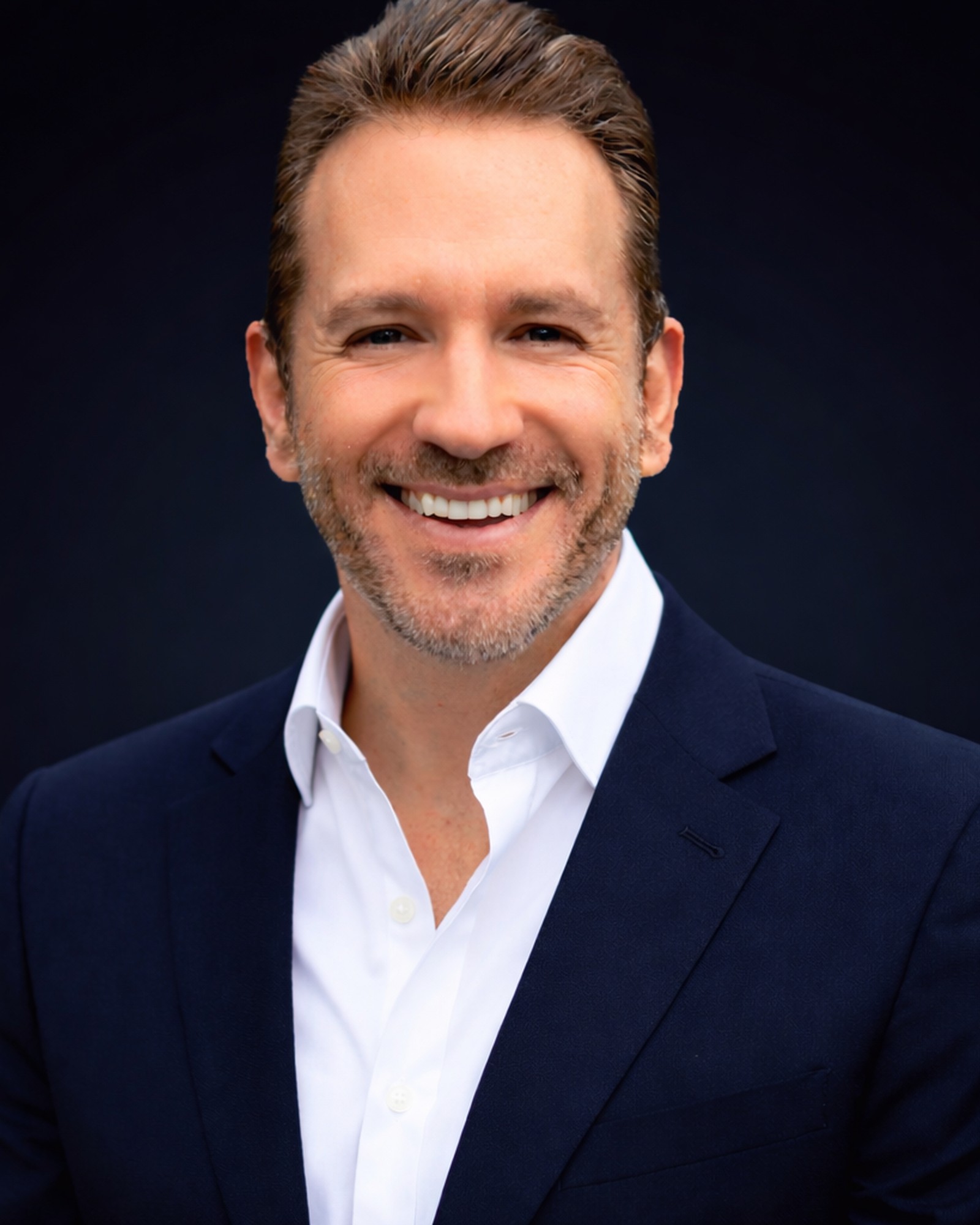
Glenn Llopis
Glenn Llopis is the creator of the Leadership in the Age of Personalization methodology and the CEO of Glenn Llopis Group. He has been a Forbes contributor for more than 17 years, is the author of six books and a manifesto, and has spent about 30 years advising Fortune 500 organizations. He also founded the Center for Hispanic Leadership.
Download The Conviction Gap
Get the designed 18-page PDF to read offline, share with your leadership team or bring to your next conversation about what your people need.
Your copy is ready
Open the PDF below and save it to keep. Thank you for reading.
Open the PDF
Belief was never the missing piece.
The Conviction Papers · Volume 1 of 3 · The Conviction Gap · Glenn Llopis · theglennllopis.com
© 2026 Glenn Llopis Group, LLC · All Rights Reserved



