Conviction
·
Self-Awareness
Custodians, Not Owners
Every leader inherits something built by others and will hand it to someone else. How you hold it in between is the measure of your leadership.
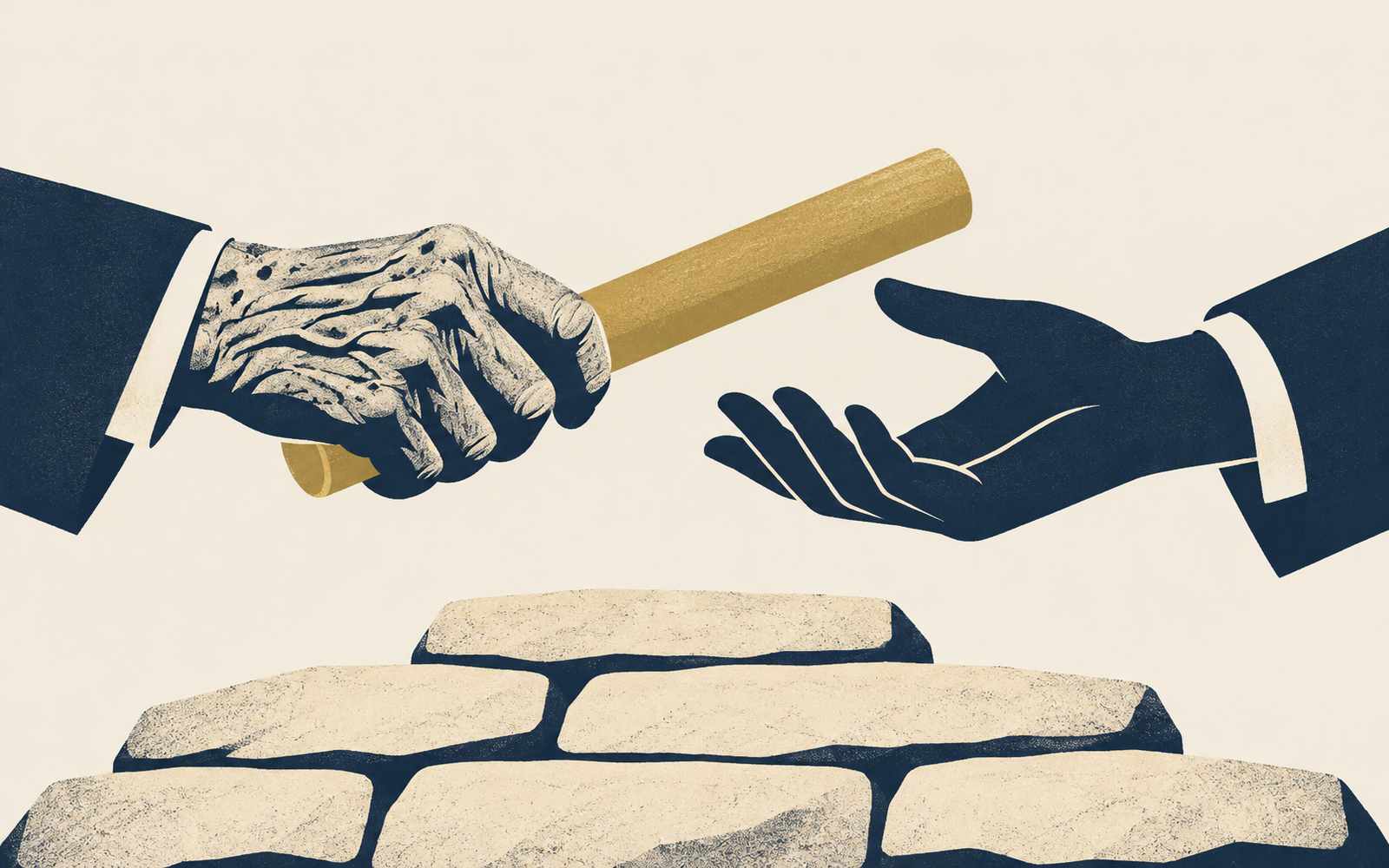
Near the end of How Boards Work, Dambisa Moyo steps back from strategy, succession and culture to offer a reflection that applies far beyond the boardroom.
Board members, she writes, should remember that past boards built the foundation from which today's companies grow and compete, and that they too "will eventually pass the baton to the board of the future." Today's directors are custodians whose job is to strengthen the company's foundation for those who come next. Her final words: corporate board members "must embrace humility rather than hubris, remaining vigilant and malleable, as they lead in an increasingly chaotic world."
The one or two decisions
Moyo makes another observation that stopped me when I read it. Over the course of a board member's career, she writes, a board will likely be charged with making "just one or two key decisions that have the potential to fundamentally change the trajectory of the company and seal its fate."
One or two. Across years of meetings, reviews and approvals, only a handful of moments truly matter. You rarely know in advance which ones they'll be.
That is why custodianship isn't about any single decision. It's about the character you bring to all of them, so that when the defining moment arrives, you're already the kind of leader who can meet it.
Hubris confuses the role
Hubris begins when leaders forget they are custodians and start acting like owners. Owners treat an organization as theirs to use. They optimize for their own tenure, their own reputation and the results that will be credited to them. Custodians treat the same organization as something entrusted to them for a time.
The difference shows up in small choices. An owner squeezes one more quarter out of a declining business. A custodian invests in the next one, even if the payoff arrives after they're gone. An owner surrounds themselves with people who agree. A custodian develops the people who will eventually replace them. An owner defends past decisions. A custodian revisits them.
In my book The Innovation Mentality, one of the six strategies is the respect to lead to leave a legacy. I've come to believe that legacy isn't what you build that carries your name. It's what you strengthen that outlasts it.
Humility is not passivity
Some leaders hear "humility" and think it means stepping back. Moyo means the opposite. She pairs humility with vigilance and with being malleable, open to change. Her whole book argues that boards must become more assertive, not less.
Humility, in this sense, is the discipline of remembering that you might be wrong, that the world is changing faster than your experience and that the organization's future matters more than your place in it. That kind of humility makes leaders braver, because they're no longer protecting themselves.
It also takes conviction. You have to know who you are to hold power lightly. Leaders who are unsure of themselves cling to control. Leaders who are secure in their identity can share it, develop others and let go when it's time.
Questions for anyone entrusted with something
What did I inherit, and from whom? Every leader stands on someone's work. Naming it keeps you grounded.
What will be stronger because I was here? Not bigger or more profitable for a quarter. Stronger, in a way the next leader will feel.
Who am I preparing to take my place? Custodians measure success partly by the readiness of their successors.
Which of my beliefs am I most afraid to revisit? That's usually where hubris is hiding.
Passing the baton well
Whether you sit on a corporate board, lead a nonprofit, run a team or raise a family, the same truth applies. Someone handed you something. One day you'll hand it on.
The leaders we remember most aren't the ones who held on the longest. They're the ones who left what they were entrusted with stronger than they found it, and the people who came after them better prepared than they were.
This essay responds to ideas in How Boards Work by Dambisa Moyo (Basic Books, 2021). Her closing reflections on custodianship, humility and the "one or two key decisions" are quoted from her book.
Learn about the keynotes I deliver to boards and leadership teams on Keynotes.
Want to explore these ideas further? Learn more about my work on leadership, identity and conviction at www.theglennllopis.com.
You don't own what you lead. You hold it in trust, and your legacy is what it becomes after you let go.
© 2026 Glenn Llopis Group, LLC. All rights reserved.
This article is the original work of Glenn Llopis and is protected by copyright. It may not be republished, reproduced, distributed or adapted, in whole or in part, in print, online or by AI tools, without prior written consent. You are welcome to share the link or quote a brief excerpt with credit to Glenn Llopis and a link back to this page. For permission requests, contact solutions@glennllopisgroup.com.
Get the next essay in your inbox
New essays on leadership, identity and conviction, sent to you when they publish. Free, and you can unsubscribe anytime.
Thank you. You're subscribed to Conviction Chronicles.
Something went wrong. Please try again.