.svg)
AI is telling your professional story—whether you helped write it or not. Without a clear, authentic voice on the record, your identity becomes a narrative assembled from whatever the machine finds.
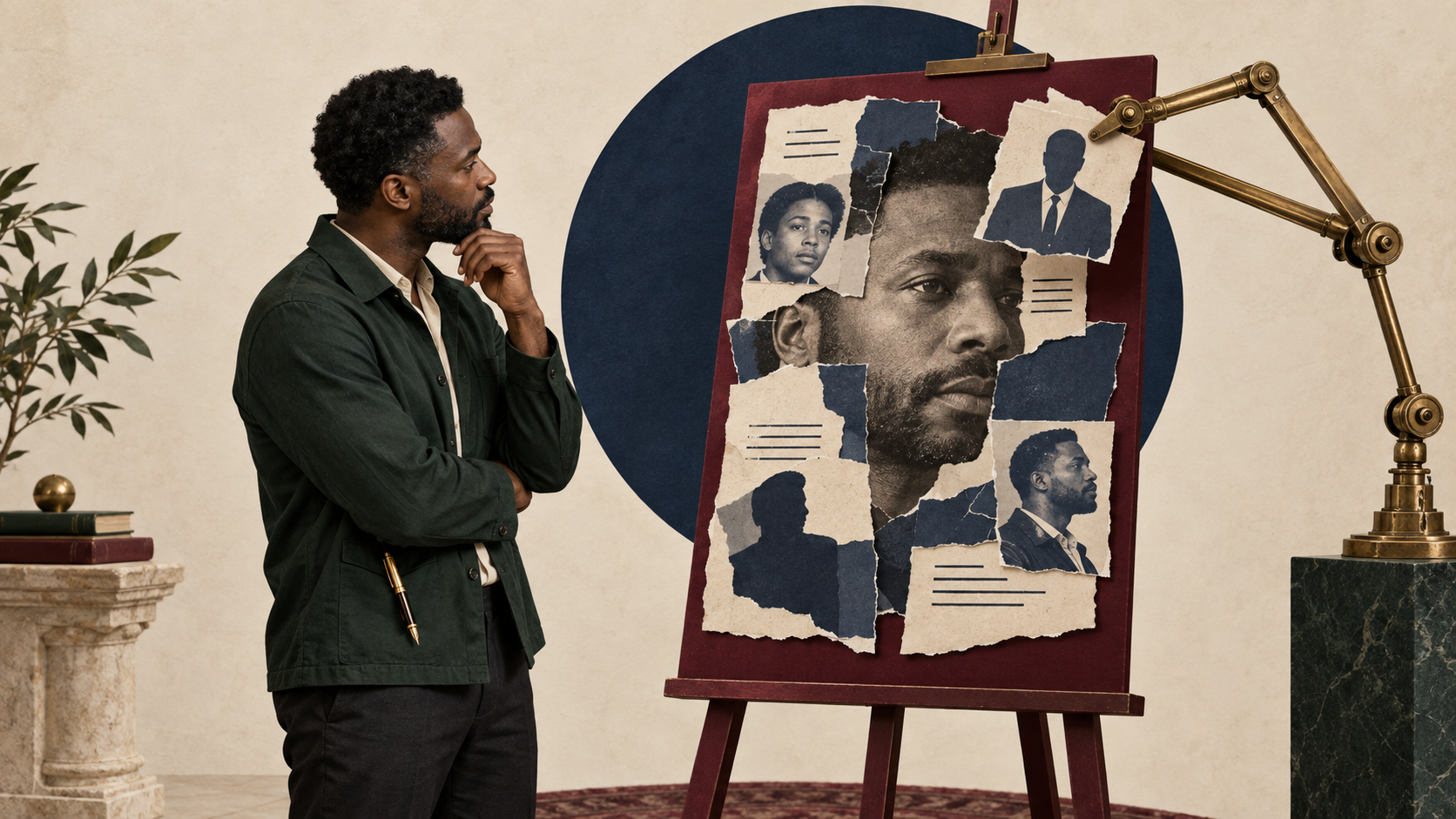
Type your own name into Google's AI Mode. Or ask an AI who you are professionally. Go ahead — I'll wait.
What you'll find, whether you're ready for it or not, is a description of you. It might be generous. It might be thin. It might be built from a stale bio, a job you left years ago, or a version of you that was true at 24 and isn't true now. But it exists, and it's being served to recruiters, partners, journalists and strangers right now — whether or not you had any hand in shaping it.
This is the part of the AI conversation nobody wants to sit with. We keep talking about AI as a tool we choose to use. We rarely talk about it as a narrator we never hired, telling a story about us we never approved.
A young woman I mentor doesn't use AI tools. No account, nothing. Good for her. So I told her to open Google, switch it to AI Mode, and ask it anything she wanted about me. Put me on the spot.
She asked whether I was trustworthy. It answered. She asked about my point of view on AI. It answered. Then she flipped it and asked how a recruiter would perceive her as an employee. That one stopped her cold — corporate communications, workplace strategy, investigative journalism, powerful content creator, and then a link to a Forbes article I'd written that featured her. The machine had connected dots she didn't know were connected.
From the look on her face, she had no idea how she was perceived in the digital world. Most people don't.
Here's what makes this different from every past wave of reputation management. In the past, if you didn't tell your story, there was silence where your narrative should have been. Today there's no silence. The machine fills the gap whether you show up or not. It scrapes what exists, synthesizes it, and hands it to anyone who asks — with a confidence that makes the description feel authoritative even when it's incomplete.
I would never have guessed, after writing hundreds of articles for Forbes, Harvard Business Review, Entrepreneur and others, that the payoff would look like this. I don't have a huge following. That was never my thing. But I have a powerful digital footprint, and now every large language model in the world has read it.
Which means when someone asks an AI who I am, it answers accurately. In the last six months, more accurately than ever. That's why content is king now — not for reach, for definition.
If you don't create your identity, it gets defined for you. Getting out in front of the models doesn't mean gaming anything. People have offered me ten, fifteen, twenty thousand dollars to write an article that hyperlinks their name to a destination. I've never done it, and I've watched journalists who did leave the industry. It means writing. A point of view, in your own voice, on the record, over time. That is what nourishes these models so they can help people understand people.
Here's the only reason I use AI: to organize and build on what I've already built. It knows it works for me. It knows I'm not dependent on it. It helps me scale me.
I do that with what people call a container. I built one trained on my entire Leadership in the Age of Personalization methodology. When someone sends me an opportunity, I run it through the container and ask whether this is a person with the right values, the right efficacy, someone I should consider working with. It tells me exactly what I think, because I created it.
I had lunch recently with a friend who'd just made a hire. Great background, great title, great company, he said. I asked him what his AI said about the person. Impressive résumé, it reported. Then I ran the same person through my container. It came back: someone I would never hire.
Same person. Same tool. Different container. His filter was who they'd worked for and what their titles were. My filter is who they are and what they're capable of doing. That's what people get backwards about AI bias. The bias isn't in the machine. It's in what you fed it.
Now look at LinkedIn. People I've known for years are posting things I know they didn't write. The tool wrote it. And the tool is only as good as its input. So when people who don't know who they are use AI to tell the world who they are, the world fills up with more disingenuous voices. Who is who?
That's why the authentic one prevails. The person who manufactured an identity to appease whatever they thought the market wanted will get exposed — maybe not the first week, but eventually. Just like the executive who's exhausted after twenty years, not from the work but from pretending.
Artificial intelligence can do a lot of things. It can generate reports, synthesize massive datasets, and produce polished communication faster than any team of people. But it cannot replicate you — not the version shaped by what you've survived, doubted, rebuilt and chosen to stand for anyway. That's the argument at the center of Conviction Over AI. Superintelligence raises the price of not knowing who you are. It also makes the ones who know unmistakable.
Take the Conviction Diagnostic. In three minutes, see where you've traded who you are for who the room wanted, and exactly where to begin reclaiming it.

His story starts where reinvention did: a family that left everything behind for a new country and refused to call it loss. Cuban Roots →
.svg)
.svg)
.svg)
.svg)
.svg)
.svg)
