
Conviction
·
Self-Awareness
When the Chatbot Sounds Better Than the Counselor
In a Norwegian experiment, young people rated ChatGPT's mental health advice higher until they learned a machine wrote it. Then they favored the professionals. Polished answers can feel helpful, but teens still want to be understood by someone who actually knows them.
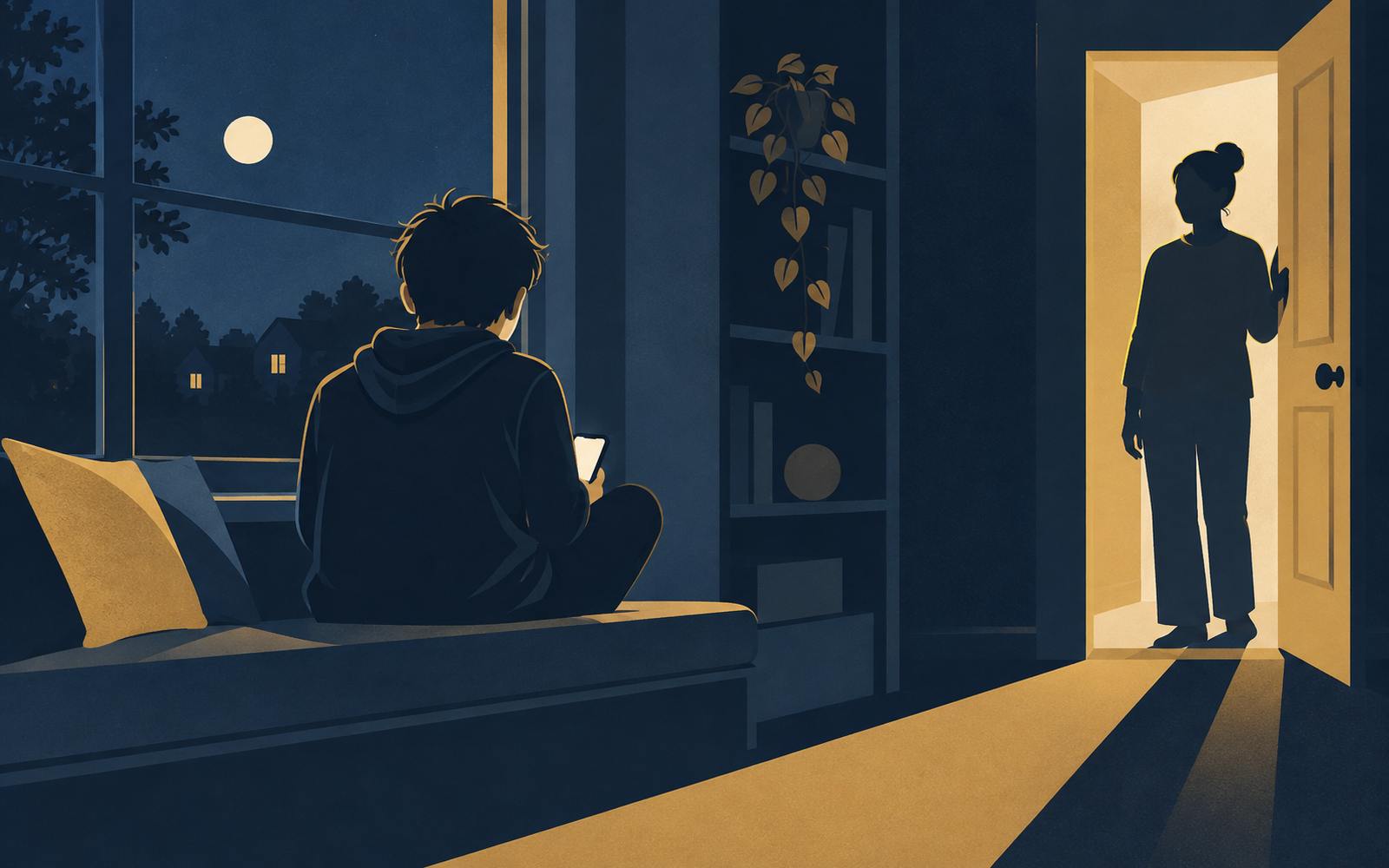
If your teenager had a rough week and wanted advice, where would they go first: to you, to a school counselor, or to the app on their phone?
Many parents would guess the phone. And when it comes to how the advice sounds, the research suggests young people may have a point. What they do with that advice once they know where it came from is the more interesting story.
A Blind Test With a Twist
Petter Bae Brandtzaeg of the University of Oslo and his colleagues Marita Skjuve and Asbjørn Følstad ran an experiment with 440 Norwegians aged 17 to 21. Participants read answers to mental health questions, some written by ChatGPT and some by health professionals, and rated them. Half were randomly assigned to read without knowing who wrote what. The other half were told.
In their 2026 study in Cyberpsychology, the results flipped depending on that one detail. When the source was hidden, ChatGPT's answers scored higher for validation, relevance, clarity and usefulness. When the authors were disclosed, participants favored the professionals and rated their answers significantly higher for validation. The researchers call this "AI aversion."
Two cautions keep this fair. The study measured how young people rated advice, not whether the advice was accurate or whether anyone felt better afterward, and the authors say so themselves. It also used less sensitive questions. Brandtzaeg's broader work, including a 2025 survey of 166 Norwegian high school students, documents real benefits teens find in AI, from tailored help to comfort at odd hours, and he argues for support that combines people and AI rather than replacing either.
Validation Means More When Someone Chose to Give It
One detail stays with me. Validation was the very quality that switched sides. The same words felt more validating when a young person believed a human had written them.
I can't tell you exactly why, and the study doesn't claim to. But I have a guess that any parent will recognize. Being reassured is pleasant. Being understood by someone who chose to pay attention to you is something else. Encouragement lands differently when it comes from a person who could have looked away and didn't.
A chatbot can be fluent, patient and available at two in the morning. What it cannot do is know your child across time: remember last spring, notice that this worry sounds like the one from eighth grade, see the gap between what your teen says and what your teen does. That kind of knowing is built slowly, by people.
Other researchers sharpen the point. Nomisha Kurian, now at the University of Warwick, has described in a 2024 paper in Learning, Media and Technology an "empathy gap" in conversational AI: systems that imitate empathy without understanding it, which young users can easily miss. Her work is a conceptual framework built from reported cases, focused mostly on younger children, not a measure of how often harm occurs. And product testing by Common Sense Media with Nina Vasan's team at Stanford Medicine's Brainstorm Lab found that four major general-purpose chatbots, used with teen accounts, often missed signs that a young user was struggling, and that safeguards held up better against a single direct question than across a long conversation. That is a test of what the products do, not a study of what happens to teens, and researchers such as Amy Orben, Andrew Przybylski and Candice Odgers have long argued that conclusions about harm need outcome data from real young people.
Put those findings together and a pattern appears. The weak spot in a long conversation is the one thing a person who knows your teen does well: following the thread, remembering the context, noticing what changed.
Be the One Who Knows the Whole Story
I have already written about the risk of chatbots keeping teens talking in A Chatbot Can Keep Teens Talking. This piece is about something different: the job that is still ours.
Don't try to out-polish the machine. You will lose that contest, and you don't need to win it. Your advantage is history and attention. Use them.
Ask what the chatbot told them, with curiosity rather than suspicion. "What did it say? Did that fit you?" turns a private exchange into a conversation where your teen practices judging advice instead of simply absorbing it.
Notice patterns out loud. "You've mentioned feeling left out three times this month" is something no answer engine can say with a parent's memory behind it. It tells your teen they are known.
Make the humans easy to reach. A coach, an aunt, a school counselor, a mentor. Young people turn to whatever is available and doesn't judge them. Make sure a few adults meet that description.
And ask better questions. "How was your day?" is easy to shrug off. I wrote about alternatives in Stop Asking "How Are You Doing?" because the question we ask signals whether we really want to know.
The conviction behind my work with teens and parents through Teens UnEdited is simple: young people need more than good answers. They need to be seen as themselves by someone who will still be there next week. A machine may give your teen the right words tonight. Only the people in their life can help them figure out whether those words are true for who they are becoming.
Research cited
Brandtzaeg, P. B., Skjuve, M., & Følstad, A. (2026). AI aversion? Effects of author disclosure on young people's perceptions of mental health advice. Cyberpsychology: Journal of Psychosocial Research on Cyberspace.
Brandtzaeg, P. B., Følstad, A., & Skjuve, M. (2025). Emerging AI individualism: How young people integrate social AI into everyday life. Communication and Change.
Kurian, N. (2024). 'No, Alexa, no!': Designing child-safe AI and protecting children from the risks of the 'empathy gap' in large language models. Learning, Media and Technology.
Common Sense Media & Stanford Medicine's Brainstorm Lab for Mental Health Innovation. (2025). Common Sense Media finds major AI chatbots unsafe for teen mental health support. Common Sense Media press release.
Want to explore these ideas further? Learn more about my work on leadership, identity and conviction at www.theglennllopis.com.
The right words can come from anywhere, but the feeling of being known only comes from someone who has paid attention to you over time.
© 2026 Glenn Llopis Group, LLC. All rights reserved.
This article is the original work of Glenn Llopis and is protected by copyright. It may not be republished, reproduced, distributed or adapted, in whole or in part, in print, online or by AI tools, without prior written consent. You are welcome to share the link or quote a brief excerpt with credit to Glenn Llopis and a link back to this page. For permission requests, contact solutions@glennllopisgroup.com.
Get the next essay in your inbox
New essays on leadership, identity and conviction, sent to you when they publish. Free, and you can unsubscribe anytime.
Thank you. You're subscribed to Conviction Chronicles.
Something went wrong. Please try again.





