.svg)
A pediatric neurosurgeon who once trained to be a concert pianist tells Glenn Llopis how she found music in the operating room, why the “I am doctor, do what I say” model has to go, and what it takes to protect patients’ dignity.
Amanda Saratsis
MD; pediatric neurosurgeon, Advocate Health Care, Chicago (at the time of recording)
Advocate Health Care
·
Personalization Outbreak podcast
·
49
min
·
Episode
Hard things are worth doing. And it doesn't mean that easy things aren't worth doing, but it's really the hard things at the end of the day that matter the most.
Amanda Saratsis
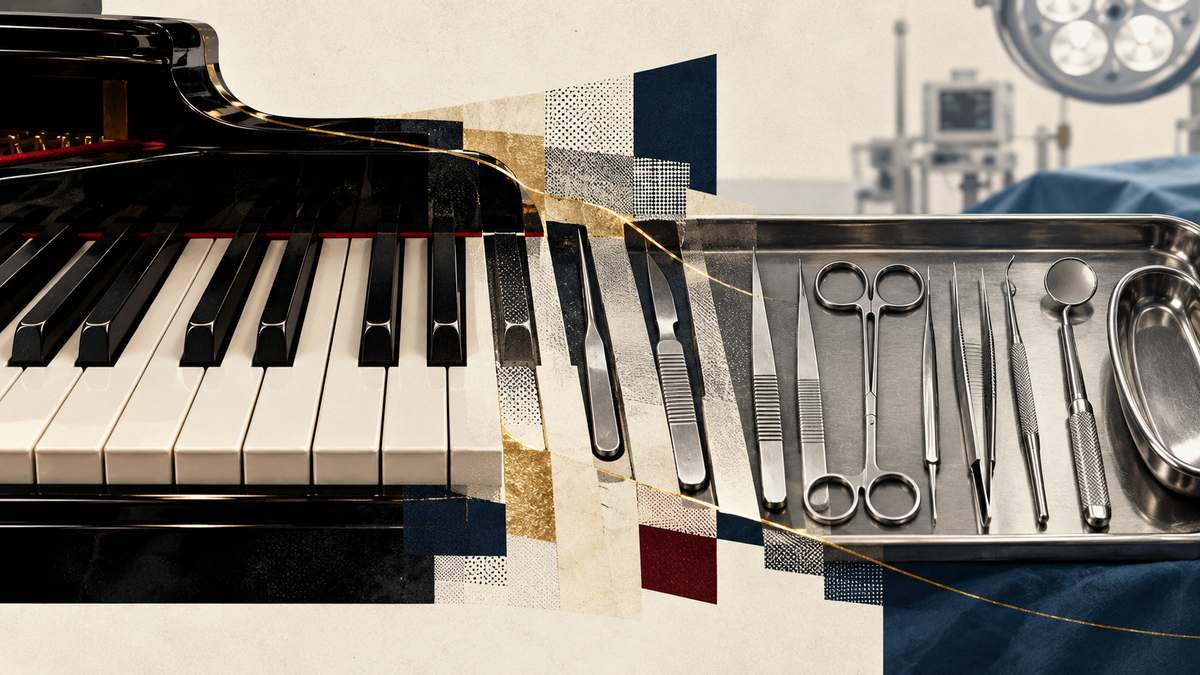
Dr. Amanda Saratsis is a pediatric neurosurgeon at Advocate Health Care in Chicago. She and Glenn Llopis both serve on the board of the Pediatric Cancer Research Foundation. In college she was a double major in biology and piano performance, headed for the concert stage. Volunteering at a local hospital showed her she wanted more human connection, and after much soul-searching she left the music program for premed.
She planned to become a pediatric oncologist and took her surgery rotation first because she was sure she didn’t want to be a surgeon. On her first night on call, the team raced to save a gunshot victim, and she watched their hands, their feet on the pedals and the beeping monitors, like an orchestra with the surgeon leading.
"I'd had all this guilt and regret for kind of walking away from my talents in music and I thought this is how I can apply it. This is how I can use my good hands, you know, to render care for people." — Amanda Saratsis · 00:06:41
Asked how those two gifts made her a better leader, she described the operating room:
"a surgeon is the leader in the operating room of a vast and varied team, all of whom are essential." — Amanda Saratsis · 00:07:59
The job is to guide everyone through what is needed and what is changing, then let the anesthesiologists and nurses do their best work, as a conductor brings in each instrument at the right time. Her mother still says she always picks the hardest things, and the line at the top of this page is what she tells her trainees. The hard work now, she argues, is changing a care culture built into how things have always been done, because for most people:
"being a patient is terrifying." — Amanda Saratsis · 00:13:09
Access to information has changed the relationship. Patients arrive having searched their diagnosis online or joined support groups, sometimes well informed and sometimes not, and trust in experts has worn thin.
"patient care really needs to step away from that sort of traditional hierarchical like I am doctor, do what I say. And we really need to become partners with our patients and their families." — Amanda Saratsis · 00:16:07
Partnership takes time. After emergency surgery she sits down with the family, looks at the scans with them and lets them cry. In clinic, she has:
"my new patient appointments booked for twice as long as my return patients." — Amanda Saratsis · 00:17:25
Her friends in primary care see complex patients in 10- to 15-minute slots, 50 or 60 a day:
"That's just not reasonable. It's impossible to give the best care in this environment. And this leads to physician burnout." — Amanda Saratsis · 00:18:11
She described a mother who, after a traumatic experience with medicine, refused an urgent procedure for her baby. Getting her agreement took weeks of conversations.
"I really wish that the institution had stepped in at some point" — Amanda Saratsis · 00:22:02
What helps: bringing parents into ICU rounds, making clear who is who on the team and giving families direct access to someone like a charge nurse. Glenn called the old way:
"this is a classical case of where standardization has dehumanized those that can actually add more value and be part of the decision-making process" — Glenn Llopis · 00:25:21
In her field, doctors used to treat every brain tumor of a given type the same way. Now they can sequence a tumor quickly, match a child to therapies based on its molecular biology, and use AI to predict which medicines will work, and outcomes have improved considerably. The same shift is needed in who gets to be a surgeon. Even she still pictures a doctor as a middle-aged man.
"there are probably tons of bright people that are kind of driven away from these fields because of this old guard, this old culture, this old way of doing things." — Amanda Saratsis · 00:29:07
"we need to kind of open up and let that personalization in for the betterment of everyone involved." — Amanda Saratsis · 00:30:32
Technology matters too. As a junior resident she ran across the hospital at night to fetch printed films while carrying the neurosurgery pager. Today she sees images on her phone, and some skull operations on babies that once needed large incisions and transfusions are done endoscopically.
Glenn told her that health administration graduate students fear healthcare is losing its dignity. She thinks they have a point. In the hospital you wear a gown, people come in at all hours and some don’t know your name:
"You are at the mercy of these strangers" — Amanda Saratsis · 00:47:07
A two-year-old can’t even say no to an IV. Still, she sees medicine becoming more attuned, with training for difficult conversations and for delivering bad news. For young people drawn to healthcare, her advice was to keep that perspective:
"I like to call it virtuous work where you feel like you're making a difference." — Amanda Saratsis · 00:42:43
The obstacles, she said, are all opportunities.
Dr. Amanda Saratsis told Glenn Llopis that she left her piano performance major for premed, then found in surgery a way to use the same gifts: good hands, practice, and leading a team the way a conductor leads an orchestra.
Saratsis told Glenn Llopis that patients now arrive with their own information, so physicians have to become partners with patients and families. That means pointing them to credible resources, supporting second opinions and giving families time, and institutions have to give physicians the structure to do it.
Saratsis told Glenn Llopis that primary care physicians who see complex patients in 10- to 15-minute slots cannot give the best care. They feel it, they burn out, and patients who leave without understanding their treatment end up sicker.
Glenn Llopis is The Identity Catalyst. For more than twenty years he has helped leaders and organizations reclaim the identity they edited away and lead from earned conviction. He is a Forbes contributor, the author of six books, and the founder of Glenn Llopis Group.
Read Glenn's story →© 2026 Glenn Llopis. All rights reserved.
This page is the original work of Glenn Llopis and is protected by copyright. Quotations are drawn from a recorded conversation and are attributed to the speaker. The page may not be republished, reproduced, distributed or adapted, in whole or in part, in print, online or by AI tools, without prior written consent. You are welcome to share the link or quote a brief excerpt with credit to Glenn Llopis and a link back to this page. Guests featured here are welcome to share and excerpt their own interview. For permission requests, contact solutions@glennllopisgroup.com.
Take the Conviction Diagnostic. In three minutes, see where you've traded who you are for who the room wanted, and exactly where to begin reclaiming it.

His story starts where reinvention did: a family that left everything behind for a new country and refused to call it loss. Cuban Roots →
.svg)
.svg)
.svg)
.svg)
.svg)
.svg)
