.svg)
Dr. Britt Yamamoto, author of The Soil of Leadership, tells Glenn Llopis what a farmer in Japan taught him about growth, why tools and trust programs fail in depleted conditions, why burnout is so often blamed on the individual, and why you cannot practice what you cannot imagine.
Britt Yamamoto
PhD; author of The Soil of Leadership; founder of Perennial and RootSpring (at the time of recording)
Perennial; RootSpring
·
Personalization Outbreak podcast
·
53
min
·
Episode
127
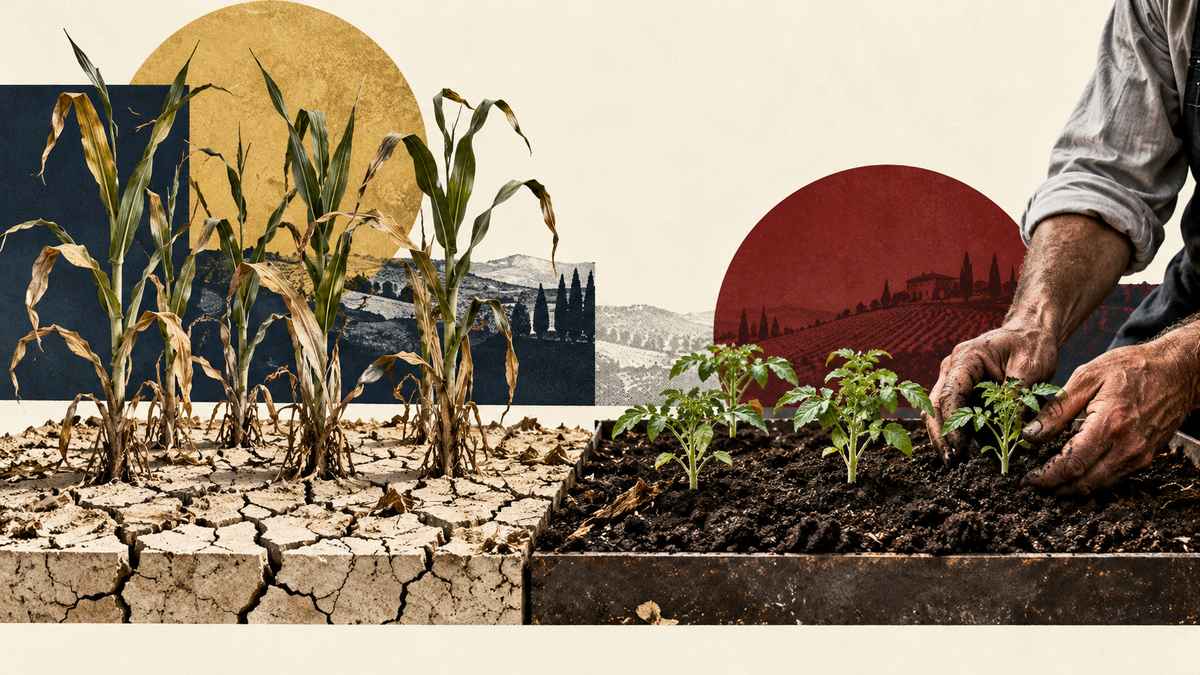
the difference between a conventional farmer and a sustainable farmer is that a conventional farmer grows plants and a sustainable farmer grows soil
Dr. Britt Yamamoto
Dr. Britt Yamamoto has spent more than two decades developing leaders around the world, and before that he spent about six years as a farmer. His book, The Soil of Leadership, borrows its central idea from a single conversation. In his mid-twenties he went to work on a farm in Japan, partly to learn farming and partly to question what it meant to him to be Japanese American. On his first day, the farmer took him into the fields and asked what separates a conventional farmer from a sustainable one.
Yamamoto gave the answers he had read in books. The farmer let him finish, then gave the answer at the top of this page. Growing plants means focusing on what you can see in the short term. Growing soil means tending what you cannot see, for harvests that come later.
Organizations, Yamamoto argues, mostly grow plants, for understandable reasons: economies reward quick outputs. The cost falls on the conditions underneath, the relationships and the trust. His clearest example is trust itself. Everyone agrees it is foundational; you can hire a consultant and run a retreat with the ten best tools for building it. But:
"Those tools and those techniques are plants. If there is not the foundational soil, and it's not just culture, it's actually just the conditions within that team to support those tools, to support those trusting relationships." — Dr. Britt Yamamoto · 00:15:40
Put the healthiest plant in depleted soil and it will not grow. People are a renewable resource, he says, but most systems are built for extraction rather than renewal. When people burn out, the usual response puts the problem back on them:
"go take a personal day and now you're individualizing and saying, let's go take time off. It's your fault that you're burning out. It's like, well, maybe the system is problematic" — Dr. Britt Yamamoto · 00:15:40
Underneath the tools, he says, are stories: the internalized narrative, for instance, that you are an asset exchanged for a wage, and therefore replaceable. New tools will not help until people have new stories to gather around.
What can leaders do right now? Yamamoto warns that his answer may be unsatisfying: not more information or more networking, but what his team calls leadership 3.0, more space for reflection, self-awareness and questioning why we believe what we believe, inside a commitment to wellbeing. Glenn was blunt about leaders who say they do not care how people feel:
"When someone tells me that, it tells me that their suppression index is so high that they become oblivious of who they've become because the system has stripped them of their identity, which then holds their people back." — Glenn Llopis · 00:28:58
Yamamoto tells rooms of younger professionals to think about the worst boss they ever had:
"They did not set out to be that terrible boss." — Dr. Britt Yamamoto · 00:29:50
They got there through isolation as they rose and through never exploring the gap between their intent and their impact. Leaders everywhere tell him the same thing, that they are burning the candle at both ends and not sure they want to continue. The starting point is not a step forward but space to reconsider how you want to be:
"Because again, you can't practice what you can't imagine." — Dr. Britt Yamamoto · 00:29:50
The story many people carry is that they are a commodity to be used up. Yamamoto rejects it:
"You just don't think about yourself as a commodity, but you're not a commodity." — Dr. Britt Yamamoto · 00:39:16
His next book, The Hyakusho Way, takes its name from an old Japanese word for farmer that he understands as the person of a hundred talents. Among its principles, restoration comes first: if people are depleted, rest and renewal have to be prioritized before anything else can grow. He begins his own programs by telling people that they matter, because he sees too many settings where people are made to feel otherwise:
"there are a lot of context in which people are made to feel they don't matter or they're only a certain part of the matters. And when they don't matter anymore, they're kicked out." — Dr. Britt Yamamoto · 00:42:52
Glenn named the design flaw underneath it all:
"It was designed to create a mentality of sameness." — Glenn Llopis · 00:47:33
A world of difference feels threatening to organizations built that way, when it is really an opportunity. Glenn summed up what he took from the conversation in four verbs that run through his own work:
"we need to see the opportunity, then we need to learn how to sow it in the soil. And then with hard work, we start growing the opportunities and then we begin to start sharing them." — Glenn Llopis · 00:47:33
Yamamoto closed with advice from a mentor: once you have experienced true community, you spend the rest of your life trying to recreate it. His work, he says, is creating the soil for that connection, and trusting that healthy soil will grow what it needs.
Britt Yamamoto told Glenn Llopis that a Japanese farmer taught him that conventional farmers grow plants while sustainable farmers grow soil. In organizations, plants are the visible short-term outputs and tools; soil is the underlying conditions, relationships and trust that decide whether anything can grow at all.
Because tools are plants. Yamamoto told Glenn Llopis that you can bring in the best techniques for building trust, but without healthy conditions in the team they will not take root, just as a healthy plant fails in depleted soil. The conditions have to be restored first.
It is Yamamoto’s term for development built on reflection, self-awareness and questioning the beliefs we operate on, within a commitment to wellbeing, rather than only more information or more networking. He told Glenn Llopis that leaders cannot practice a different way of leading until they can imagine it.
Glenn Llopis is The Identity Catalyst. For more than twenty years he has helped leaders and organizations reclaim the identity they edited away and lead from earned conviction. He is a Forbes contributor, the author of six books, and the founder of Glenn Llopis Group.
Read Glenn's story →© 2026 Glenn Llopis. All rights reserved.
This page is the original work of Glenn Llopis and is protected by copyright. Quotations are drawn from a recorded conversation and are attributed to the speaker. The page may not be republished, reproduced, distributed or adapted, in whole or in part, in print, online or by AI tools, without prior written consent. You are welcome to share the link or quote a brief excerpt with credit to Glenn Llopis and a link back to this page. Guests featured here are welcome to share and excerpt their own interview. For permission requests, contact solutions@glennllopisgroup.com.
Take the Conviction Diagnostic. In three minutes, see where you've traded who you are for who the room wanted, and exactly where to begin reclaiming it.

His story starts where reinvention did: a family that left everything behind for a new country and refused to call it loss. Cuban Roots →
.svg)
.svg)
.svg)
.svg)
.svg)
.svg)
