.svg)
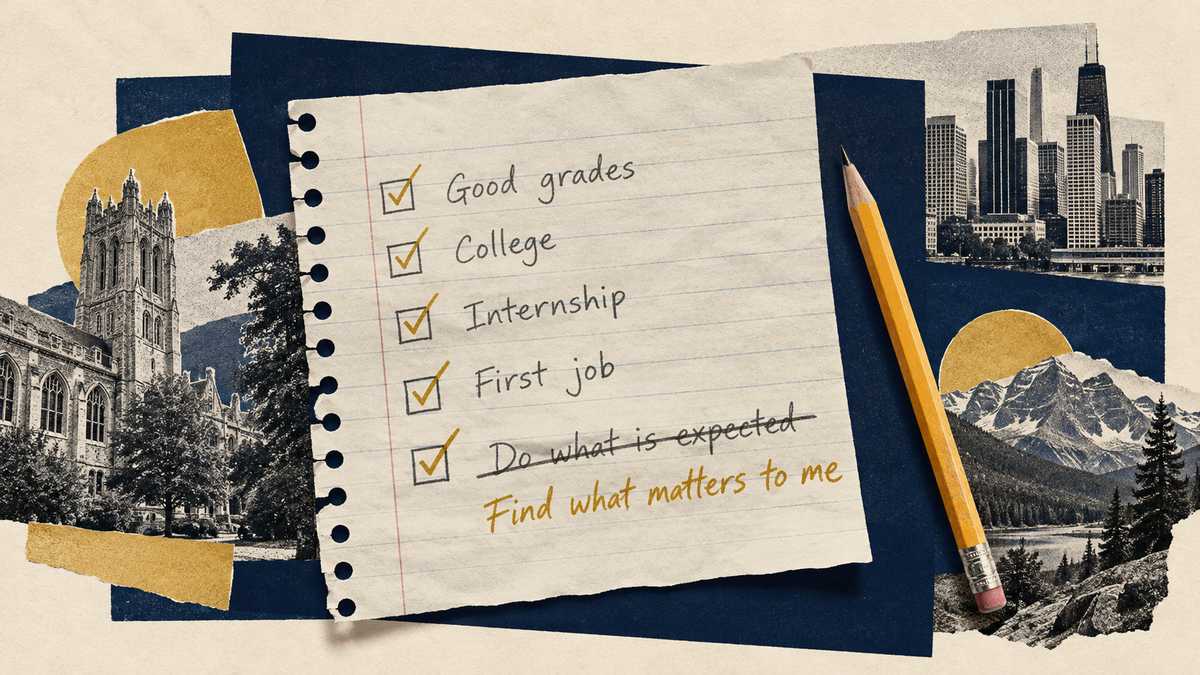
The founder of the career platform The Muse tells Glenn Llopis about the checklist she wrote at thirteen, the dream job that turned out to be wrong, and why employers who hide the hard parts of a job pay for it twice.
Kathryn Minshew
Co-founder and CEO, The Muse; author of The New Rules of Work (at the time of recording)
The Muse
·
Personalization Outbreak podcast
·
30
min
·
Episode
62
people say yes to hard things all day, every day, but they like to know what those are before they opt in.
Kathryn Minshew
Kathryn Minshew founded the career platform The Muse, which pioneered what it calls the values-based job search. Before that she worked at McKinsey and on vaccine introduction in Rwanda and Malawi. Glenn Llopis asked how that winding path shaped her, and her answer went back further than her résumé does.
At thirteen she decided she would join the State Department. She majored in political science, learned languages, worked the checklist, and then:
"And I walked into what I thought was the job of my dreams. And I realized like, I don't think I actually like this. I don't think this is actually right." — Kathryn Minshew · 00:02:19
What followed were several years of sampling other lives, and a question she has been working on ever since:
"how do they make those decisions again, in the context of what's right, for them not what their parents did or their friends are doing, or looks cool on television, but truly what matters to you" — Kathryn Minshew · 00:02:19
Glenn recognized the pattern from his own start:
"the pathway was already created for me ... we're fighting against those old outdated standards where your career was almost predetermined for you" — Glenn Llopis · 00:04:14
Her advice to anyone searching is to start with self-reflection about what actually matters, from the concrete, pay and leave and benefits, to the intangible: meaningful work, kindness, pace. She compares finding a workplace to dating. Most companies will not be a fit, and that does not make them bad; it makes them specific.
"we are all sort of hurt by the idea of this one size fits all workplace ... all jobs are interchangeable and they're just not, that's literally not true." — Kathryn Minshew · 00:07:28
So her platform made company attributes searchable, and then went further, publishing culture in employees’ own words rather than only the version human resources writes. She is candid that it works both ways: it is a success when a candidate reads an employee’s description and decides they would be unhappy there.
Minshew traces today’s hiring habits back to decades when workers were treated as interchangeable and talent teams were built as back offices, measured on how cheaply and quickly they could fill a seat. The better companies, she says, now look past cost per hire and time to hire, to whether the person stayed and whether the team has the skills it needs.
The economics are blunt: many employers lose money on a hire who does not stay past a certain point, which makes honesty cheaper than persuasion. And the social contract changed too. When she started working, leaving a job inside two years was close to taboo. Younger candidates now leave quickly when the job is not what was advertised.
Glenn connected it to the shift the method describes:
"It's become less about the business, defining the individual and much more about the individual, defining the process towards a shared mission." — Glenn Llopis · 00:19:33
"I personally don't care if someone has 30 years of experience, I wanna know what you can solve for today based upon today's business climate and or industry climate." — Glenn Llopis · 00:20:45
Asked how she would help a recruiter rebuild a role from scratch, Minshew starts with the people already there. Collect what is working and what is not, through surveys, focus groups and exit interviews, then sort the hard parts into two piles. The things that are true today and should not be get a real plan, communicated, with updates. The things that will not change get said out loud in the hiring process.
That is where the line at the top of this page comes from, and her point is that a surprising number of candidates will accept the hard thing: some will say it is fine, some will say they can help fix it. What loses people is discovering it after they arrive.
Her caution is to be realistic about distance. A slow, bureaucratic organization that recruits people used to rapid change will break the new arrivals. Saying instead that you are here and want help getting there attracts people who want that work.
Minshew’s last point is aimed above the talent team: executives who demand a seat filled fast make the careful work impossible, and then inherit the turnover. Glenn took it further, arguing that everyone is in the human resources business now, and that leaders cannot define roles well when they have never done the work themselves.
He closed with the question he asks every audience, and which this conversation answers in hiring terms: nobody takes a class in opportunity management, yet what organizations actually need are people who can see and create opportunity, rather than people who merely fill a seat.
Kathryn Minshew told Glenn Llopis it starts with self-reflection about what truly matters to you, from pay and benefits to pace and meaning, and then matching that against what a company is really like, including culture described by its own employees.
Minshew told Glenn Llopis that many employers lose money on a hire who does not stay long enough to justify the cost of recruiting them, so cost per hire alone is a misleading measure next to retention and quality.
Yes. Minshew told Glenn Llopis that people say yes to hard things every day, but they want to know what those are before they opt in, and candidates who find out afterwards are the ones who leave.
Glenn Llopis is The Identity Catalyst. For more than twenty years he has helped leaders and organizations reclaim the identity they edited away and lead from earned conviction. He is a Forbes contributor, the author of six books, and the founder of Glenn Llopis Group.
Read Glenn's story →© 2026 Glenn Llopis. All rights reserved.
This page is the original work of Glenn Llopis and is protected by copyright. Quotations are drawn from a recorded conversation and are attributed to the speaker. The page may not be republished, reproduced, distributed or adapted, in whole or in part, in print, online or by AI tools, without prior written consent. You are welcome to share the link or quote a brief excerpt with credit to Glenn Llopis and a link back to this page. Guests featured here are welcome to share and excerpt their own interview. For permission requests, contact solutions@glennllopisgroup.com.
Take the Conviction Diagnostic. In three minutes, see where you've traded who you are for who the room wanted, and exactly where to begin reclaiming it.

His story starts where reinvention did: a family that left everything behind for a new country and refused to call it loss. Cuban Roots →
.svg)
.svg)
.svg)
.svg)
.svg)
.svg)
