
Conviction
·
Self-Awareness
81% of Teens Feel Pressure. Most of It Is About a Future Someone Else Drew.
A national survey of 1,545 teens found that pressure about their future path is the most common kind they feel, and adults at school are its top source. The data suggest the weight teens carry is less about effort and more about living out a plan they never drew themselves.
After one of my talks at a university, a student asked me a question I still think about. Why, she wanted to know, did her mentors keep telling her to be more like them, instead of helping her find out what made her different?
She still wanted guidance, only pointed toward a future of her own. I wrote about her question in The Best Mentors Discover You. What I didn't have then was the data to show how many young people are living inside that same question. Now I do.
The Pressure Has an Address
In late 2023, Emily Weinstein of the Center for Digital Thriving at the Harvard Graduate School of Education, working with Common Sense Media and Indiana University, surveyed a nationally representative group of 1,545 American teens aged 13 to 17. Eighty-one percent said they felt pressure that makes them feel bad in at least one of six areas.
Appearance pressure came in at 51% and achievement pressure at 53%. Topping the list was pressure about their future path, which the report calls their "game plan," at 56%. More than a quarter of teens, 27%, said they were actively struggling with burnout.
Then comes the detail every parent and educator should sit with. When it came to pressure about the future, the top source teens named was adults at school, at 48%. And for achievement pressure, the top source was teens themselves, also at 48%.
A survey like this describes what teens report. It can't tell us why. But read those two numbers side by side and a story suggests itself. The plan is handed down by adults who mean well. By the time the pressure feels like it comes from inside, the plan has been memorized.
Performing a Plan Instead of Owning One
Denise Pope at Stanford, who co-founded the nonprofit Challenge Success, has spent years asking high schoolers how they experience school. In surveys she and her colleague Sarah Miles reported of about 55,000 students at 73 public and private high schools, her team found that 48% fit a pattern she calls "doing school": working hard for the grade without finding meaning in the work. Only 13% were fully engaged. One caution: these schools were not a national sample, so the numbers describe the students surveyed rather than every American teenager.
Even so, "doing school" is a precise name for what happens when a young person is handed a future and asked to perform it. They learn the moves. They hit the marks. They get very good at looking like the person the plan requires, while quietly losing track of who they are.
Research from Erika Patall at USC adds a useful distinction. In a 2025 paper led by her colleague Seo, with two samples, 148 U.S. college students and 6,908 South Korean seventh graders, parents' control over big goals such as career decisions was more negatively linked to students' motivation than control over everyday tasks such as homework. The data are correlational, the Korean data are from 2005 and the American sample was in college, so I wouldn't stretch it far. But the direction makes sense. Holding the line on homework is structure. Choosing the dream is something else.
Patall's broader work makes a point I want to honor. Structure and autonomy work together. Kids need clear expectations, guidance and adults who show up. Standards and routines give young people something steady to push against. The trouble starts when the structure quietly expands until it decides the destination too.
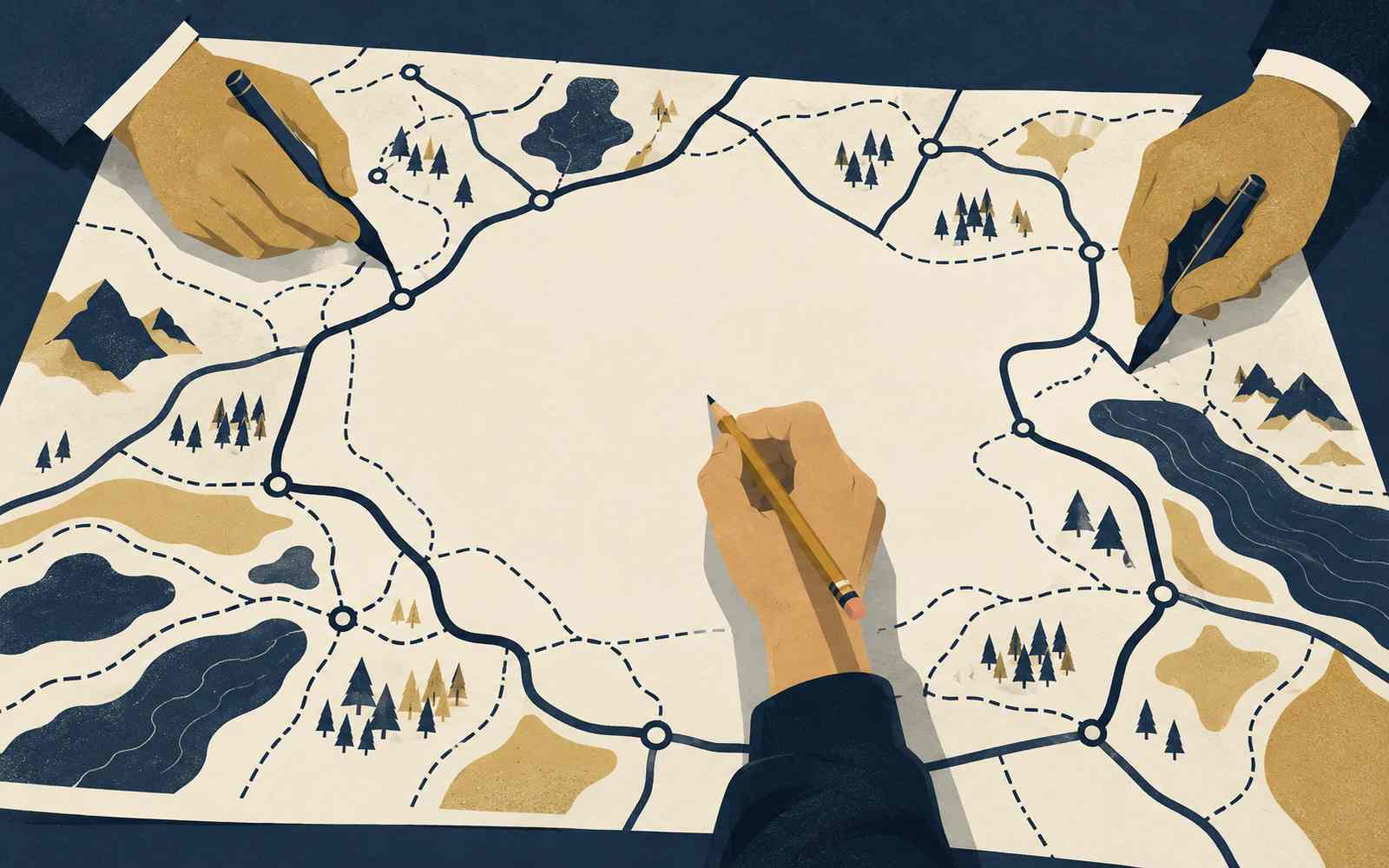
Handing Back the Pencil
Most of us didn't invent the plan we give our kids. We inherited it. I explored that in Parents Were Handed the Same Script, and it is why I don't think blaming parents or teachers gets anyone anywhere. What helps is noticing which parts of the plan are scaffolding and which parts are the drawing itself.
Keep the scaffolding. Sleep, homework, showing up, finishing what you start. Those are yours to hold.
Give back the drawing. When your teen talks about the future, ask what problems they like working on, what they lose track of time doing, and what they would want people to come to them for. Then resist the urge to translate their answer into a major or a job title right away.
Listen for borrowed language. If every answer your teen gives about the future sounds like something an adult once said to them, gently ask what they would say if no one were grading the answer.
Educators and counselors, you are the top named source of future pressure in this survey, which also means you are among the most powerful people in a teen's life. One question asked with real curiosity, "What do you notice you're good at that no one has asked you about?", can do more than another planning worksheet.
That is the conversation I hope my work with teens and parents through Teens UnEdited can help more families have. It also echoes an argument I made in Raise the Individual, Not the Resume.
The student who asked me about her mentors wanted permission to have a future of her own. Every young person deserves an adult who grants it, and then helps them draw it.
Research cited
Weinstein, E., et al. (2024). Unpacking grind culture in American teens: Pressure, burnout, and the role of social media. Common Sense Media, Center for Digital Thriving and Indiana University.
Pope, D. C., & Miles, S. (2022). A caring climate that promotes belonging and engagement. Phi Delta Kappan.
Seo, E., et al. (2025). Parental behavioral control and student motivation: Why control over big dreams vs. daily tasks matters. Journal of Child and Family Studies.
Want to explore these ideas further? Learn more about my work on leadership, identity and conviction at www.theglennllopis.com.
The most loving thing an adult can do with a young person's future is hold the ladder and let them choose the wall.
© 2026 Glenn Llopis. All rights reserved.
This article is the original work of Glenn Llopis and is protected by copyright. It may not be republished, reproduced, distributed or adapted, in whole or in part, in print, online or by AI tools, without prior written consent. You are welcome to share the link or quote a brief excerpt with credit to Glenn Llopis and a link back to this page. For permission requests, contact solutions@glennllopisgroup.com.
Get the next essay in your inbox
New essays on leadership, identity and conviction, sent to you when they publish. Free, and you can unsubscribe anytime.
Thank you. You're subscribed to Conviction Chronicles.
Something went wrong. Please try again.





