
Individuality
·
Culture
A Company Built Around One Person Is a Monument, Not a Culture
In the WSJ CEO Brief, Take-Two CEO Strauss Zelnick says a company at risk when any one executive leaves is a monument, not a company. He also prizes long-tenured teams. Both are true. A company stops depending on any one person when its leaders know many people well.
What the Headlines Miss · Responding to
What Culture Can Build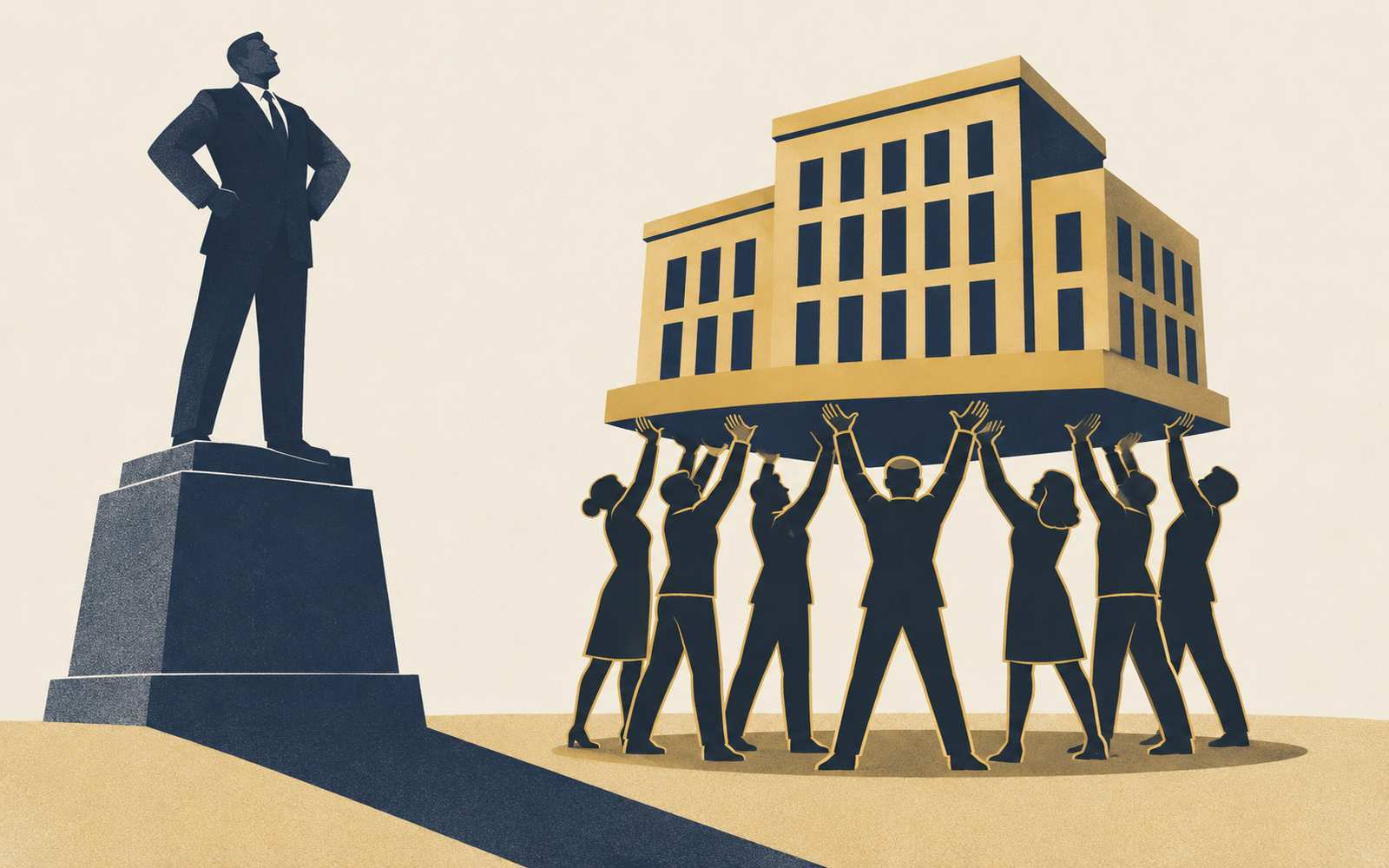
In The Wall Street Journal's CEO Brief, Lila MacLellan shares two moments from the WSJ Tech conference in California where culture took center stage. In What Culture Can Build, she describes Sequoia Capital's Pat Grady explaining why the firm is flattening layers and cutting programs so its partners can move faster in a world changing by the day. Then she turns to Strauss Zelnick, chairman and CEO of Take-Two Interactive, whose Rockstar Games studio is preparing to release Grand Theft Auto VI later this month.
Asked whether he worried about losing long-tenured talent, Zelnick said he values his teams deeply and that the longevity of senior creative and executive teams is strongly tied to long-term success in entertainment. Then he added a twist. If a company is at risk when any one executive leaves, himself included, it isn't really a company. It is "some kind of monument to a human being."
Valuing People Without Depending on One
Zelnick's two statements sound like they pull in opposite directions. Value people so highly that you keep them for decades. Build the company so that no single person is essential. I think he has described exactly the balance most organizations miss.
Many companies fall into one of two traps. In the first, a single leader becomes the culture. Decisions wait for one person, ideas need one person's blessing and everyone learns to anticipate what that person wants. The business may thrive for a while, but its identity is borrowed from one individual. When that person leaves, the company discovers it never knew who it was.
In the second trap, leaders treat people as interchangeable to avoid that risk. Everyone is replaceable, so no one is truly known. That company survives departures, but it rarely gets the best of anyone. People sense quickly when they are seen as a slot to fill.
The healthier path is the one Zelnick hints at. A company stops depending on any one person when it knows many people well. Leaders who understand what each person brings can see who is ready to step up, who holds critical knowledge and where the gaps are. Succession becomes a question of knowing your people rather than hoping someone emerges.
Fewer Layers Means Leaders Have to See More
Grady's comments add a timely layer. Like many organizations in the AI era, Sequoia is flattening its structure so its people can run without jumping through hoops. That can be the right move. Grady's logic is that a world changing this quickly rewards agility, and a firm juggling too many nice-to-have commitments can't move. Fewer layers can mean faster decisions and more ownership.
But flattening also removes many of the people whose job was to know the people. When the middle disappears, someone still has to notice who is struggling, who is ready for more and whose quiet contribution holds a team together. If no one takes on that work, a flatter company becomes a more anonymous one, and decisions start to concentrate around the few voices leaders already know.
This is where a clear structure earns its keep. Shared standards for how people are developed, how decisions get made and how knowledge is passed on are what let a company outlast any individual. The best cultures pair that consistency with leaders who know each person's strengths by name. I wrote about how quickly a team reads whether a leader truly sees them in Your People Can't Follow a Leader Who Can't See Them.
Questions for Leaders This Week
Ask yourself who would make the call on your three most important decisions if you were gone for a month. If the answer is no one, you have built a monument, not a team.
List the five people whose departure would hurt your organization most. Then ask what you know about each of them beyond their role. What do they naturally solve for? Who are they developing?
If you are removing layers, decide who will take on the work of knowing people before the change, not after. Make it someone's real responsibility.
When someone leaves, hold a short conversation with the team about what that person carried that no one wrote down. Then decide together who will pick it up.
And look inside your own walls for the next generation of leaders. They are often already there, waiting for someone to notice. I explored that idea in Your Next Disrupter May Already Be on Your Payroll.
Zelnick told the audience that if he were gone, the company would not miss a beat, and that the next leader might even do a better job. That is a leader who measures himself by what he leaves in others.
A culture is built to last when its identity lives in many people, and every one of them is known for who they are.
Want to explore these ideas further? Learn more about my work on leadership, identity and conviction at www.theglennllopis.com.
A culture is built to last when its identity lives in many people, and every one of them is known for who they are.
© 2026 Glenn Llopis Group, LLC. All rights reserved.
This article is the original work of Glenn Llopis and is protected by copyright. It may not be republished, reproduced, distributed or adapted, in whole or in part, in print, online or by AI tools, without prior written consent. You are welcome to share the link or quote a brief excerpt with credit to Glenn Llopis and a link back to this page. For permission requests, contact solutions@glennllopisgroup.com.
Get the next essay in your inbox
New essays on leadership, identity and conviction, sent to you when they publish. Free, and you can unsubscribe anytime.
Thank you. You're subscribed to Conviction Chronicles.
Something went wrong. Please try again.





