Reinvention
·
Reinvention
Hiding Who You Are Costs More Than Anyone Sees
Playing down who you are to fit in looks harmless from the outside. Research on adults and young teens suggests the cost is real and mostly carried in private. The habit often starts in adolescence, which is exactly why reclaiming it can start there too.
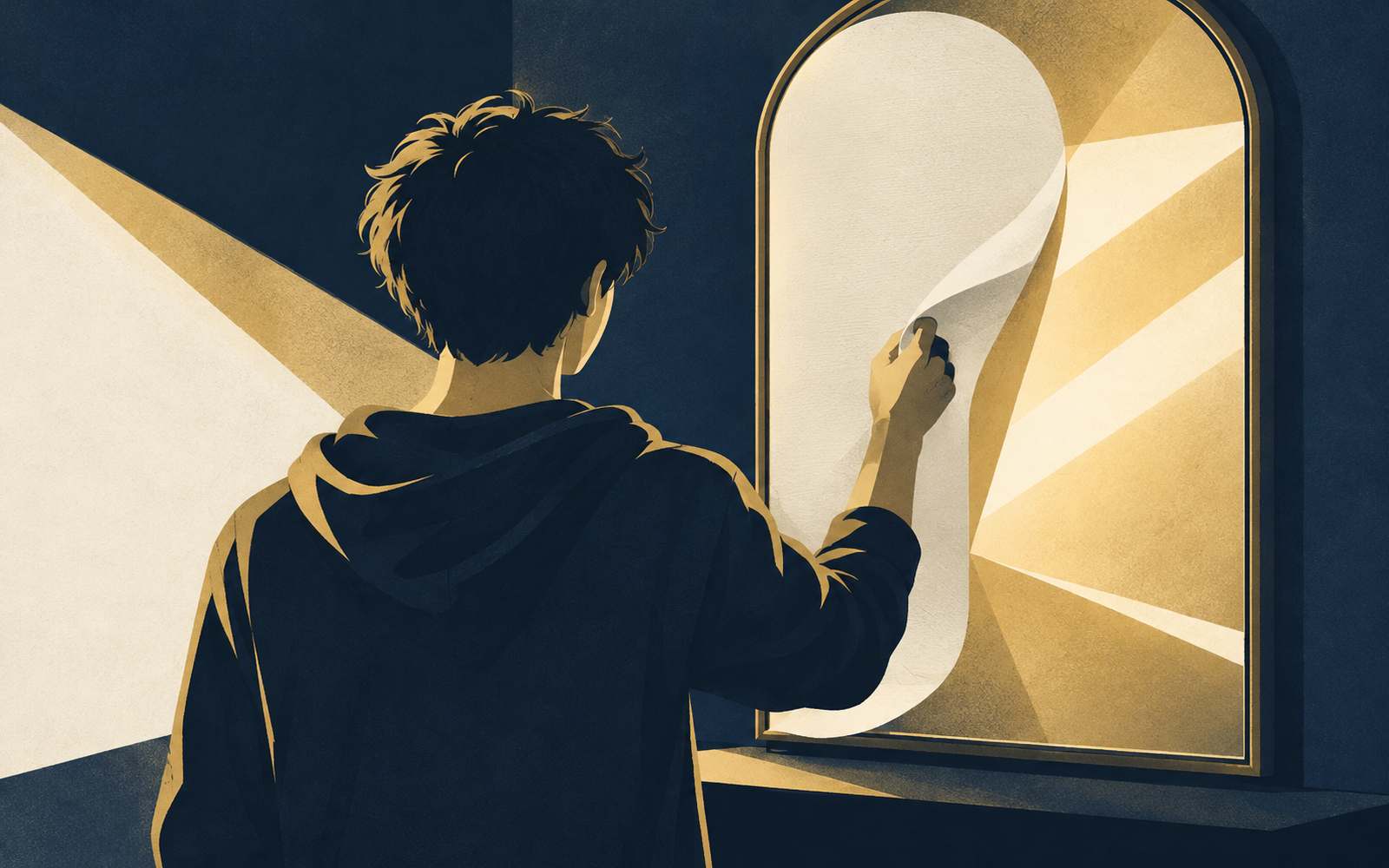
In my first corporate job, I was told I was too passionate. When I shared it with my parents, they didn't tell me to tone it down. They told me to go back and double down on that passion.
I have thought about that moment many times since, and I told the fuller story in The Price and the Payoff of Standing Out. What strikes me now is how unusual their answer was. Most young people get the first message, "be a little less of who you are," and never hear the second. So they comply. They play down the trait, the background or the opinion that doesn't fit. From the outside, nothing looks wrong. The research suggests the cost is real anyway. It is just paid somewhere nobody can see.
The Weight Shows Up When You're Alone
Michael Slepian, a psychologist at Columbia Business School, has spent years studying what it costs people to hide things about themselves. One of his findings surprised me. We tend to assume the hard part of keeping something hidden is the moment of hiding it, the careful conversation, the dodged question. His work points elsewhere.
In a 2025 diary study of 174 adults, with a second study of 133 adults, led by Bianchi with Slepian among the co-authors, people's minds wandered back to their most important secret 2 to 3 times a day on average, while actively concealing it happened less than once a day. In other words, the secret took up far more room in their private thoughts than in their conversations. In a 2024 review of this research, Slepian argues that this returning to the secret, more than the act of hiding, is what goes with lower well-being. Those links are correlational.
A newer paper gets closer to the act of editing yourself. A team led by Brown, with Slepian, studied 1,648 adults aged 18 to 79 across six studies covering more than 22,000 moments when people felt a part of their identity was under threat. Playing that identity down was the strongest predictor of feeling inauthentic. In a seven-day experiment within the paper, people randomly assigned to distance themselves from a threatened identity, by downplaying it or stressing how similar they were to everyone else, came to identify less with it and felt less authentic.
I need to say this plainly: these are studies of adults, not teenagers. Applying them to a 14-year-old is my extrapolation, not Slepian's finding. But after decades of working with leaders, I'm convinced the habit of playing yourself down rarely begins at work. As I wrote in The Exhausted Executive Was Once a Kid, it usually starts much earlier.
When Fitting In Becomes a Demand
Some research with younger people shows how much pressure can surround that early editing. A team led by first author Stanaland, and including Sarah Gaither at Duke University, worked with 207 boys aged 10 to 14, plus one parent each. The boys were randomly told that a test showed they were either typical or atypical for their gender. Among boys in mid-to-late puberty, though not boys earlier in puberty, hearing they were atypical predicted an aggressive reaction, especially among boys who felt pressured, rather than freely motivated, to fit the expected mold. That sense of pressure went with feeling that parents and peers would disapprove.
The feedback was randomized, but the role of puberty and pressure was measured rather than assigned, so those parts are associations. Still, the pattern is worth holding onto. When fitting in is something a young person feels they owe others, a threat to that fit lands hard.
Rebecca Covarrubias at UC Santa Cruz looks at this from another angle. In interviews with 35 low-income, first-generation, Mexican-heritage high school seniors, she and her co-author Valle found the students didn't experience a clean split between an independent school world and an interdependent home world. They were working out who they had been and who they were becoming in an in-between space. Covarrubias argues that schools and colleges should build on the cultural strengths students bring instead of asking them to trade those strengths away. She frames that as a job for institutions, not something students should have to fix alone.
Taking Back What Got Edited Out
When people hear the word reinvention, they often picture becoming someone new. I have come to see it differently. Much of real reinvention is reclamation: going back for the parts of yourself you learned to hide and deciding they belong in your life after all. That is the heart of my work with teens and parents through Teens UnEdited, because the earlier a young person claims who they are, the less there is to reclaim later.
Notice what your teen has stopped doing. A dropped instrument, a quieter voice at dinner, a sense of humor that only shows up at home. Ask about it with curiosity, not alarm.
When someone tells your teen they are "too much" of something, listen before you agree. Sometimes the feedback is fair. Sometimes it is a request to shrink. Help your teen tell the difference.
Separate adjusting from hiding. Every room has norms, and adapting how you speak in a job interview is a useful skill. Erasing what you value to stay comfortable in that room is something else.
My parents could have told me to blend in. They gave me permission to stay myself instead. The parts of yourself you learned to hide are rarely gone; they are waiting for you to decide they were worth keeping. Your teen deserves to hear the same thing from you, out loud, before someone else teaches them the opposite.
Research cited
Bianchi, V., et al. (2024). Secrecy in everyday life. Personality and Social Psychology Bulletin.
Slepian, M. L. (2024). The new psychology of secrecy. Current Directions in Psychological Science.
Brown, N. D., et al. (2026). Managing threatened identities across everyday situations. Journal of Experimental Social Psychology.
Stanaland, A., et al. (2024). Adolescent boys' aggressive responses to perceived threats to their gender typicality. Developmental Science.
Covarrubias, R., & Valle, I. (2023). In the in-between: Low-income Latinx students' sensemaking of paradoxes of independence and interdependence. Personality and Social Psychology Bulletin.
Want to explore these ideas further? Learn more about my work on leadership, identity and conviction at www.theglennllopis.com.
The parts of yourself you learned to hide are rarely gone; they are waiting for you to decide they were worth keeping.
© 2026 Glenn Llopis Group, LLC. All rights reserved.
This article is the original work of Glenn Llopis and is protected by copyright. It may not be republished, reproduced, distributed or adapted, in whole or in part, in print, online or by AI tools, without prior written consent. You are welcome to share the link or quote a brief excerpt with credit to Glenn Llopis and a link back to this page. For permission requests, contact solutions@glennllopisgroup.com.
Get the next essay in your inbox
New essays on leadership, identity and conviction, sent to you when they publish. Free, and you can unsubscribe anytime.
Thank you. You're subscribed to Conviction Chronicles.
Something went wrong. Please try again.