Opportunity
·
Self-Awareness
Parents Have Never Had More Updates. Many Know Less About Their Kids.
In The Atlantic, Stephanie H. Murray shows how school apps bury parents in updates while many still misread how their children are doing. The deeper issue is that being informed about a child is not the same as knowing them. That comes from conversations no app can carry.
What the Headlines Miss · Responding to
The School Apps Are Out of Control
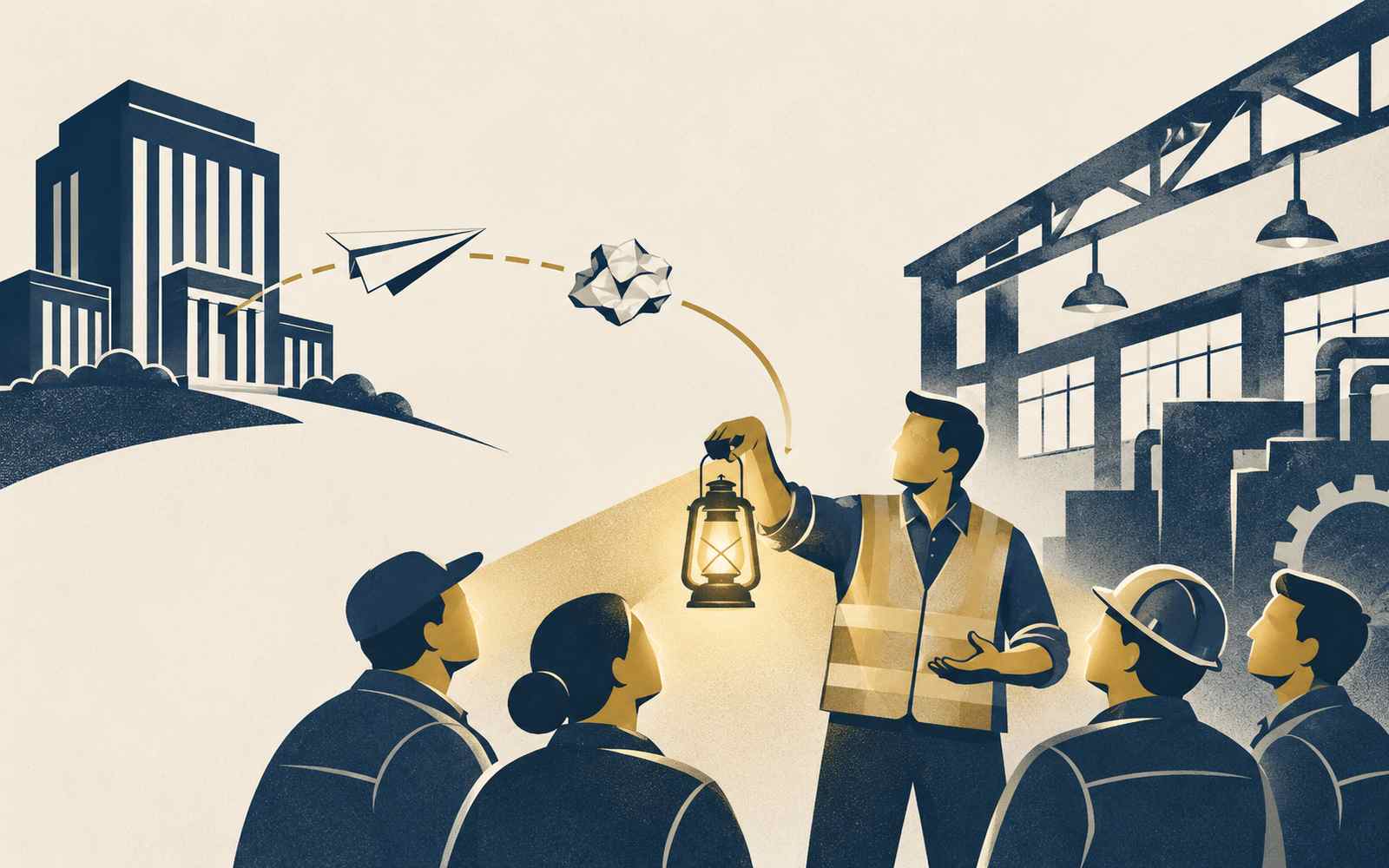
In The Atlantic, Stephanie H. Murray describes a problem most parents will recognize the moment they read the headline. In The School Apps Are Out of Control, she lists the folders, binders, newsletters, texts and the growing stack of apps her children's school uses to reach her. One mother she interviewed has four different apps for children who all attend the same school. Murray's conclusion is that parents are getting too much information and too little at the same time.
The research she cites makes the gap concrete. In Learning Heroes' 2026 national parent survey, 88% of parents say their child is at or above grade level in reading, and 83% say the same about math. Yet Murray notes, citing federal data compiled from state scores, that in most states fewer than half of students meet those expectations. Murray points to grade inflation and to a quieter problem: as the founder of Learning Heroes told her, "teachers are not trained or expected to tell parents the whole picture."
Information Is Not the Same as Knowing
Murray frames this as a communication problem, and she is right that the apps are a mess. But I think something deeper is happening underneath the notifications. We have confused being informed about our children with knowing them.
A grade, a behavior log and a reminder about Pajama Day are all facts about a child. None of them tells a parent how that child is actually doing: whether she is quietly falling behind, whether he has stopped raising his hand, whether the subject that used to light them up has gone dark. Those things show up in a conversation, not a dashboard. When every update arrives through a screen, it becomes easy to feel connected while missing the one signal that matters.
The same thing happens in organizations. Leaders get more data about their people than ever, and many of them know their people less. A well-built system can create the illusion that someone is paying attention. Schools and families are now living with their own version of it.
I made a related point about classroom technology in One-to-One Was Supposed to Mean a Laptop. It Should Mean an Adult. The device was never the relationship. Neither is the app.
Parents Have to Be Willing to Hear It
Murray is also fair to teachers, and that matters. Many teachers would love fewer apps, but schools add tools piecemeal and rarely retire the old ones. She notes that some parents are hard to reach and some don't want to hear bad news. One teacher told her that a real concern about a child is not a conversation for a messaging platform.
That is where parents come in. It is tempting to treat a steady stream of school updates as proof that everything is fine. But a child's identity is forming in the years when we are most likely to be reading notifications instead of asking questions. The most important information about how a young person is doing often lives in what they don't say: the class they stopped mentioning, the friend who disappeared from dinner conversation, the effort that quietly dropped.
None of this is an argument against structure. Clear, consistent measures of whether a child is on track are exactly what parents need, and schools that share them plainly do families a real service. A good system tells parents where to look. Only a relationship tells them what they are seeing.
What Parents and Schools Can Do This Month
For parents: once a week, put the apps down and ask your child one question no app can answer. What felt hard this week? What did you figure out on your own? Listen for what lights them up and what they avoid.
Ask your child's teacher directly whether your child is working at grade level, not just whether the grades are good. Then ask what the teacher has noticed about how your child learns.
Go to the conference, even when the report card looks fine. That is often when you learn the things no one would ever post.
For school leaders: count your communication tools and retire half of them. Then protect teacher time for the conversations that actually change outcomes, especially the hard ones.
And for both: agree on one clear signal of whether a child is on track, and say it in plain language. Fewer messages, more meaning.
I have long believed that young people do best when at least one adult truly knows them, not just their scores. I wrote about helping teens see themselves clearly in The Best Screen-Time Limit Is a Future Self. The same is true for parents. The clearest view of our children rarely comes through a screen.
The more updates we receive about our children, the more deliberately we have to make time to know who they are becoming.
Want to explore these ideas further? Learn more about my work on leadership, identity and conviction at www.theglennllopis.com.
The more updates we receive about our children, the more deliberately we have to make time to know who they are becoming.
© 2026 Glenn Llopis Group, LLC. All rights reserved.
This article is the original work of Glenn Llopis and is protected by copyright. It may not be republished, reproduced, distributed or adapted, in whole or in part, in print, online or by AI tools, without prior written consent. You are welcome to share the link or quote a brief excerpt with credit to Glenn Llopis and a link back to this page. For permission requests, contact solutions@glennllopisgroup.com.
Get the next essay in your inbox
New essays on leadership, identity and conviction, sent to you when they publish. Free, and you can unsubscribe anytime.
Thank you. You're subscribed to Conviction Chronicles.
Something went wrong. Please try again.