Reinvention
·
Resilience
Stop Passing the Pressure Down
Eduardo Criado learned that what got him to the top wouldn't carry him further. His body told him first.
Eduardo Criado spent years selling health plans to employers. Part of his pitch was a truth he understood well: how much an employer's people use their health plan mirrors how well they are doing.
At our Human Capital Reinvention forum in Puerto Rico, he admitted that he hadn't applied that truth to himself. His own drive for results showed up as stress-related gout attacks, about once a quarter.
It was an honest admission from a successful executive, and it set up one of the most important lessons of the day.
What got you here won't take you further
Eduardo had to learn that the habits that made him successful were the same ones now limiting him. Pushing harder had worked for years. It had built his career and his reputation. But it was costing him his health, and it was shaping how his team experienced him.
Many leaders recognize this pattern. The intensity that once set them apart becomes the thing that wears them, and everyone around them, down. They keep reaching for it because it is familiar, even after it stops producing the results it once did.
Eduardo described the same pattern at the organizational level. "Year after year, we run the same strategic planning sessions. We do the same SWOT analyses. And yet, nothing changes." The process becomes a ritual. Everyone participates, nothing moves, and next year the same exercise begins again.
Share the pressure instead of passing it down
The most practical change Eduardo made was in how he handled pressure. Instead of passing it down to his team, he learned to share it with them.
Those sound similar. They aren't.
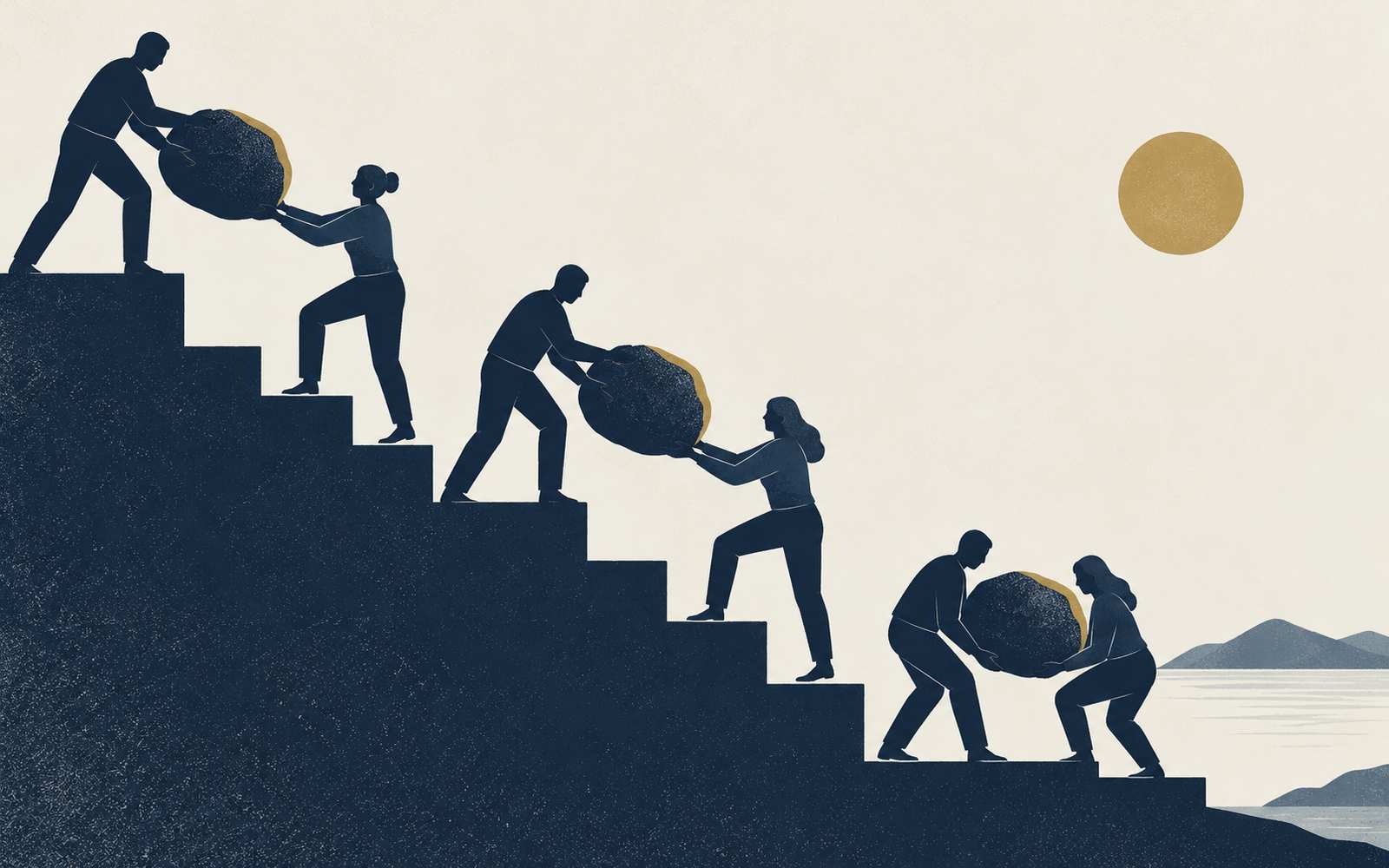
Passing pressure down means taking the demands placed on you and pushing them onto the people below, often with less context and more urgency. Each layer adds a little stress and removes a little understanding. By the time the pressure reaches the front line, it feels arbitrary.
Sharing pressure means bringing people into the problem. You explain what is at stake, why it matters and what you are carrying. You ask for their thinking. People can handle a great deal of pressure when they understand it and feel trusted to help. What wears them down is pressure without meaning.
Part of that shift was personal. Eduardo admitted that, like most leaders, he believed he had to have every answer himself. Then he had a teenager, and learned how little anyone controls. He started talking through problems with colleagues instead of carrying them alone, and the load got lighter.
Don't be a dream killer
Eduardo used a phrase I keep coming back to. Reinvention taught him to stop being a dream killer, at work and with his own children.
Leaders kill dreams in small ways. A quick "that won't work." A raised eyebrow at an idea that doesn't fit the plan. A habit of answering every new suggestion with the reasons it will fail. None of it feels like a big deal in the moment. Over time, people stop bringing ideas at all.
The same habits follow us home. A parent who meets every ambition with practical objections teaches a child to keep their dreams private. Eduardo saw that he was doing both, and decided to change.
Eduardo also offered one of the clearest definitions of inclusion I heard all day. Inclusion, he said, is where diversity is supposed to lead: recognizing different ways of thinking, accepting them and working toward alignment. An inclusive culture is one of openness, with little censorship and room for deep dialogue. That is the opposite of a culture of dream killers.
He sees the same shift in his own business. When everything is sold on price, he said, the cheapest option wins and the relationship becomes a commodity. The only way out is to add real value, and that requires people who are free to think differently about the client in front of them.
And he named why so few leaders get there. Every January we make resolutions about our weight or our habits, he said, but rarely about how we will grow as human beings. We run on autopilot, checking items off a list, and never make the time to step back and rethink.
Questions to ask yourself
- What is your body telling you about how you lead?
- Which planning rituals in your organization produce documents instead of change?
- When pressure lands on you, do you explain it or simply pass it on?
- When someone shares an idea, how quickly do you list the reasons it won't work?
Eduardo described the discipline behind his change as learning, unlearning and relearning, then repeating. He also told us his well-being and state of mind came back once he started practicing it. That may be the best measure of all.
You can watch Eduardo's full talk in Challenging the Status Quo, and the rest of the Human Capital Reinvention season.
Leaders don't have to carry everything alone, and they certainly shouldn't hand it all down. The ones who share the weight build teams that grow stronger under pressure instead of breaking beneath it.
Want to explore these ideas further? Learn more about my work on leadership, identity and conviction at www.theglennllopis.com.
A leader's job is to share the weight of pressure, not to hand it down the line.
© 2026 Glenn Llopis. All rights reserved.
This article is the original work of Glenn Llopis and is protected by copyright. It may not be republished, reproduced, distributed or adapted, in whole or in part, in print, online or by AI tools, without prior written consent. You are welcome to share the link or quote a brief excerpt with credit to Glenn Llopis and a link back to this page. For permission requests, contact solutions@glennllopisgroup.com.
Get the next essay in your inbox
New essays on leadership, identity and conviction, sent to you when they publish. Free, and you can unsubscribe anytime.
Thank you. You're subscribed to Conviction Chronicles.
Something went wrong. Please try again.