Individuality
·
Transformation
The Training Ground Is Disappearing, and It Starts in High School
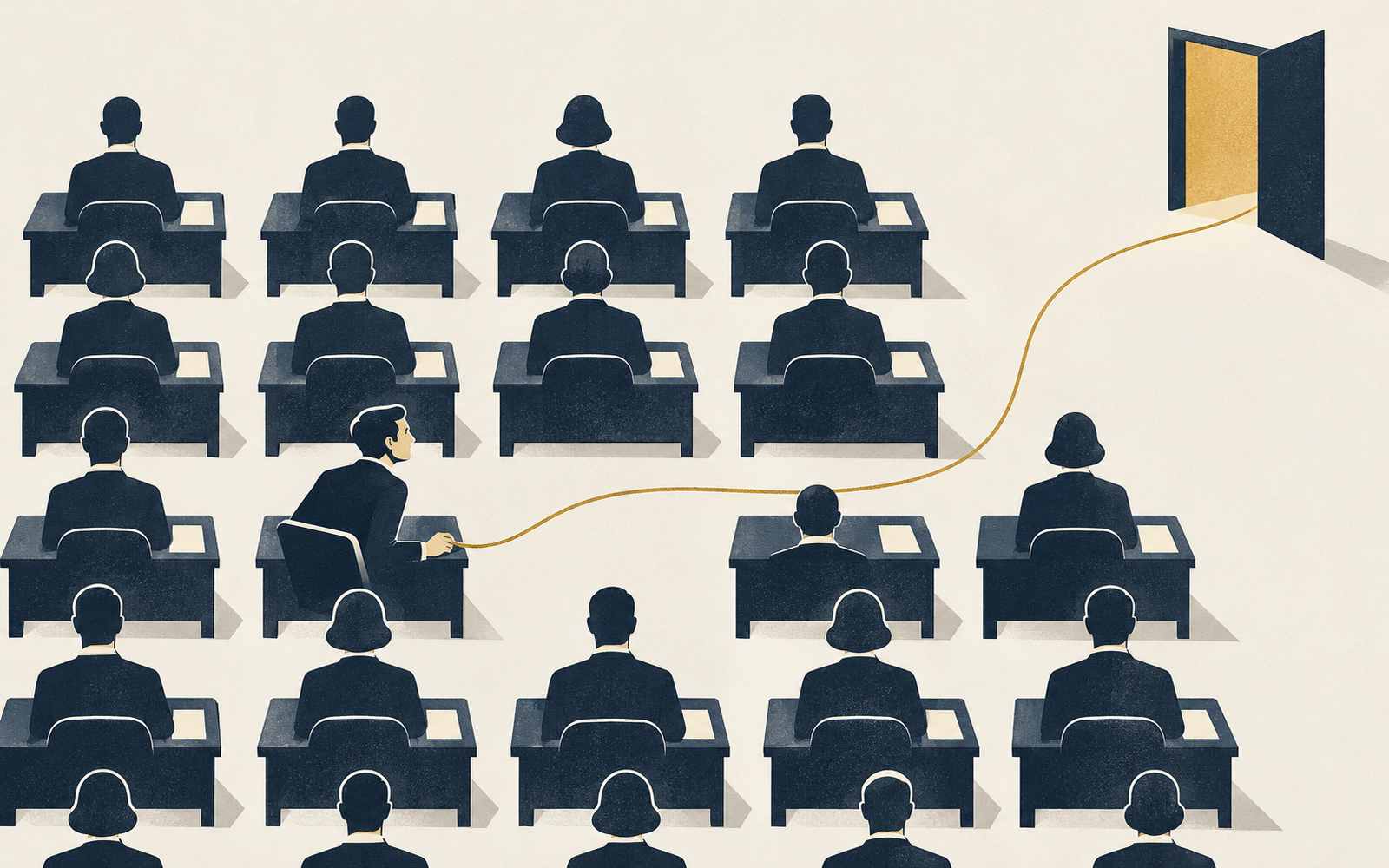
Of the 50 CEOs Deloitte interviewed, 38 warned that AI may erase the routine work where young people learn judgment. That training ground does not start in the first job. It starts in high school, and parents and teachers can protect it.
What the Headlines Miss · Responding to
Artificial Intelligence. Original Advantage. CEO AI Leadership Report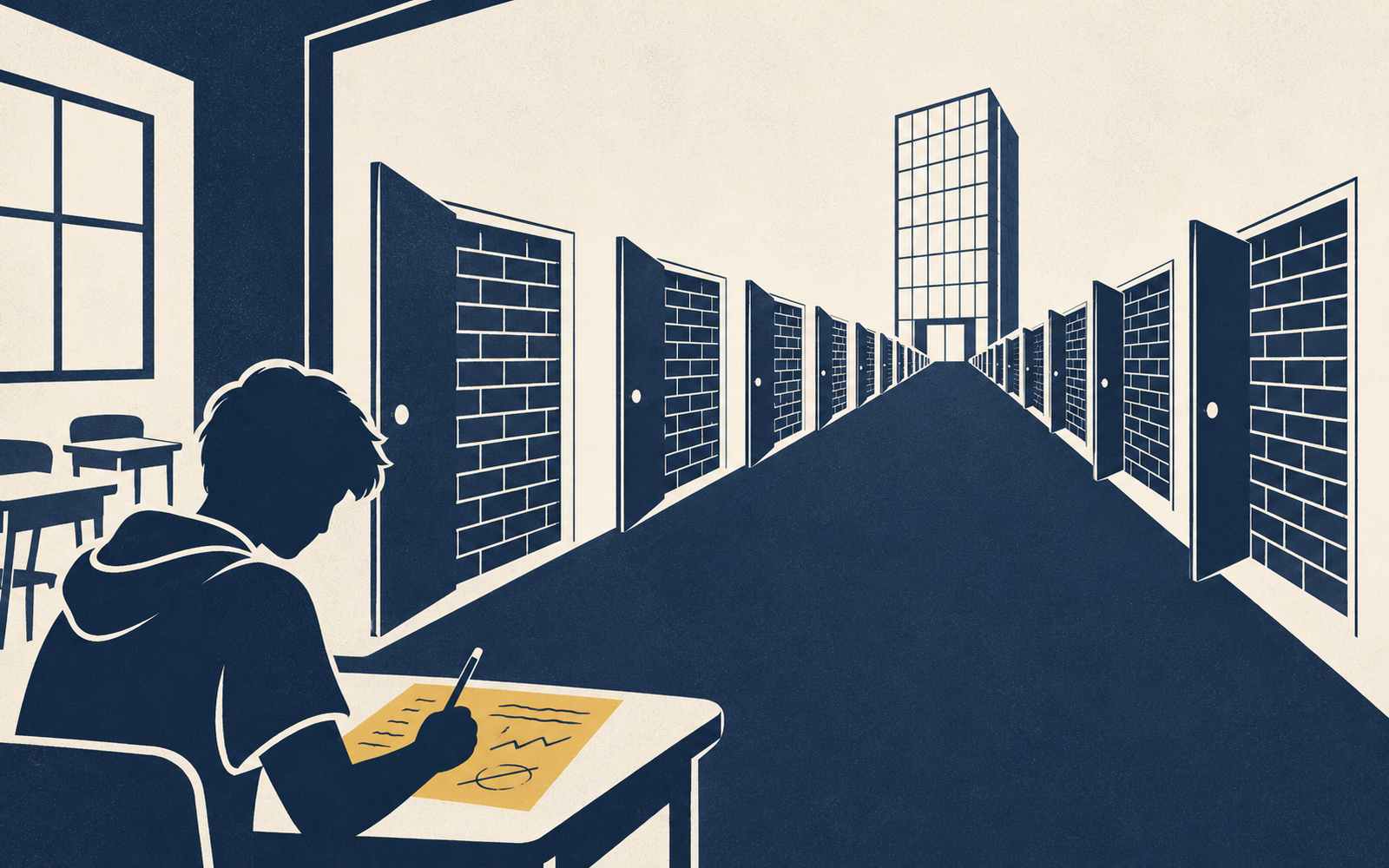
Ask almost any executive how they learned to make good decisions, and the answer is rarely a course. It is a first job. The report nobody wanted to write. The client call that went sideways. The small judgment calls that were too routine to matter to anyone senior, and exactly the right size for someone learning.
Deloitte has just put a number on what happens when that work disappears. For its new CEO AI Leadership Report, Artificial Intelligence. Original Advantage., the firm surveyed 1,278 business leaders across 18 APEC economies, including the United States, Canada and Mexico, plus India, and interviewed 50 CEOs and senior executives. Of those 50, 38 raised a danger Deloitte calls capability debt: the efficiency AI delivers today may come at the cost of the exceptions and judgment calls that junior staff have always learned by doing.
That is a workplace finding, and the report is about companies, not teenagers. I wrote about what it means for leaders in AI Is Abundant. Originality Still Comes From People. But read it as a parent or a teacher and it lands somewhere much closer to home. The training ground those CEOs are worried about does not start in the first job. It starts in high school.
The Messy First Draft Was the Lesson
For a teenager, the equivalent of that routine first-job work is the assignment nobody is excited about. The essay that has to start from a blank page. The lab write-up where the data does not quite say what you hoped. The math problem you have to sit with before it makes sense.
Those moments are uncomfortable on purpose. Struggling to find the words is how a young person discovers what they actually think. Deciding which evidence matters is how judgment gets built. Now an AI tool can hand back a clean first draft before that struggle begins. The work gets done. The muscle the work was meant to build does not.
Teens are noticing it themselves. In a nationally representative survey of 1,017 U.S. teens conducted for Common Sense Media by NORC at the University of Chicago this spring, 70% said they use AI for schoolwork. Among those who do, 39% said they feel they miss out on learning when AI completes their assignments. And only 27% of all the teens surveyed said a teacher had ever talked with them about what AI is and how it works.
I want to be fair here. AI is not the enemy of learning, and the report is not anti-AI either. Deloitte's own point is that the companies pulling ahead use AI to move people toward framing problems and developing judgment, not away from it. The question is not whether teens use these tools. It is what is left for them to practice once they do.
What the Companies Getting It Right Are Doing
One example in the report stayed with me. At a pharmaceutical company, a quality analyst caught a defect an AI model had missed and overrode its recommendation on a batch that had already been cleared. The company responded by treating a caught model error the way it treats a caught product defect. In other words, it rewarded the person who noticed what the machine did not.
That analyst did not learn to see that defect from a dashboard. Somewhere along the way, someone let them make calls, get some wrong and build the instinct to question a confident answer. That is the capacity we want for our kids, and it is built the same way: by giving them real decisions before the stakes are high.
For years I have argued that when everyone has access to the same tools and the same playbook, the only advantage left is what is original to you. Deloitte now calls the distance between using AI and owning an advantage the Originality Gap. For a teenager, closing it starts with protecting the part of school where they figure out how they think.
Protecting the Training Ground at Home and at School
Ask for the thinking, not just the product. When your teen finishes an assignment, ask what they decided and why. Which source did they trust? What did they leave out? If they can't answer, the tool did the deciding.
Keep one blank page a week. Pick one piece of work where the first draft is theirs alone, start to finish. It can be rough. Rough is where the learning lives.
Teachers, grade the judgment calls. Give credit for the moment a student questions a source, catches an error or explains why they chose one approach over another. What gets noticed gets practiced.
Celebrate the catch. When your teen spots something wrong in an AI answer, make a bigger deal of that than of the polished result. That is the analyst's instinct, showing up early.
Let small decisions be theirs. Judgment is not taught in a lecture. It is earned in low-stakes calls they get to own, including the ones that go wrong.
The executives Deloitte interviewed are worried about who will make the hard calls ten years from now if no one practices the small ones today. Parents and educators can answer that worry before it ever reaches a workplace. The judgment our kids will need at work is being built, or skipped, at the kitchen table and in the classroom right now.
A tool can finish the assignment. Only the struggle can build the person who knows what to do with the answer.
Want to explore these ideas further? Learn more about my work on leadership, identity and conviction at www.theglennllopis.com.
A tool can finish the assignment. Only the struggle can build the person who knows what to do with the answer.
© 2026 Glenn Llopis Group, LLC. All rights reserved.
This article is the original work of Glenn Llopis and is protected by copyright. It may not be republished, reproduced, distributed or adapted, in whole or in part, in print, online or by AI tools, without prior written consent. You are welcome to share the link or quote a brief excerpt with credit to Glenn Llopis and a link back to this page. For permission requests, contact solutions@glennllopisgroup.com.
Get the next essay in your inbox
New essays on leadership, identity and conviction, sent to you when they publish. Free, and you can unsubscribe anytime.
Thank you. You're subscribed to Conviction Chronicles.
Something went wrong. Please try again.