.svg)
Reinvention
·
Transformation
Vulnerability Is How Organizations Evolve
Organizations cannot evolve faster than their senior leaders are willing to. Vulnerability is not a personal trait to admire. It is an organizational strategy that makes evolution possible.
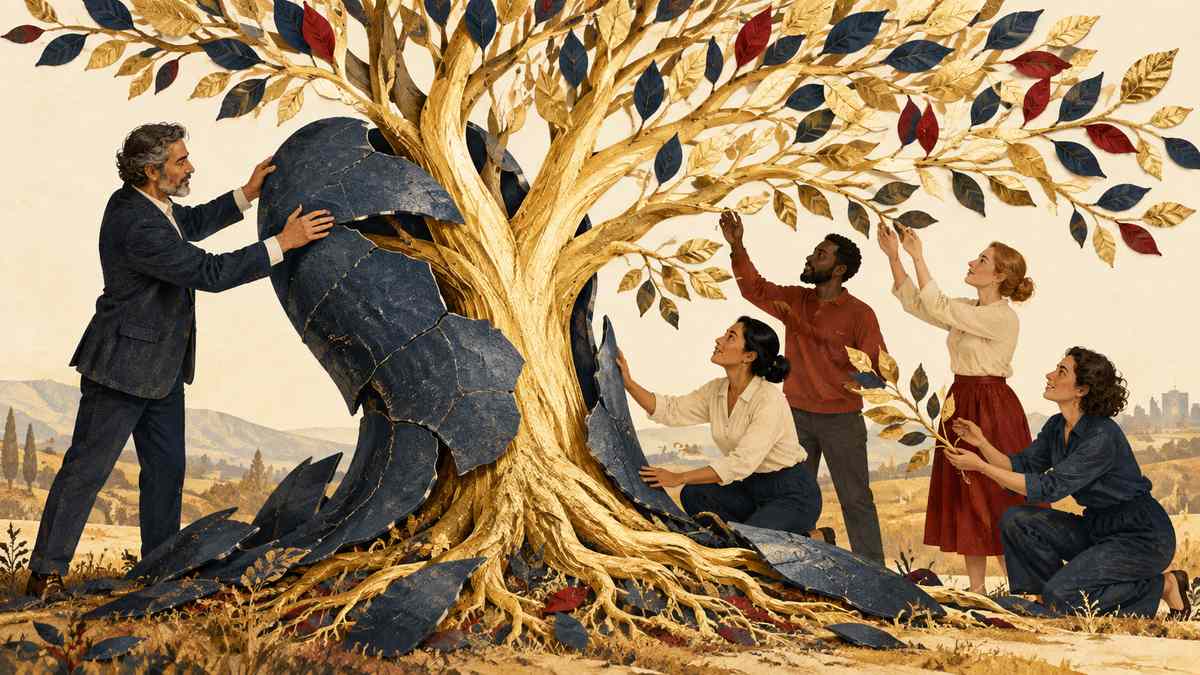
"Our leadership is not ready to accept change in order for the business to evolve." A director said that to me after a keynote, speaking for a group of peers, and it named a problem I keep seeing. Companies expect to grow and compete while their leaders are not vulnerable enough to evolve.
The pattern repeats. Leaders become more of what their peers and their environment expect them to be, rather than who they are. Meanwhile, the marketplace demands new thinking. Business models are being rebuilt, and customers expect experiences personalized to them.
Organizations must break free from substitutional thinking, swapping one familiar approach for another, and commit to constant evolution with the end game in mind. That shift requires leaders to admit that the old ways no longer apply as much as they once did. That admission is the heart of vulnerability.
The Message Directors Heard First
The keynote was for a group of Fortune 500 executives who wanted to refresh their corporate culture and find new ways to evolve their business. My message was that it is becoming less about the business defining the individual and more about the individual defining the business. For the business to evolve, leaders must take greater ownership of evolving themselves.
To my surprise, the people who embraced that message most were the directors and senior directors. Afterward, several approached me. One spoke for the group: "Mr. Llopis, did you notice that the majority of the reactions and questions came from us, and not many VPs and EVPs? Our leadership is not ready to accept change in order for the business to evolve. It disappoints us that they are not willing to be vulnerable at a time when we must all have each other's backs if we are to grow together as a team. We are deeply concerned."
That conversation has stayed with me ever since. When leaders lack the courage to be vulnerable, they disappoint the people they lead, often without realizing it, and begin to lose their respect. They hide their insecurities behind titles and tenure in an attempt to play it safe.
Why This Is an Organizational Issue
Vulnerability is usually discussed as a personal quality. I see it as a strategic one. An organization cannot evolve faster than its senior leaders are willing to.
Plenty of leaders, especially near the top, are afraid to admit they have an identity crisis of their own. The approach that made them successful a decade ago may no longer fit the moment. When they cling to it, they create tension, confusion and politics. Top talent in the middle and near the top starts to lose respect for senior leadership and to question its own loyalty and long-term future in the organization.
From Engagement to Intimacy
Leaders must be willing to get their hands dirty and touch the business as much as they lead it. The minute they stop touching it is the minute they stop understanding what it needs to evolve.
Engagement is like an initiative that comes and goes. Intimacy with the business requires a connection that never ends. Leaders who fear evolution often fear exactly that, because intimacy demands more accountability and leaves nowhere to hide.
Throw Your Title Out the Door
My challenge to leaders is simple: throw your title out the door and accept that vulnerability is a responsibility of leadership. Earn what the title represents. If you won't embrace vulnerability as a responsibility, your leadership will be short-lived, and lost respect is hard to regain.
I have challenged plenty of leaders with one question: what type of leader are you when your title and company logo disappear? Great leaders are not dependent on either. When a leader's identity depends on a business card, the marketplace passes them by. Lasting success is designed, and the design starts with leaders who lead from their identity rather than their position.
Start Where the Titles Are Biggest
- Go first. Senior leaders should be the first to name what they are unlearning, not the last.
- Listen to the middle. Directors and managers often see the need for change earliest. Create forums where their voices reach the top.
- Replace substitution with evolution. Before approving a new initiative, ask whether it evolves the business or just swaps one familiar method for another.
- Stay close to the work. Schedule regular time with customers and frontline teams, not just reports about them.
- Ask the title question. Invite each leader on your team to answer who they are without their title.
Leaders don't have all the answers. They never did. But they do have to be vulnerable, and the great ones always are. Powerful things happen when they are: transparency leads to trust, respect is earned and multiplied, work becomes energizing again and the leader, once at risk of becoming extinct, starts to evolve along with the organization. That is the difference between substitution and evolution.
Want to explore these ideas further? Learn more about my work on leadership, identity and conviction at www.theglennllopis.com.



.svg)
.svg)
.svg)
.svg)
.svg)
.svg)
