Individuality
·
Trust
What a Board Learns When It Finally Assesses Itself
Boards evaluate everyone else. The most revealing review is the one they turn on themselves.

Boards spend their time judging others. They evaluate the CEO, review the strategy, scrutinize the numbers and sign off on executive pay. It's natural to assume they hold themselves to the same standard. Increasingly they do, and what they find can be surprising.
In How Boards Work, Dambisa Moyo, who has served on boards from Barclays to Chevron, describes the formal board assessment as "a barometer of the inner workings of the board team as well as the collaboration between the board and management." She cites a 2018 report from the Harvard Law School Forum on Corporate Governance finding that 93 percent of Fortune 100 boards undergo some form of evaluation.
The detail that stayed with me is one she shares from her own experience. On a few occasions, she writes, an assessment revealed discord among board members and between the board and management, "none of which had been previously apparent."
Why the meeting room hides the truth
How can a group that meets regularly fail to notice its own tension? Anyone who has served on a board knows the answer. Board meetings are designed for decisions, not candor. Agendas are full, time is short and the culture rewards consensus. Disagreement gets softened into a polite question. Frustration gets saved for the car ride home.
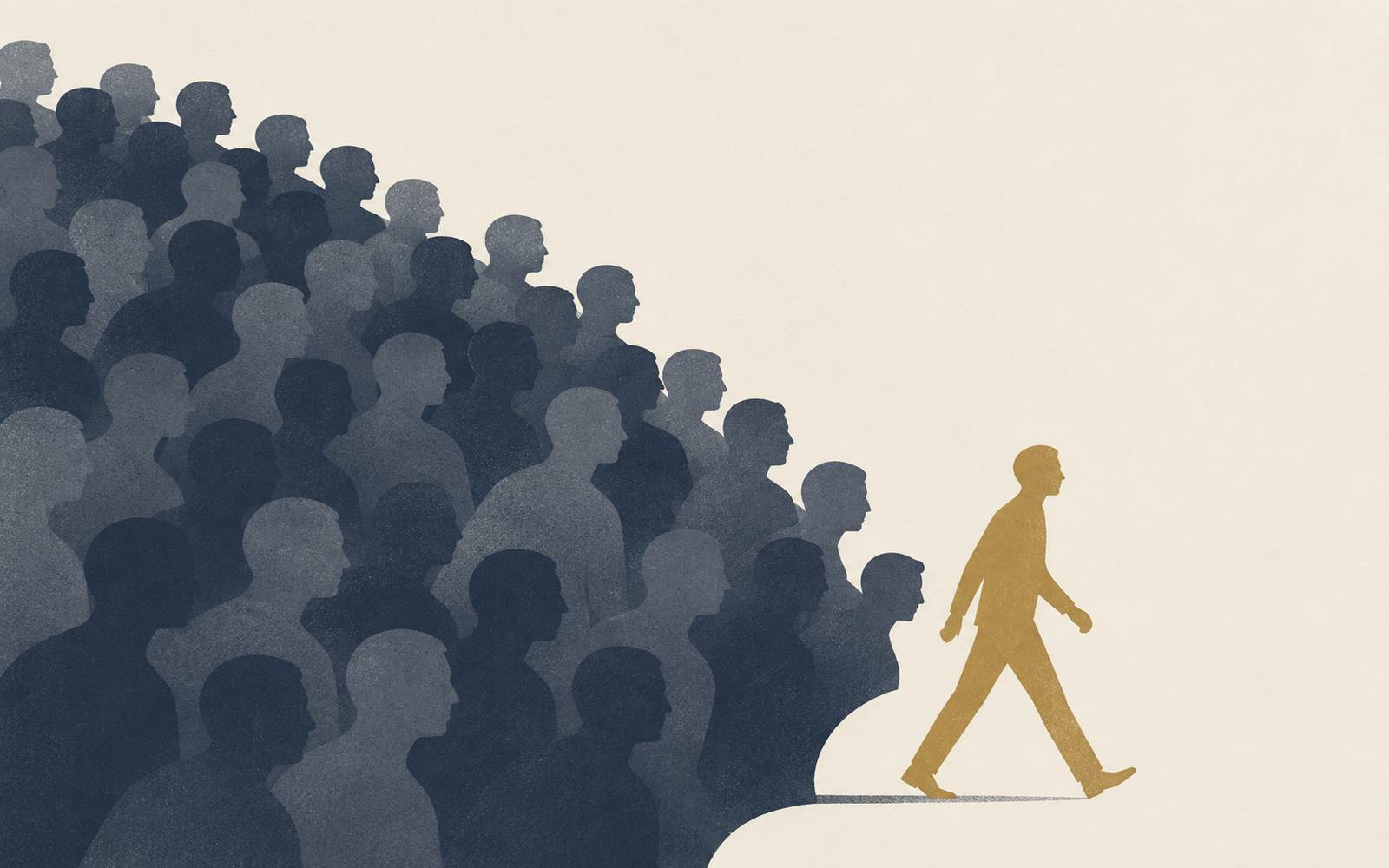
Over time, those unspoken differences shape the board's behavior. Some voices dominate. Others go quiet. Decisions get made by the few who feel safe enough to speak. From the outside, the board looks unified. On the inside, it's operating well below its potential.
What a good assessment actually measures
Moyo points to Jeffrey Sonnenfeld's Harvard Business Review article, "What Makes Great Boards Great," to describe what assessments can reveal: whether the board has access to the information it needs, whether candor, energy and engagement are high, and how individual directors contribute, including their interpersonal styles and initiative. Most reviews combine a full board evaluation, individual self-assessments and peer feedback.
I would add one thing from my own work measuring behavior. The most useful assessments don't just ask whether the board is doing its job. They ask how each individual is showing up, and whether the environment allows them to bring what they uniquely offer.
When we look at how people respond on the Workplace Serendipity Assessment, a consistent pattern appears. People are capable of seeing what's happening around them. The struggle is acting on it, sharing it and trusting their own judgment, especially in environments that judge opinions instead of welcoming a different point of view. Boards are not immune to that dynamic. A director who sees a problem but doesn't feel safe raising it is a cost the board never records.
A board is a team of individuals
Sonnenfeld's conclusion, which Moyo quotes, says it well: a great board must become "a robust team," with members who "know how to ferret out the truth, challenge one another, and even have a good fight now and then."
That doesn't happen by accident. It happens when each director knows their role, trusts the others enough to disagree and believes their perspective is actually wanted. Those are questions of individuality and trust as much as governance. A board that treats its members as interchangeable seats gets interchangeable contributions.
Questions every board, and every leadership team, should ask
What do we know about each other that we've never said out loud? An honest assessment gives people a safe channel to say it.
Whose voice is missing from our decisions? Look past attendance to influence. Who speaks, who gets heard and who has stopped trying?
Are we measuring behavior or just outcomes? Results tell you what happened. Behavior tells you what will happen next.
The courage to look in the mirror
It takes humility for a group of accomplished people to evaluate themselves. It also takes conviction, because what you find may require you to change how you work together.
That is precisely the point. Boards ask organizations to face hard truths every day. The ones that earn the most trust are willing to face their own first.
This essay responds to ideas in How Boards Work by Dambisa Moyo (Basic Books, 2021). The Harvard Law School Forum figure and the Sonnenfeld findings are as cited in her book.
See how I work with leadership teams on Solutions.
Want to explore these ideas further? Learn more about my work on leadership, identity and conviction at www.theglennllopis.com.
A board that never examines itself is asking everyone else to be braver than it is.
© 2026 Glenn Llopis Group, LLC. All rights reserved.
This article is the original work of Glenn Llopis and is protected by copyright. It may not be republished, reproduced, distributed or adapted, in whole or in part, in print, online or by AI tools, without prior written consent. You are welcome to share the link or quote a brief excerpt with credit to Glenn Llopis and a link back to this page. For permission requests, contact solutions@glennllopisgroup.com.
Get the next essay in your inbox
New essays on leadership, identity and conviction, sent to you when they publish. Free, and you can unsubscribe anytime.
Thank you. You're subscribed to Conviction Chronicles.
Something went wrong. Please try again.