.svg)
The president and CEO of the Latino Donor Collaborative tells Glenn Llopis why she argues from data rather than good intentions, what a first-generation student taught her about brand loyalty, and why a community has not been allowed to be proud.
Ana Valdez
President and CEO, Latino Donor Collaborative (at the time of recording)
Latino Donor Collaborative
·
Personalization Outbreak podcast
·
63
min
·
Episode
122
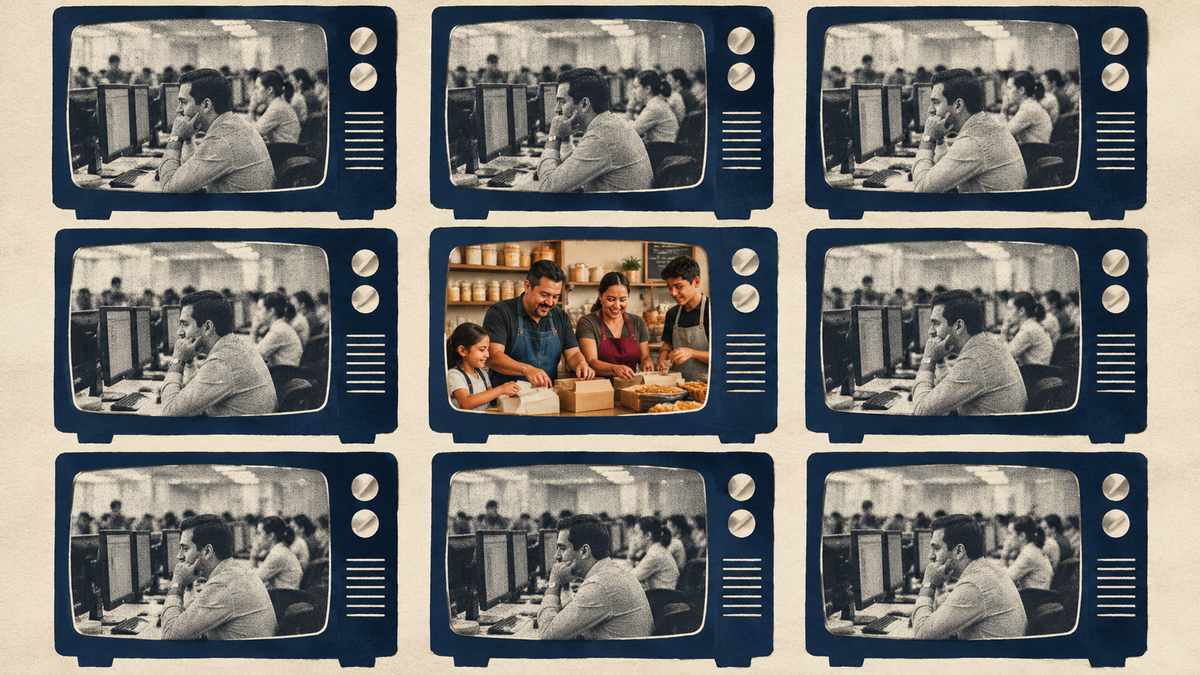
No, this is not an experiment. This is facts. I'm telling you mathematically where the growth is coming from and that you have to know that segment because if not, you won't grow.
Ana Valdez
Ana Valdez is president and CEO of the Latino Donor Collaborative, a think tank founded in 2010 after a wave of profiling made a group of Latino business leaders decide the community needed evidence rather than argument. Its focus is narrow on purpose: the economic contribution of U.S. Latinos. As Valdez puts it, stereotypes do not only wound people, they stop decision-makers from making good decisions.
Glenn Llopis frames the episode through what he named in 2015 as the cultural demographic shift: the moment when large cultural segments of a population grow enough to influence everyone’s decisions. It is the root of the method, and this conversation is its business case.
Valdez’s favourite example is a beer brand that was far down the sales rankings when its new owners decided to market to Latino consumers without apology, in mainstream slots rather than only Spanish-language ones, with advertising built on real stories. It crossed over, because the community it spoke to was also shaping popular culture.
Glenn named the shift underneath it:
"the brand identity says, this is what we think you need and want. And the individual identity say, well hold on brands. I don't want you to define me. I want to help define you based upon what I want." — Glenn Llopis · 00:14:05
The generational version arrived in one of the Collaborative’s research sessions. A first-generation student, on a full scholarship, was asked why he would spend his limited money on an expensive laptop:
"no, I did my research and I found that Apple has one Latina board member, two Latinos in the C-suite, and I can see myself reflected in their advertising. So I'm going to support the brand." — Ana Valdez · 00:18:01
Her own generation, she says, was loyal to a fault. This one puts its money where its identity is.
The Collaborative polls the country every three years on how Latinos are perceived, and the finding that repeats is blunt: the worst perceptions belong to people who have never met a Latino. Where the direct experience is missing, entertainment and news fill in, and when the community appears there it is usually as a criminal or a victim. Valdez is careful to say the shows in question are often good shows, which is exactly why the picture sticks.
Glenn connected it to the shift from tribal to human, the habit of sorting people into boxes so that someone always has to lose. Valdez’s answer was to describe the cost to the people inside the box:
"there's been a need, an emotional need to fit in by saying who you are in importance ... I think it's not that they are not proud, it's that they haven't been allowed to be proud." — Ana Valdez · 00:35:16
It is one of the clearest descriptions of the edit on this site: not a personal failure of pride, but a room that never made pride safe.
Glenn pushed the responsibility back toward his own community too, and told her how he answers the question every professional gets asked:
"The first thing I tell them is that I'm proud to be the son of Cuban immigrants." — Glenn Llopis · 00:31:44
"When people ask about who you are, tell them who you are, not what you do, because no one really cares if you're the executive to this or the owner of this. People want to know who you are." — Glenn Llopis · 00:33:36
Valdez agreed, and corrected him on one point. The reluctance is not a flaw in the community; it was taught, by bullying at school and by decades of being portrayed badly. She also tells of people who, after hearing her, say she is different, and of answering that she is not: there are many like her, and the data shows it.
The sharpest moment comes when Glenn frames the work as experimenting with inclusion to find growth, and Valdez stops him. That, she says, is the argument she is careful not to make. The Collaborative is not asking anyone to include people and trust that good will follow. It is telling resource allocators where growth is, mathematically, and letting them act on it. Hence the line at the top of this page.
Asked what the community itself should do, she gave three things. Learn who you are and who your community is. Help each other, because another person’s success raises yours. And then:
"Believe it, know it, act on it. Put it in your DNA and become that because you're part of that community that is literally outstanding." — Ana Valdez · 00:57:50
Her definition of investment is equally practical: get to know people professionally and intentionally, acquire the tools to decide from what you learned, then build the policy, marketing and access that lets a community keep driving growth.
Ana Valdez told Glenn Llopis that it is a think tank focused on the economic impact of U.S. Latinos, founded in 2010 after a wave of profiling, and that its purpose is to give resource allocators data rather than stereotypes so they can make better decisions.
Because she argues it is a growth question, not a good deed. Valdez told Glenn Llopis that the Collaborative supports inclusion but makes a business case: it shows where growth is coming from, and companies that ignore that segment will not grow.
They buy from brands that reflect them. Valdez described to Glenn Llopis a first-generation student who researched a company’s board, leadership and advertising before choosing it, and said her own generation was loyal to a fault by comparison.
Glenn Llopis is The Identity Catalyst. For more than twenty years he has helped leaders and organizations reclaim the identity they edited away and lead from earned conviction. He is a Forbes contributor, the author of six books, and the founder of Glenn Llopis Group.
Read Glenn's story →© 2026 Glenn Llopis. All rights reserved.
This page is the original work of Glenn Llopis and is protected by copyright. Quotations are drawn from a recorded conversation and are attributed to the speaker. The page may not be republished, reproduced, distributed or adapted, in whole or in part, in print, online or by AI tools, without prior written consent. You are welcome to share the link or quote a brief excerpt with credit to Glenn Llopis and a link back to this page. Guests featured here are welcome to share and excerpt their own interview. For permission requests, contact solutions@glennllopisgroup.com.
Take the Conviction Diagnostic. In three minutes, see where you've traded who you are for who the room wanted, and exactly where to begin reclaiming it.

His story starts where reinvention did: a family that left everything behind for a new country and refused to call it loss. Cuban Roots →
.svg)
.svg)
.svg)
.svg)
.svg)
.svg)
