.svg)
A senior Northwell Health executive tells Glenn Llopis what happened when his teams took their badges off, and why a leader who wants to track every hour is really saying something about themselves.
Joe Moscola
Executive Vice President, Enterprise Management, Northwell Health (at the time of recording)
Northwell Health
·
Personalization Outbreak podcast
·
46
min
·
Episode
35
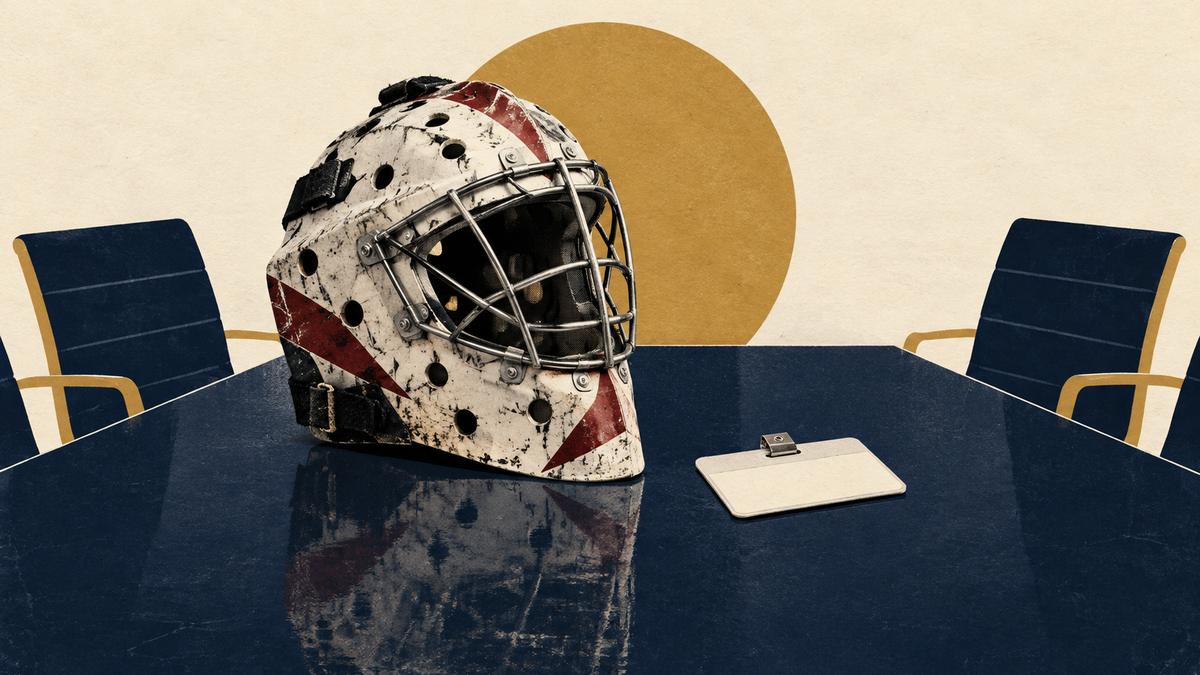
we talk so much about culture and then when you put it to the test, what is your retreat? Is your retreat to then take control, or is it to give control
Joe Moscola
Joe Moscola came up as a physician assistant in cardiothoracic surgery, moved into operations, became Northwell Health’s chief human resources officer, and at the time of this conversation led human resources, information technology, facilities, construction, real estate and shared services across the system. Glenn Llopis recorded it with his co-host in mid-2021, fifteen months into the pandemic, which turns out to be the right moment to ask a leader what they actually learned.
Glenn starts every episode by asking who the guest is as an individual. Moscola’s answer was team sport. He plays ice hockey, in goal, and what he values is a room where nobody is guarded.
"I can be myself if they're being themselves." — Joe Moscola · 00:01:10
Glenn pointed out the irony of a man who guards the net wanting rooms where nobody is on guard. Moscola’s lesson from the position is that sooner or later the puck goes in, and the job is to learn and move to the next challenge.
Glenn brought three concerns from a health system chief executive he had spoken with. The first was that healthcare tends to emulate rather than innovate, and treats imitation as innovation. Moscola did not dispute it. He described the familiar cycle: a technology company announces it is entering healthcare, and the coverage suggests the problem is about to be solved, while health systems respond by copying each other and trying to be slightly better at the copy.
His own counter-example is a culture that allows a large organization to try things and fail quickly, then try again. The second concern was that regulation becomes the excuse for not changing; his answer was to educate and engage rather than wait for a mandate. The third was the changing job of the chief executive, where he is an optimist: the skill set is shifting toward partnership, community and getting care to the right person at the right time, and he says a good handful of leaders are already working that way.
"It's no longer about the institution defining the individual, whether it's an employee or a patient..." — Glenn Llopis · 00:08:24
Asked what he learned as a leader, Moscola described problems arriving faster than any one person could hold. His image for it is the triage nurse: evaluate what comes in, move it to whoever can solve it, and do not insist on owning every step, because that is literally impossible and the attempt breaks you.
"you take your badge off, titles don't matter, the outcomes matter." — Joe Moscola · 00:22:22
He is honest that this is hard for people to accept. A crisis pushes an organization toward command structure, and yet command cannot solve everything, so the titles go at the door and the group solves as a whole. Glenn named what that produced: teams that respected each other as individuals, silos that quietly disappeared, and capability nobody knew was there until the pressure revealed it.
On partnerships, Moscola is clear-eyed about what a health system does and does not have. Digitally native companies have deeper pockets and more engineering strength; the health system has patients, facilities and data needs, which makes it a real partner rather than a supplicant. Northwell’s direct-to-employer business is his example of going straight to employers who want lower cost and a better experience, and he notes that it changes his own organization too, forcing different conversations about access, price and the kind of experience people expect.
"sometimes to get power, you have to relinquish some power." — Joe Moscola · 00:32:12
The sharpest part of the conversation is about remote work. Leaders came to him saying they needed people back in the office so they could track every movement and see how long they were at their computers. His response was to slow them down and ask what made them think the work was not getting done. The answer was usually that someone had not picked up the phone. He would then ask whether that person had young children, and what it might be like to parent an elementary-school child at home during a pandemic.
"let's lead with positive intent... not just being able to track someone's every hour, but rather the total work product." — Joe Moscola · 00:35:13
Glenn asked the harder question: had the organization lost a little faith in its own culture if leaders were thinking that way? The line at the top of this page is Moscola’s answer, and it is the test he puts to any organization that talks about culture. Pushed on it, he says, leaders get there themselves.
"they begin to realize, yeah, you know what, in fact, it's about me, it's not about them." — Joe Moscola · 00:37:46
Glenn closed with what the research keeps showing him:
"most people are capable of being self-directed. And, but yet the leader is unprepared for that shift" — Glenn Llopis · 00:38:32
Moscola’s practical follow-through is to bring people together deliberately rather than constantly, and to dig into what they say they need instead of resisting it, so the workplace becomes a place for debriefing, collaboration and, eventually, invention.
When culture is put to the test, what is your retreat: to take control or to give control. Moscola told Glenn Llopis that this is the moment that reveals whether the culture an organization describes is the one it actually has.
Moscola told Glenn Llopis that during the crisis his teams took their badges off, titles stopped mattering and outcomes did, and the group solved problems collectively because no individual could own every step.
Lead with positive intent and judge the total work product rather than tracking every hour. Moscola told Glenn Llopis that he asked leaders what made them think the work was not getting done, and usually the answer said more about the leader than the employee.
Glenn Llopis is The Identity Catalyst. For more than twenty years he has helped leaders and organizations reclaim the identity they edited away and lead from earned conviction. He is a Forbes contributor, the author of six books, and the founder of Glenn Llopis Group.
Read Glenn's story →© 2026 Glenn Llopis. All rights reserved.
This page is the original work of Glenn Llopis and is protected by copyright. Quotations are drawn from a recorded conversation and are attributed to the speaker. The page may not be republished, reproduced, distributed or adapted, in whole or in part, in print, online or by AI tools, without prior written consent. You are welcome to share the link or quote a brief excerpt with credit to Glenn Llopis and a link back to this page. Guests featured here are welcome to share and excerpt their own interview. For permission requests, contact solutions@glennllopisgroup.com.
Take the Conviction Diagnostic. In three minutes, see where you've traded who you are for who the room wanted, and exactly where to begin reclaiming it.

His story starts where reinvention did: a family that left everything behind for a new country and refused to call it loss. Cuban Roots →
.svg)
.svg)
.svg)
.svg)
.svg)
.svg)
