Opportunity
·
Leadership
In Uncertain Times, Boards Hire the Résumé They Already Know
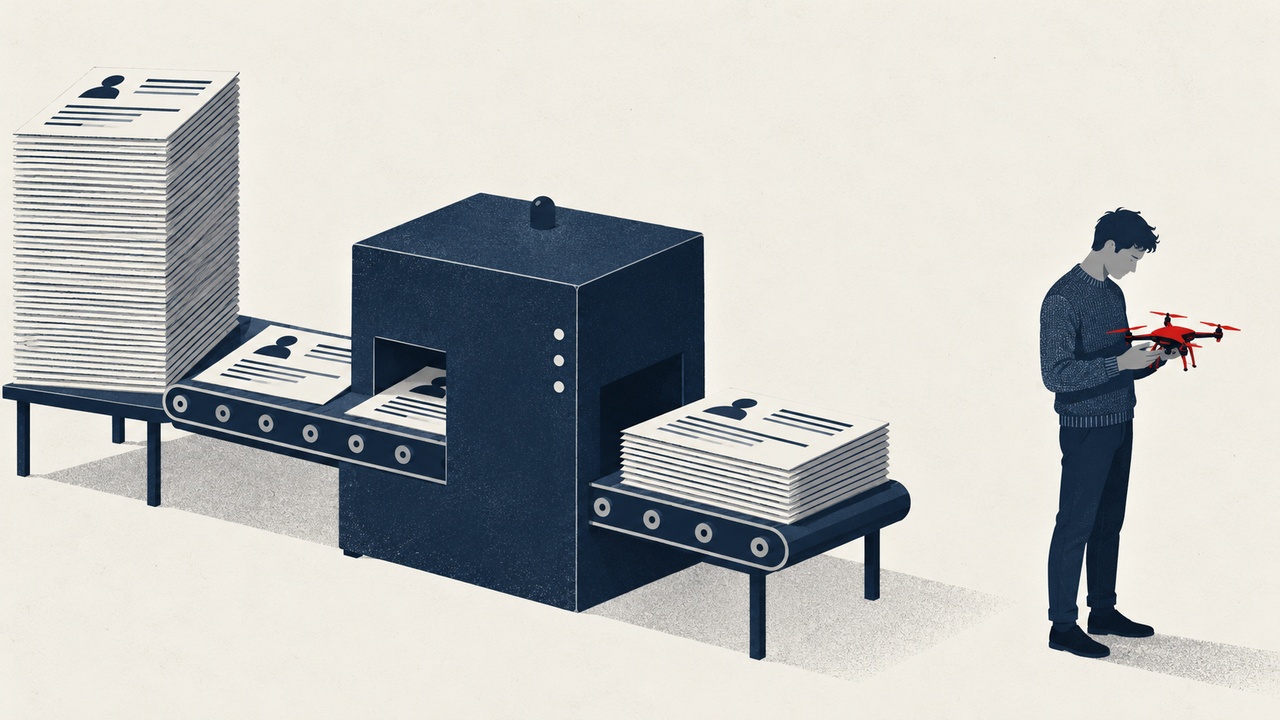
The WSJ reports on new Conference Board research: boards are adding fewer first-time directors and more former CEOs, as first timers fell from 39.1% to 21.6% of new Russell 3000 seats in a year. Experience matters. But boards hiring only what they recognize risk governing the company that used to exist.
What the Headlines Miss · Responding to
The Telling Changes to Board Composition
In The Wall Street Journal's CEO Brief, Lila MacLellan reports on a quiet shift inside America's boardrooms. In The Telling Changes to Board Composition, she shares an early look at The Conference Board's annual research on who companies are putting on their boards. The short version: boards are refreshing more slowly, and when they do add someone, they increasingly choose a person who has done it before.
The numbers in The Conference Board's release are striking. Among newly elected S&P 500 directors, just 17.6% were joining a public company board for the first time in 2026, down from 27.8% a year earlier. Across the Russell 3000, the share of first timers fell from 39.1% to 21.6%. Former CEOs now account for 23.1% of newly elected Russell 3000 directors, up from 15.4% in 2022. A co-author of the report tells MacLellan that a turbulent economy is part of the reason, as companies decide they don't want to train someone new to the boardroom.
The Safe Choice Has a Cost
That logic is understandable. When markets are volatile and AI is rewriting business models, a board wants people who have seen a crisis up close. Experience is an asset, and a proven governance playbook is one of the most valuable things a company can have. Consistency in how a board oversees risk, pay and succession is exactly what investors count on.
But notice what is happening underneath. In a period of enormous uncertainty, boards are reaching for the résumé they already recognize. They are hiring for the problems they have solved before rather than the ones in front of them.
The research itself hints at the gap. The share of independent directors reporting AI expertise has more than doubled in a year, but from a very low base: from 1.4% to 3.3% in the Russell 3000 and from 2.7% to 5.4% in the S&P 500. Boards say AI is reshaping everything. Yet the people they are adding look a lot like the people already there, chosen for the experience they bring from a world that is quickly changing.
There is a quieter cost, too. First board seats are how a new generation of leaders learns governance. When those seats shrink by nearly half in a single year, the pipeline of future directors narrows with them. Today's caution becomes tomorrow's shortage of people who know how a boardroom works.
Familiar Isn't the Same as Prepared
I have spent much of my career inside rooms where leaders confuse familiarity with readiness. The instinct is human. When the future feels unclear, we lean on what has worked. The risk is that the board becomes very good at governing the company that existed five years ago.
The first-time director often brings what an experienced one can't: a closer view of how customers, employees and technology are changing right now. They are more likely to ask the question no one else in the room thinks to ask. That doesn't make them better than a seasoned former CEO. It makes them different, and a board needs both.
The healthiest boards I have seen treat that difference as a strength to manage, not a risk to avoid. They let the experienced director teach the newcomer how governance really works, and they let the newcomer show the veterans what the business looks like from where the change is happening.
I made a related point about boards whose members all think alike in The Best Boards Are Made of People Who Won't Edit Themselves. This new data adds a timing problem. Boards aren't only choosing similar people. They are choosing them at the very moment the business most needs people who see what others don't.
Questions Every Board Should Ask
Before your next director search, ask what problem this seat is meant to solve three years from now, not the one you faced last year. Write it down before anyone looks at a résumé.
Look at the full board and ask whose experience of the business is most recent. If the answer is no one, you have found your gap.
Consider candidates who are already close to the change: an operator running AI adoption, a leader who knows your next generation of customers firsthand. Pair them with seasoned directors who can teach the craft of governance. That mentoring is far cheaper than a board that falls behind.
And look inside your own walls. Some of the people who understand where your industry is heading are already on your payroll. I wrote about finding them in Your Next Disrupter May Already Be on Your Payroll.
A board that only hires what it already knows will be the last to know what is coming.
Experience protects what a company has built, but only fresh eyes can show it what it is about to become.
Want to explore these ideas further? Learn more about my work on leadership, identity and conviction at www.theglennllopis.com.
Experience protects what a company has built, but only fresh eyes can show it what it is about to become.
© 2026 Glenn Llopis Group, LLC. All rights reserved.
This article is the original work of Glenn Llopis and is protected by copyright. It may not be republished, reproduced, distributed or adapted, in whole or in part, in print, online or by AI tools, without prior written consent. You are welcome to share the link or quote a brief excerpt with credit to Glenn Llopis and a link back to this page. For permission requests, contact solutions@glennllopisgroup.com.
Get the next essay in your inbox
New essays on leadership, identity and conviction, sent to you when they publish. Free, and you can unsubscribe anytime.
Thank you. You're subscribed to Conviction Chronicles.
Something went wrong. Please try again.