Individuality
·
Individuality
Dignity Starts With the Person Pushing the Gurney
Scott Wolf, Amanda Saratsis and Greg Brannon each described dignity in healthcare differently. Together they showed it begins long before the diagnosis.

Scott Wolf has spent more than 30 years in healthcare, including as the CEO of a health system, and he still describes the bond between patient and caregiver as sacred. "There's no occupation out there," he told me during our Belonging and Retention season, "where a person can walk into your space and within seconds share their most personal and intimate issues with you." That bond, he said, is what dignity in healthcare protects.
He defined dignity simply: "That's what dignity is. It's having that sense of worth and that truly you have meaning and you have purpose."
Then he told me about Tony.
Tony's pride
Tony was a hospital transporter, and he and Scott used to meet for coffee. One morning Tony was excited. "Dr. Wolf, I want you to know yesterday I got all my patients to their radiology exams on time."
Scott asked why that mattered so much to him. At the time, the hospital was focused on patient flow, because every extra day in the hospital carries both a cost and a risk to quality. Tony explained that because his patients got to radiology on time, nobody had to stay in the hospital longer because of a delay.
Scott's point was not that everyone needs to understand a profit and loss statement. It was that everyone should understand how their part connects to the whole. Tony did. That is what dignity at work looks like.
Scott also built habits to find out what got in people's way. When he led a health system, Wednesday mornings were meeting-free, and the whole executive team rounded on units with directors and bedside nurses, asking what barriers they could remove. "There's a big difference between listening and hearing," he said. And he made the case for payers, providers and patients sitting down together, because dignity can't be restored by any one of them alone. His father taught him that a relationship starts with a firm handshake and eye contact, and he believes healthcare needs more of both.
The surgeon who doesn't bluster
Amanda Saratsis brought the conversation into the operating room. She was a piano performance major before she chose medicine, and she went into her first surgery rotation certain she would never become a surgeon. On her first night on call, her team rushed a gunshot victim into emergency surgery. Watching their hands, the pedals and the monitors, she saw an orchestra, with the surgeon as conductor. She is now a pediatric neurosurgeon, one of about 200 women board certified in neurosurgery in the United States.
She told me about a mother whose baby had suffered brain damage during a complicated birth. The mother was deeply distrustful of medicine, and when her baby needed a relatively urgent procedure, she refused. Care conferences and second opinions from Amanda's partners didn't change her mind. It took weeks of long conversations and phone calls before she agreed. Amanda wished her institution had stepped in to help, rather than leaving her pitted against a frightened parent.
Amanda sees how much the relationship has changed. Her grandmother, in her nineties, still answers every doctor with "yes, doctor" and asks no questions. Today's families arrive having searched their child's diagnosis and joined support groups online. The answer is not to resent that, but to become partners.
Her standard is clear. "We don't just bluster into a room, say, we're going to do this to you, and bluster out. That's not the right way to treat our patients. That's not how anyone wants to be treated." She books new patient visits for twice as long as return visits, and in her ICU, parents join the team in the hallway as the plan is presented.
When standardization loses the individual
Greg Brannon, an OB-GYN, has wanted to be a doctor for as long as he can remember. After more than 30 years in medicine, he believes healthcare standardized so much that the individual got lost.
"That's what happened in institutions of healthcare. We've standardized everything where the individuals have been lost."
He remembers nurses in labor and delivery who knew every patient, and even their husbands, before charting pulled them to the computer. His advice to leaders: keep asking why, and above all listen to each patient's story. "Nobody knows that human body better than that individual."
Dignity is a whole-building responsibility
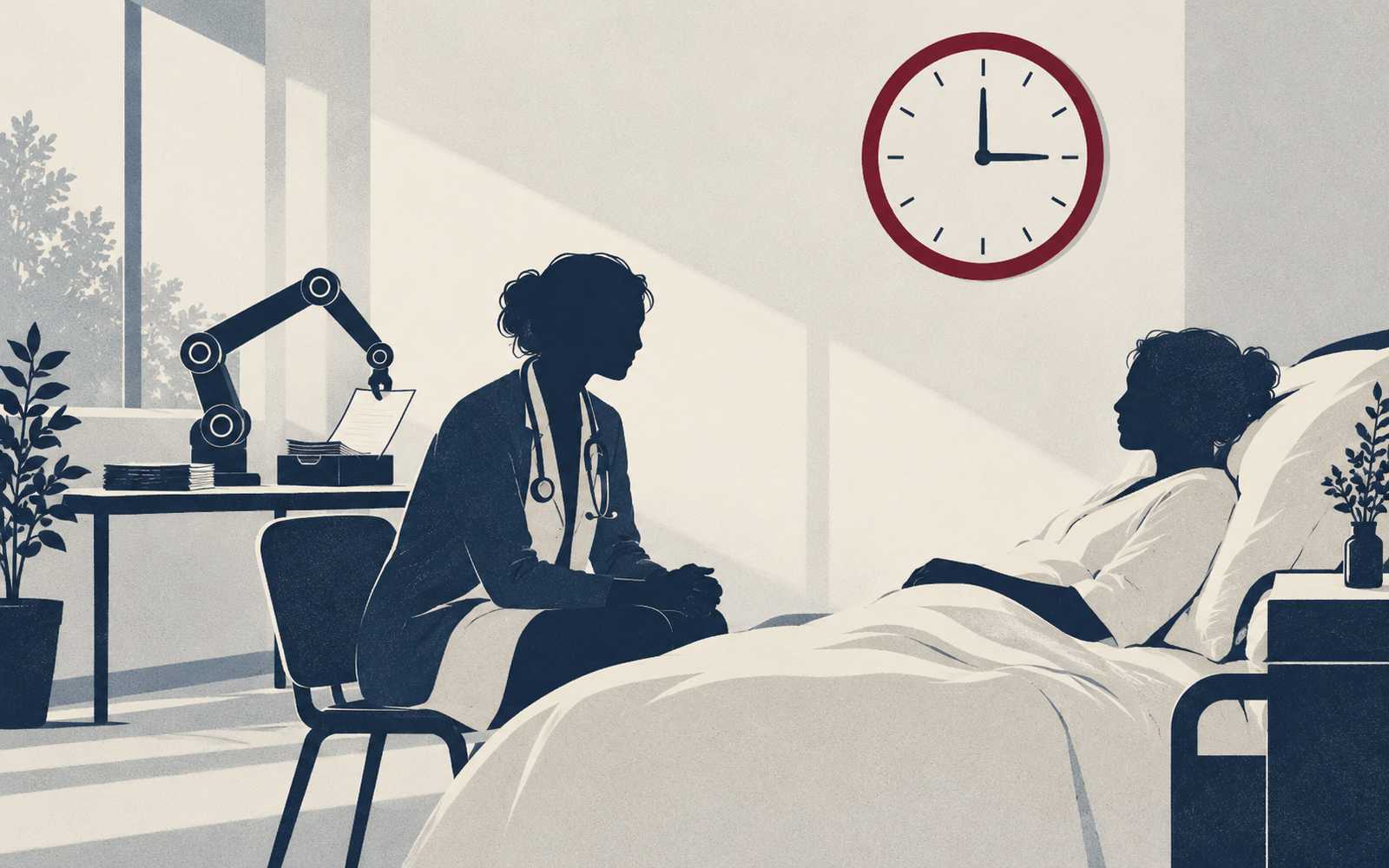
Put these three conversations together and a picture emerges. Dignity is experienced by the patient in the bed, the parent signing a consent form and the transporter in the hallway. It depends on whether the system gives people time to listen and tools to do their jobs well.
- Does every role in your organization know how its work connects to the patient?
- Where are you rushing conversations that deserve more time?
- What has standardization made efficient that has also made impersonal?
- When a clinician faces a frightened family alone, does your institution step in?
You can watch Restoring Dignity and Human Connection with Scott, Beyond the Operating Room with Amanda and Restoring Individuality in Healthcare with Greg in the Belonging and Retention season.
Tony never needed a title to know his work mattered. Every healthcare organization should make sure all its people feel the same.
Want to explore these ideas further? Learn more about my work on leadership, identity and conviction at www.theglennllopis.com.
Dignity is not a policy. It is how every person in the building is made to feel that they matter.
© 2026 Glenn Llopis. All rights reserved.
This article is the original work of Glenn Llopis and is protected by copyright. It may not be republished, reproduced, distributed or adapted, in whole or in part, in print, online or by AI tools, without prior written consent. You are welcome to share the link or quote a brief excerpt with credit to Glenn Llopis and a link back to this page. For permission requests, contact solutions@glennllopisgroup.com.
Get the next essay in your inbox
New essays on leadership, identity and conviction, sent to you when they publish. Free, and you can unsubscribe anytime.
Thank you. You're subscribed to Conviction Chronicles.
Something went wrong. Please try again.