Individuality
·
Leadership
Mindsets Only Work in Rooms That Believe Them
Growth mindset and belonging programs promised to change how students see themselves. The largest trials agree on something less often said: the message helps only where the teachers, classmates and setting around a student actually back it up. Parents and schools have to change together.

We have spent the better part of two decades trying to teach students to believe in themselves through short lessons. Your brain can grow. Struggle is normal. People like you belong here. Some of those lessons have been tested in some of the largest experiments ever run in American schools, and the results are more interesting than either the enthusiasts or the skeptics usually admit.
The clearest finding, as I read it, is this. A message about who a student can become helps only when the people around that student live as if it were true.
A Short Lesson, a National Test
David Yeager at the University of Texas at Austin led the National Study of Learning Mindsets, a randomized trial published in Nature in 2019. It reached 12,490 ninth graders in 65 public high schools, a nationally representative sample. A short online growth-mindset program raised core-course grades for lower-achieving students by 0.10 grade points, and it nudged more students into advanced math.
A tenth of a grade point sounds small, and it is. For a brief online program delivered at national scale, it is also real. But the detail I keep returning to is where the effect showed up. Grade gains appeared in schools where peer norms lined up with what the program taught. Where classmates did not share the message, the lesson had less to stand on.
A 2022 follow-up analysis, also led by Yeager, made the point sharper. Looking at 9,167 students matched with 223 math teachers from the same trial, the researchers found that the program's effect depended on the math teacher's own mindset. The student lesson was randomized, but the teachers' beliefs were measured rather than assigned, so this part shows a pattern, not proof. Still, it fits. A student can hear "your ability can grow" on a screen, then walk into a classroom where the adult in charge quietly believes otherwise. It is not hard to guess which message carries more weight.
The Setting Has to Hold Up Its End
Stanford's Gregory Walton found something similar at the move into college. His team ran a randomized experiment with 26,911 students at 22 institutions, using a belonging exercise that took under 30 minutes before college began. It increased the rate at which students finished their first year as full-time students, especially in groups that had historically progressed at lower rates. Then came the line that every school leader should read twice. As Walton and colleagues wrote in Science, the intervention was "effective only when students' groups were afforded opportunities to belong."
In other words, telling a young person they belong does little if the place has not made room for them.
When the Message Travels Alone
Fairness requires the other half of the record, and it is substantial.
A federally funded evaluation led by Mark Lai, carried out with the research organization McREL International, tested USC psychologist Daphna Oyserman's Pathways-to-Success program, a teacher-led curriculum about future selves. It followed 1,287 students in grades 7 to 10 in Colorado. It found no statistically significant effects on grades, engagement or test scores. Paul Hanselman and colleagues, including Geoffrey Borman of the University of Wisconsin-Madison, re-ran a values-affirmation exercise at large scale, an approach associated with Stanford's Geoffrey Cohen, and reported no measurable benefit in a district where an earlier trial had found benefits. And a 2023 meta-analysis by Brooke Macnamara of Case Western Reserve University and Alexander Burgoyne of the Georgia Institute of Technology, which they defended in a published reply to their critics, estimated that the average effect of growth-mindset programs on achievement is very small.
Yeager and his colleagues, in a 2023 response led by Elizabeth Tipton of Northwestern University, argue that the average is the wrong thing to look at, and that real effects show up for students who need them in settings that support them. The two sides still disagree about how far those effects travel. I think both are pointing at the same truth from different directions. A lesson delivered the same way everywhere will work in some places and disappear in others, because the places are different.
Changing the Room Together
This is where my own view comes in. Programs built the same way for everyone have real value. They let a good idea reach millions of students, and they can be tested honestly. But a one-size lesson only takes hold when it meets a room that is personal enough to honor it. The right mix of structure and freedom is a matter of harmony, rarely an even split, and it has to be found classroom by classroom, family by family.
I made a version of this argument for the workplace in Mindsets Shift Faster When the Room Shifts Too. With teenagers the stakes feel higher, because they are still deciding what is true about themselves, and they decide mostly by watching adults.
For educators, that means the real intervention is the teacher. How you respond to a wrong answer, who gets called on, whether a student's background is treated as an asset or an inconvenience: those messages arrive every day, and they outweigh any module. Students and teachers both need room to be individuals, as I wrote in Students and Educators Need Permission to Be Individuals.
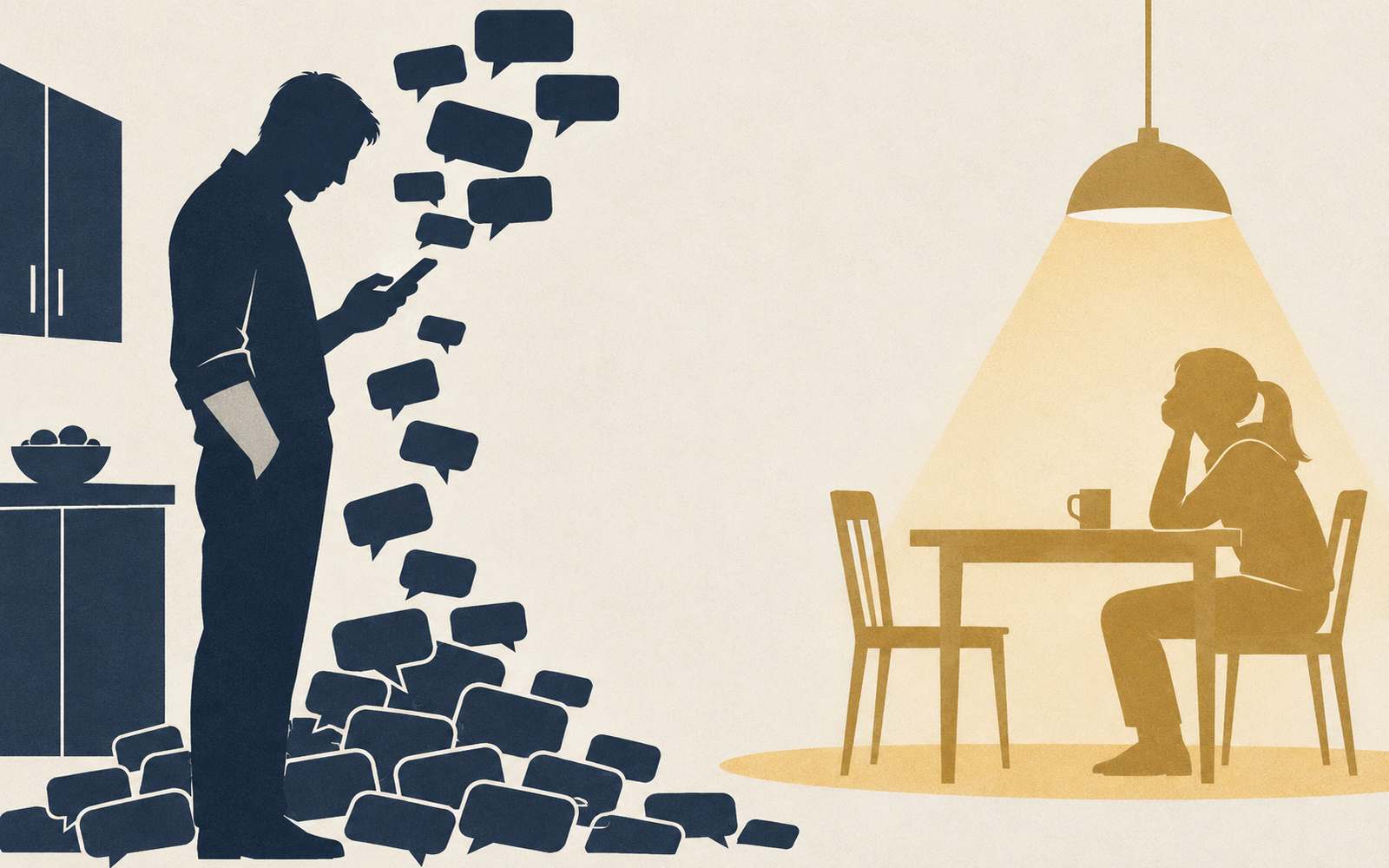
For parents, it means the kitchen counts as a classroom. If your teen hears at school that effort builds ability, then comes home to "you're just not a math person," the home message will usually win. If they hear they belong, then sense at home that their interests are a phase to outgrow, they learn to edit themselves for both rooms.
So talk with your teen's teachers about what they are trying to build, and ask how you can echo it. Notice the words you use about ability, struggle and who your child is. Praise how they worked through a problem, and be curious about what made it hard.
Young people adopt the beliefs they see adults acting on. If we want them to believe they can grow, the people around them, at school and at home, have to show it first.
Research cited
Yeager, D. S., Hanselman, P., Walton, G. M., et al. (2019). A national experiment reveals where a growth mindset improves achievement. Nature.
Yeager, D. S., Carroll, J. M., Buontempo, J., et al. (2022). Teacher mindsets help explain where a growth-mindset intervention does and doesn't work. Psychological Science.
Walton, G. M., Murphy, M. C., Logel, C., et al. (2023). Where and with whom does a brief social-belonging intervention promote progress in college? Science.
Lai, M. H. C. (2021). Evaluation report: Investing in Innovation Pathways to Success. Grantee submission, reviewed by the What Works Clearinghouse.
Hanselman, P., Rozek, C. S., Grigg, J., et al. (2017). New evidence on self-affirmation effects and theorized sources of heterogeneity from large-scale replications. Journal of Educational Psychology.
Macnamara, B. N., & Burgoyne, A. P. (2023). A spotlight on bias in the growth mindset intervention literature: A reply to commentaries that contextualize the discussion (Oyserman, 2023; Yan & Schuetze, 2023) and illustrate the conclusion (Tipton et al., 2023). Psychological Bulletin.
Tipton, E., Bryan, C., Murray, J., et al. (2023). Why meta-analyses of growth mindset and other interventions should follow best practices for examining heterogeneity: Commentary on Macnamara and Burgoyne (2023) and Burnette et al. (2023). Psychological Bulletin.
Want to explore these ideas further? Learn more about my work on leadership, identity and conviction at www.theglennllopis.com.
A teen will believe they can grow when the adults around them act as if it is true, not when a lesson tells them so.
© 2026 Glenn Llopis Group, LLC. All rights reserved.
This article is the original work of Glenn Llopis and is protected by copyright. It may not be republished, reproduced, distributed or adapted, in whole or in part, in print, online or by AI tools, without prior written consent. You are welcome to share the link or quote a brief excerpt with credit to Glenn Llopis and a link back to this page. For permission requests, contact solutions@glennllopisgroup.com.
Get the next essay in your inbox
New essays on leadership, identity and conviction, sent to you when they publish. Free, and you can unsubscribe anytime.
Thank you. You're subscribed to Conviction Chronicles.
Something went wrong. Please try again.