Individuality
·
Individuality
Your Kid's School Sends You Everything Except Who Your Child Is Becoming
In The Atlantic, Stephanie H. Murray shows parents drowning in school apps while 88% believe their child reads at grade level, though fewer than half of students do. The bigger gap isn't grades. It's knowing who your child is becoming, and no app can tell you.
What the Headlines Miss · Responding to
The School Apps Are Out of Control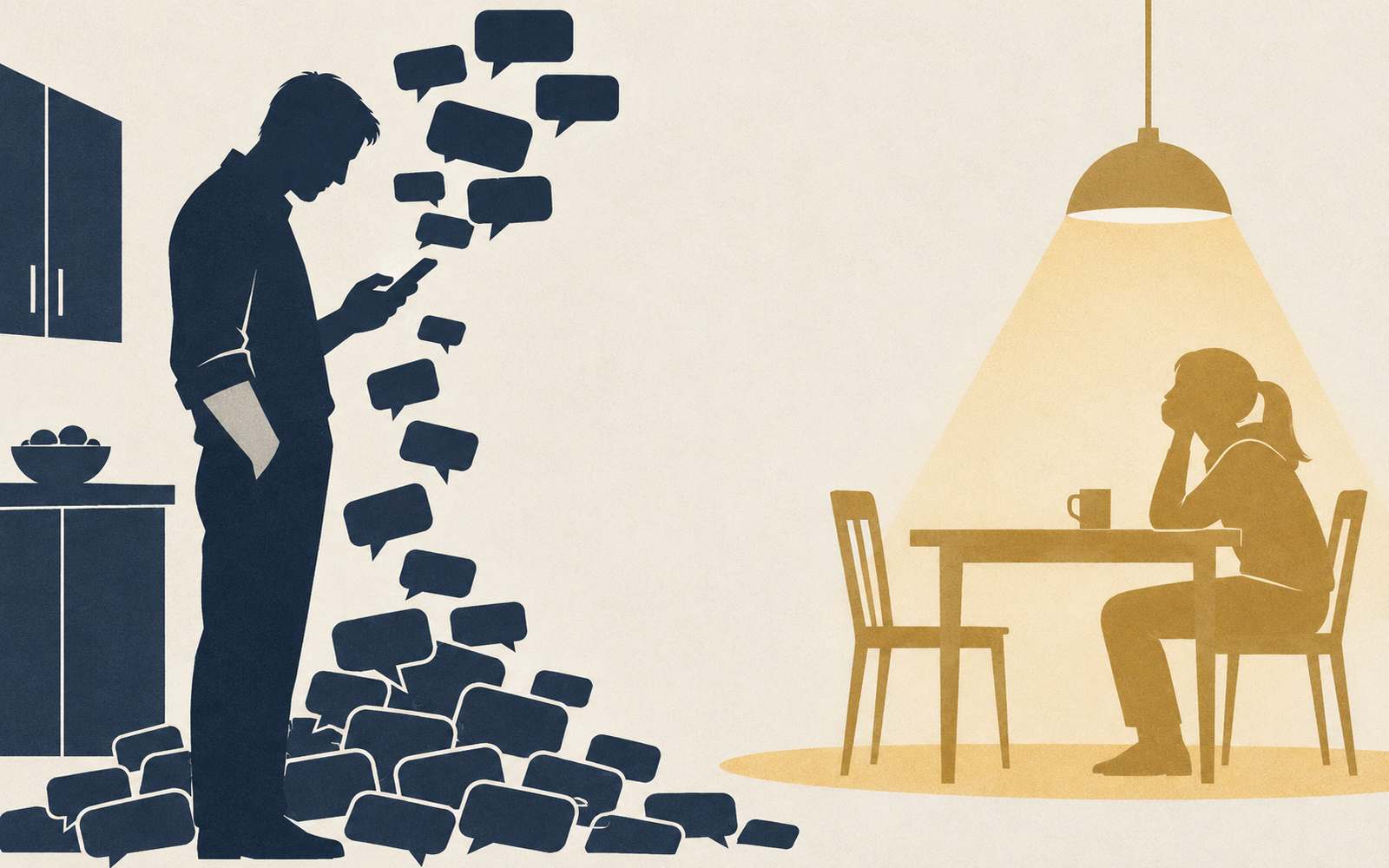
In The Atlantic, Stephanie H. Murray describes a problem nearly every parent will recognize. In The School Apps Are Out of Control, she counts the channels her children's school uses to reach her: a weekly folder, a nightly binder, texts, emails, a newsletter, PTA updates and a rotating cast of apps. One mother she interviewed has four different apps for one school, plus a fifth site for test scores. A father calls it "an undifferentiated fire hose."
Then Murray lands on the paradox at the center of her piece. Parents are receiving too much information and too little at the same time.
Drowning in data, missing the picture
The numbers she cites are sobering. According to the nonprofit Learning Heroes, about 88% of American parents say their child is performing at or above grade level in reading, and 83% say the same about math. Yet in most states, fewer than half of students actually meet grade-level expectations. Meanwhile, the share of K to 8 parents attending parent-teacher conferences has fallen from 77% in 2017 to 57% today.
So parents get more notifications than ever, show up for fewer real conversations and walk away believing their kids are fine. Murray's conclusion is the right one. Building the trust needed for hard conversations isn't something an app can solve. Parents have to reach out to the teacher directly.
I'd take that conclusion one step further, because the gap she describes runs deeper than grades.
The question no app can answer
Whether your child is reading at grade level is an important question. It is also the easier one. The harder question is who your child is becoming, and nothing on your phone will tell you.
No platform reports what your teenager is quietly good at, what they've started to care about, or what they've stopped saying out loud because they've learned it doesn't fit. Those signals don't arrive as notifications. They show up at the dinner table, in the car, in the half-finished sentence a kid offers when they think no one is really listening.
This matters most in the teen years, when identity is taking shape. It's the stage when many young people learn to edit themselves to fit what school, friends and screens reward. I've written about how "doing school" is where teens first learn to edit themselves: they learn to perform what the system measures and set aside what makes them unmistakably themselves. A parent watching only grades and app alerts can miss that edit entirely.
Information is not understanding
The school communication problem is a small version of a much larger one. We've confused access to information with understanding a person.
The same thing happens at work, where leaders read dashboards about employees they've never really talked to. It happens at home, where parents scroll updates about children they're too tired to sit down with. In both places, the volume of data creates a feeling of knowing that can hide how little we actually know.
The answer isn't to ignore the data. Grades, test scores and attendance all matter, and schools should make them clearer and easier to find. Standards give parents a baseline. But a baseline isn't the whole child. Every report card describes a student. Only a conversation reveals a person.
What parents can do this week
Turn down the volume. Pick the one or two channels that carry what matters and mute the rest. You can't notice what's important if everything arrives at the same volume.
Ask for the real number. Ask the teacher directly whether your child is on grade level, and what that's based on. Don't let a good grade answer a question it wasn't designed to answer.
Have the conversation the app can't. Once a week, put the phone away and ask your teen something no school platform tracks: What did you enjoy today that surprised you? What's something you're good at that no one at school sees? Then listen without fixing.
Notice the edits. If your teen has stopped talking about something they used to love, ask about it. That silence is information too.
As I wrote in Purpose Isn't Found. It's Built With Someone Beside You., young people discover who they are in the company of adults who are paying attention. No app can be that adult.
Being known, not just tracked
Schools will keep adding apps, and some will be useful. But the most important information about our kids will never come through a platform. It comes from showing up, asking real questions and being curious about who they are becoming, not just how they're performing.
Our children are growing up in a world built for them, not the one we grew up in. They don't need us to track them more closely. They need us to know them.
Want to explore these ideas further? Learn more about my work on leadership, identity and conviction at www.theglennllopis.com.
Every report card describes a student. Only a conversation reveals a person.
© 2026 Glenn Llopis Group, LLC. All rights reserved.
This article is the original work of Glenn Llopis and is protected by copyright. It may not be republished, reproduced, distributed or adapted, in whole or in part, in print, online or by AI tools, without prior written consent. You are welcome to share the link or quote a brief excerpt with credit to Glenn Llopis and a link back to this page. For permission requests, contact solutions@glennllopisgroup.com.
Get the next essay in your inbox
New essays on leadership, identity and conviction, sent to you when they publish. Free, and you can unsubscribe anytime.
Thank you. You're subscribed to Conviction Chronicles.
Something went wrong. Please try again.