.svg)
Individuality
·
Individuality
Stop Reading Personality Types. Read Levels of Suppression.
What we label as someone's personality is often how much they have been holding back. Leaders who learn to read levels of suppression stop managing types and start unleashing people.

When leaders describe the people on their teams, they often reach for personality types.
She is guarded. He is negative. She is difficult. He is the quiet one. We learned to sort people this way through assessments, workshops and years of management training. And there is nothing wrong with understanding how people tend to show up.
But I see something different when I look at teams. I don't see personality types. I see different levels of suppression.
What Suppression Looks Like
Suppression is what happens when people hold back who they are for long enough that it starts to look like who they are.
Someone who has been ignored for years becomes quiet. Someone whose ideas have been dismissed becomes skeptical. Someone who has watched leaders come and go becomes protective. Someone who feels that no one really cares stops offering more than what is required.
Over time, we label these behaviors as personality. We say, "That's just how she is." But very often, that is not how she is. It is how she has learned to survive. Her behavior is not a fixed trait. It is a response to the environment she has been working in.
The scale of this is easy to underestimate. Gallup's State of the Global Workplace 2026 found that 16% of employees worldwide are actively disengaged, and only 20% are engaged. The majority sit somewhere in between, present but holding back. That middle is where suppression lives.
Different Magnitudes, Different Work
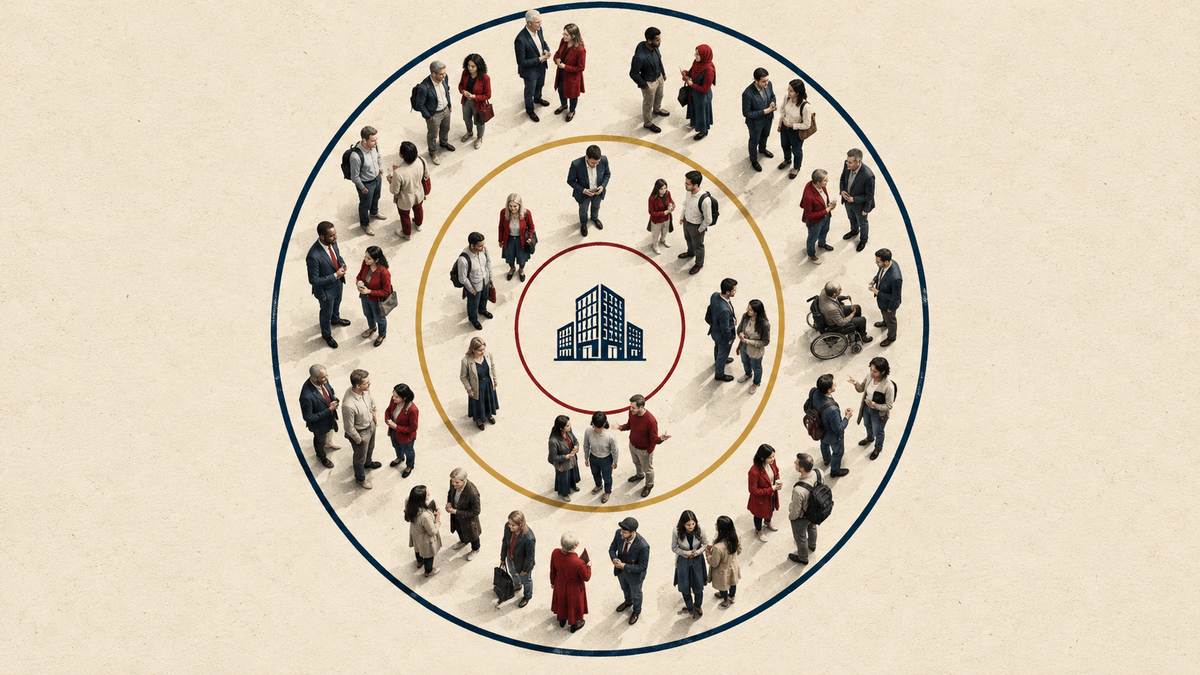
When you lead a team, you are not dealing with one kind of person. You are dealing with different magnitudes of suppression.
Some people are lightly suppressed. They just need someone to ask what they think and mean it. Others have been holding back frustration for years. They have concluded that speaking up doesn't change anything, and they need far more than one good conversation before they believe otherwise.
And some people are so far down that they no longer expect to be seen at all. They have made peace with being invisible because it feels safer than being disappointed again.
This is why the same leadership approach works with one person and fails with another. It isn't that one person is easier. It is that one person has further to come back from.
Your job as a leader is to move each person from suppressed to unleashed. That journey is different for every individual, and it takes as long as it takes.
The Trap Good Leaders Fall Into
Here is where well-intentioned leaders often get it wrong.
A driven leader arrives with energy and ideas. They take initiative, move fast and try to bring good things to the team. In their mind, they are being helpful.
But to someone who is suppressed, that speed can feel like one more person who doesn't see them. Every time the leader does more, the team believes a little less in what they themselves are capable of. Without meaning to, the leader pushes them further down.
I call this the standardization trap. We fall into it hundreds of times a day because we are solving for the work instead of the person. What people are really asking is simple: Do you even want to take the time to know me and see me?
As I've written before, many organizations have left their people's skills asleep. Suppression is often why.
How to Read and Reverse Suppression
If you want to unleash the people around you, start here.
Replace labels with questions. Instead of deciding someone is difficult, ask yourself what might have taught them to behave that way.
Ask what they really contribute. Find out what each person does, how they do it and what they are capable of contributing beyond their role. Then show appreciation for it.
Influence more, do less. Your speed can make others feel smaller. Step back and create room for them to step forward.
Expect the rebuilding to take time. Trust that took years to lose won't return in a week. Consistency matters more than intensity.
Watch for small signs of release. A question asked, an idea offered, a disagreement voiced. These are signs that suppression is lifting. Notice them and honor them.
People Are Not Their Defenses
The most important shift a leader can make is to stop confusing people with their defenses.
When you see suppression instead of personality, you stop trying to manage people into a type. You start helping them come back to who they are. And when that happens, the person you thought you knew often turns out to be someone far more capable than you imagined.
That is what it means to stop holding back at work, and why the leader's role is to make it safe to do so.
Before you decide who someone is, find out what they have been holding back.
Want to explore these ideas further? Learn more about my work on leadership, identity and conviction at www.theglennllopis.com.
What looks like someone's personality is often just how long they have been holding back.
© 2026 Glenn Llopis. All rights reserved.
This article is the original work of Glenn Llopis and is protected by copyright. It may not be republished, reproduced, distributed or adapted, in whole or in part, in print, online or by AI tools, without prior written consent. You are welcome to share the link or quote a brief excerpt with credit to Glenn Llopis and a link back to this page. For permission requests, contact solutions@glennllopisgroup.com.
Get the next essay in your inbox
New essays on leadership, identity and conviction, sent to you when they publish. Free, and you can unsubscribe anytime.
Thank you. You're subscribed to Conviction Chronicles.
Something went wrong. Please try again.


.svg)
.svg)
.svg)
.svg)
.svg)
.svg)
