Individuality
·
Trust
When AI Arrives, Managers Decide Whose Voice Counts
Being seen and heard at work isn't a survey score. It's kept or broken one manager at a time, and as AI arrives, managers are making dozens of small decisions about whose voice counts. The organizations that invest in those managers now will bring everyone through the change.
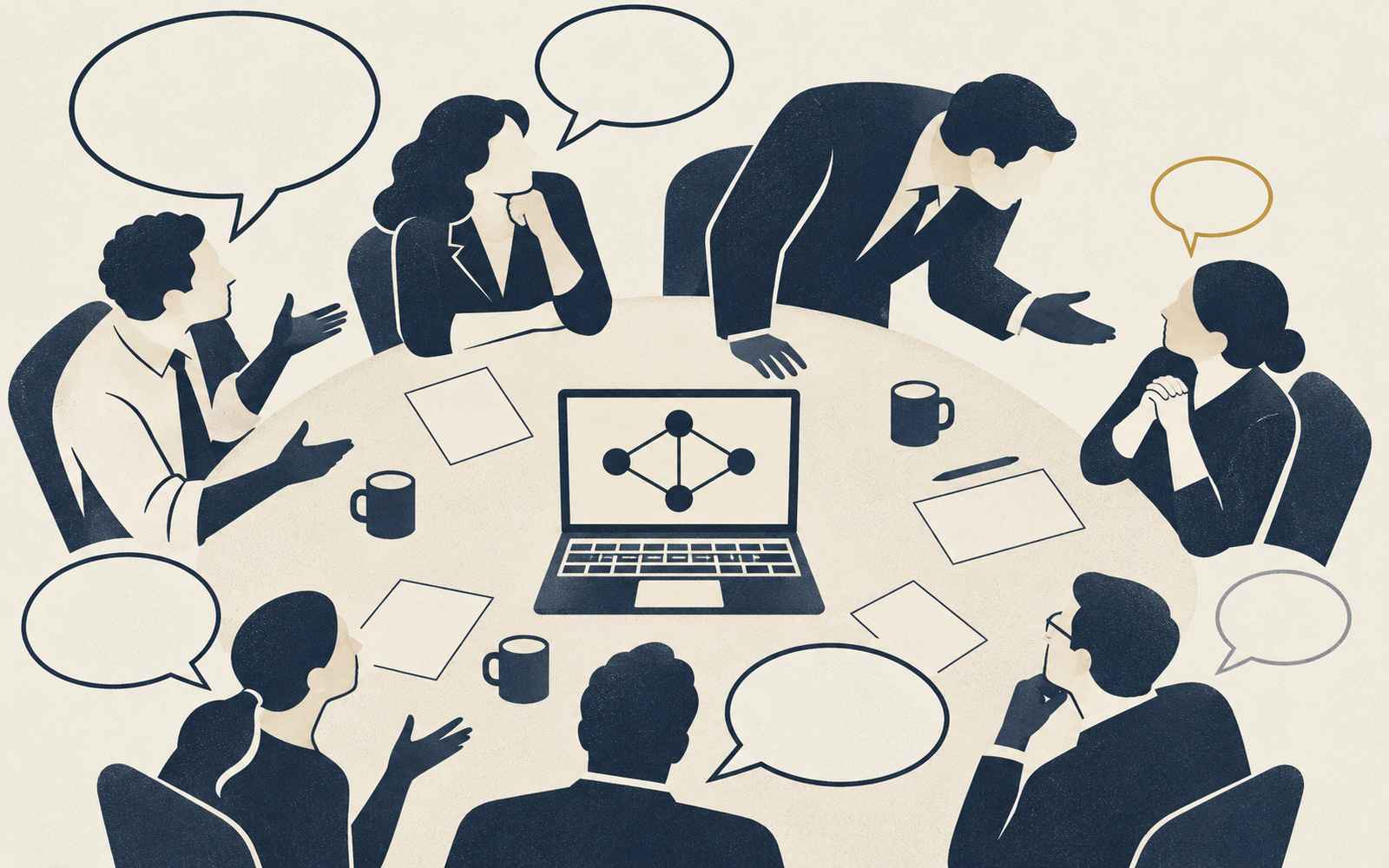
Most organizations measure whether employees feel heard through an annual survey. But being seen and heard isn't a score that moves once a year. It's kept or broken every week, one manager at a time, in meetings, one-on-ones and the small decisions about whose idea gets followed up and whose quietly disappears.
That has always been true. What's new is that AI is about to raise the stakes.
A new set of decisions
As organizations bring AI into daily work, someone has to decide how it gets used on each team. Which tasks change first. Who gets trained. Whose concerns are taken seriously and whose are written off as resistance. Whose experiments get attention.
In most organizations, those decisions aren't made by the strategy team. They're made by managers, often informally and under time pressure.
The research suggests many employees aren't feeling supported through it. Gallup's latest workplace data shows that fewer than a third of U.S. employees in organizations adopting AI strongly agree their manager actively supports their team's use of it. Gallup also found that manager support is one of the strongest drivers of whether people use the technology at all.
When managers don't create room for every voice, AI adoption doesn't just slow down. It becomes uneven. The people who were already confident and visible move ahead. The people who were already hesitant to speak up fall further behind.
Being heard is not the same as being surveyed
There's a difference between asking people for input and acting on what you hear. Many employees have learned to tell the two apart. When feedback disappears into a system and nothing changes, people stop offering it, and the silence gets mistaken for agreement.
AI can make this worse in subtle ways. If a tool summarizes employee comments, someone still decides which themes matter. If an algorithm recommends who is ready for a new project, someone still decides whether to trust it. A manager who doesn't know their people well will defer to the system. A manager who does will notice what the system missed.
Seeing people as individuals
I've spent years helping organizations move from managing people as groups to understanding them as individuals. Labels and demographics can tell you who someone is on paper. They can't tell you what that person is uniquely good at, what they're worried about or what they'd contribute if someone asked.
That's the manager's job, and AI makes it more important, not less. A manager who sees each person clearly can use AI to free up time for better conversations. A manager who doesn't will use it to manage from a distance. As I've argued, individuality is the people strategy that doesn't need a side. It simply asks leaders to see the person in front of them.
The quiet cost of getting it wrong
When employees feel unheard during a major change, they rarely complain loudly. They pull back. They contribute a little less, share fewer ideas and stop raising problems early. Some of the most capable people begin looking elsewhere, often without saying a word.
For organizations that have worked hard to build inclusive cultures, AI is a real test of that work. The commitments made in policies and programs will either be honored or undone in thousands of everyday team decisions. Leaders who want those commitments to hold need to look closely at the one place they're actually kept: the relationship between each employee and their manager.
Questions every manager can ask this quarter
Who on my team hasn't spoken up about AI, and why? Silence is information. Ask privately.
Whose ideas have I followed up on, and whose have I let drop? Look back at the last month honestly.
Am I giving everyone the same chance to learn? Training opportunities often go to whoever asks first. Make sure they reach the people who won't.
What did the tool miss? Before acting on any AI recommendation about people, ask what you know that it doesn't.
The leaders who will matter most
The coming years will be described as an AI transformation. Inside each team, though, it will be a human one. Every manager will make dozens of small choices about who gets heard, who gets trained and who gets left out of the conversation.
Organizations that want everyone to come through this change stronger should invest in those managers now. Help them know their people as individuals. Give them the time to listen and the authority to act on what they hear. Hold them accountable not just for adoption rates, but for whether every voice on the team still counts.
Technology will decide what's possible. Managers will decide who gets to take part.
Want to explore these ideas further? Learn more about my work on leadership, identity and conviction at www.theglennllopis.com.
Technology decides what's possible. Managers decide who gets to take part.
© 2026 Glenn Llopis Group, LLC. All rights reserved.
This article is the original work of Glenn Llopis and is protected by copyright. It may not be republished, reproduced, distributed or adapted, in whole or in part, in print, online or by AI tools, without prior written consent. You are welcome to share the link or quote a brief excerpt with credit to Glenn Llopis and a link back to this page. For permission requests, contact solutions@glennllopisgroup.com.
Get the next essay in your inbox
New essays on leadership, identity and conviction, sent to you when they publish. Free, and you can unsubscribe anytime.
Thank you. You're subscribed to Conviction Chronicles.
Something went wrong. Please try again.