Individuality
·
Leadership
Training Ends in the Classroom. Behavior Starts on Tuesday.
Organizations spent $102.8 billion on training in the U.S. last year, and HR leaders say behavior change is the proof they want. Whether it happens is decided after the course ends, by managers who often weren't part of it. Design for Tuesday.

Every year, organizations make a substantial bet on their people. According to Training Magazine's 2025 Training Industry Report, U.S. training spending rose 4.9% to $102.8 billion, and management and supervisory training tied with compliance for the largest share of budgets.
That investment reflects real conviction that leaders can be developed. I share it. But the return on that bet isn't decided in the session itself. It's decided on an ordinary Tuesday afternoon, when a manager faces a hard conversation, a missed deadline or a team member who's quietly checking out, and has to choose whether to lead the way the program taught or the way they always have.
The proof everyone wants
Ask HR leaders how they want to measure leadership development, and the answer is clear. In DDI's 2025 HR Insights research, 78% of HR professionals said behavior change is the proof of success they're after. Measuring that success is the biggest challenge they face in running these programs.
That makes sense. Attendance is easy to count, and satisfaction scores are easy to collect. Behavior is harder, because it happens far from the classroom, inside teams, under pressure and usually without anyone watching. A program can teach a manager how to give feedback. It can't make them give it on the day it's uncomfortable.
Where learning gets stuck
The barrier is rarely the content. It's the environment the learner returns to.
Gallup asked chief human resources officers what blocks learning and development. In its 2025 research on development barriers, about two in five (39%) named support from direct managers as a key obstacle, second only to time away from the job. Gallup also found that having a supervisor seen as getting in the way of one's growth is the strongest predictor of an employee's intent to leave.
The managers themselves are often stretched thin. LinkedIn's 2025 Workplace Learning Report found that only 15% of employees say their manager helped them build a career plan in the past six months, down five points from the year before. And Gallup's State of the Global Workplace 2025 reported that fewer than half of the world's managers (44%) say they have received any management training at all.
Put those together, and the picture is clear. People leave a good program ready to try something new. Then they return to a manager who wasn't part of it, a calendar with no room for practice and a culture that rewards the old way of getting things done. The learning doesn't fail. It simply has nowhere to land.
Designing for Tuesday
Bring the manager in before the course, not after. The learner's manager should know what the program teaches and what behavior to look for. A five-minute conversation before and after a session does more for application than another module.
Define the behavior, not just the topic. "Coaching skills" is a topic. "Asks one open question before offering an answer" is a behavior. When the change is specific, people know what to try and others can see it.
Make room to practice. Learning sticks when people use it soon and safely. Protect time for leaders to try a new approach on real work and talk about what happened.
Notice it out loud. When a leader applies something they learned, say so. Recognition tells everyone the new way is wanted, and it makes the next attempt easier.
Measure what people do, not what they finished. Completion rates tell you who showed up. Ask the people around a leader what has changed, and you'll know whether the program worked.
I've written about why trust is won or lost at the frontline leader's desk. The same is true of learning. And as I described in The Managers Who Stayed Are Carrying the Most, many managers are already holding more than any program accounts for. Asking them to reinforce new behavior without giving them the time and support to do it sets everyone up to fall short.
The individual makes it real
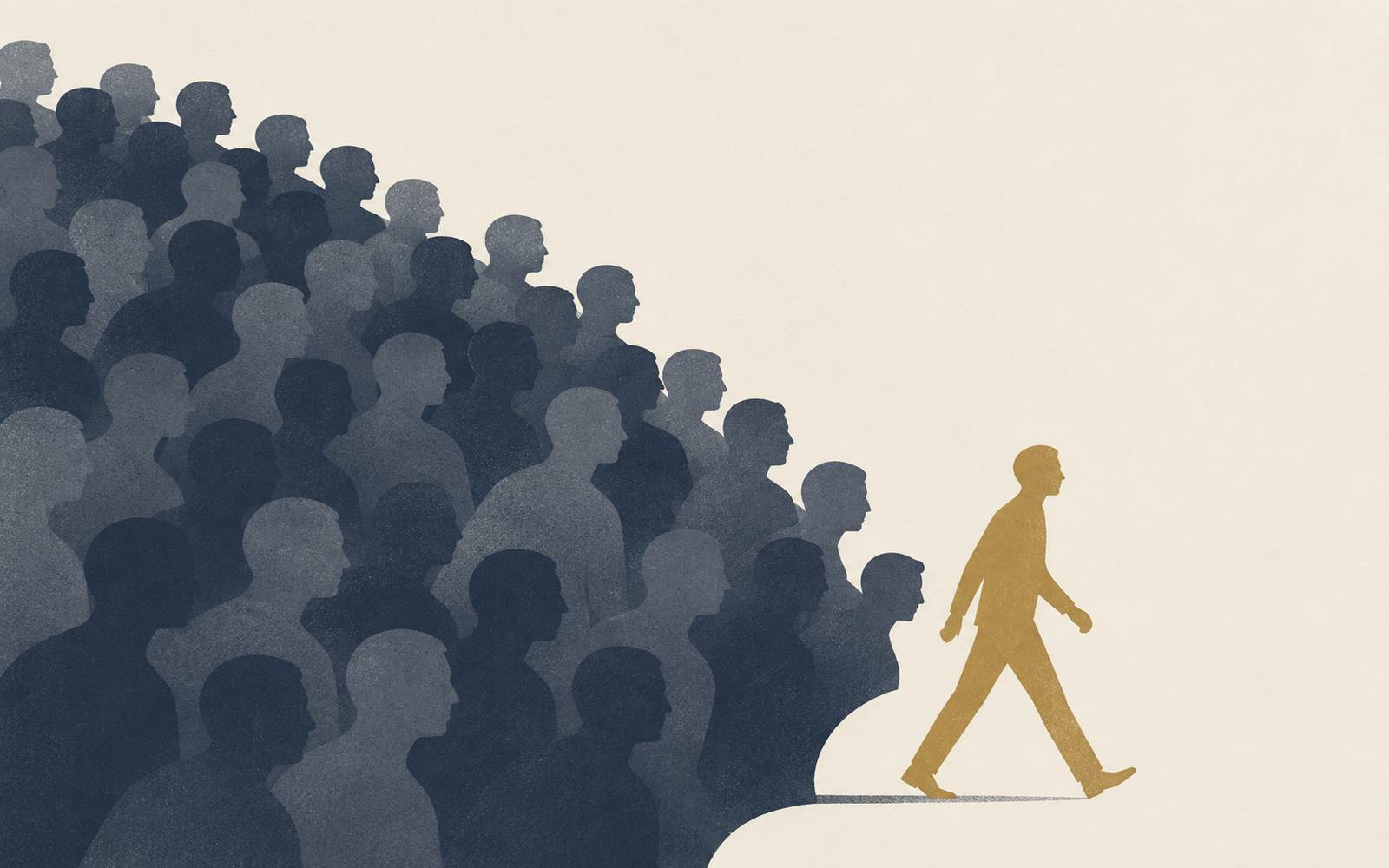
There's one more piece that's easy to miss. Behavior changes when a person sees why it matters to them, not just to the organization. The same program will land differently for every participant, because each one brings a different history, strength and set of habits. The best learning leaders design for that. They pair a strong, consistent curriculum with room for each person to connect it to their own work and their own goals.
Training will always end in the classroom. The organizations that get a return on it are the ones that plan just as carefully for what happens next, on Tuesday, when the work is real and the choice belongs to the leader.
Want to explore these ideas further? Learn more about my work on leadership, identity and conviction at www.theglennllopis.com.
A program can teach a leader what to do. Only the environment they return to decides whether they do it.
© 2026 Glenn Llopis Group, LLC. All rights reserved.
This article is the original work of Glenn Llopis and is protected by copyright. It may not be republished, reproduced, distributed or adapted, in whole or in part, in print, online or by AI tools, without prior written consent. You are welcome to share the link or quote a brief excerpt with credit to Glenn Llopis and a link back to this page. For permission requests, contact solutions@glennllopisgroup.com.
Get the next essay in your inbox
New essays on leadership, identity and conviction, sent to you when they publish. Free, and you can unsubscribe anytime.
Thank you. You're subscribed to Conviction Chronicles.
Something went wrong. Please try again.