Individuality
·
Culture
Your Job Must Love You Back
Economist Olga Yakusheva and physician Sumita Yadav see the same problem from different angles: healthcare treats the people who give the most care as if they matter least.

Some people come to healthcare economics through spreadsheets. Olga Yakusheva came through her mother's hospital bed.
Olga, an economist and professor of nursing at the Johns Hopkins School of Nursing, told me during our Belonging and Retention season that her work is personal. She spent the last months of her mother's life in a hospital room with her in Kazakhstan. The physicians, she said, would come in and barely look her mother in the eye, offering cheerful updates about test results that no longer meant much. The nurses were different. They held her mother's hand, kept Olga informed when she couldn't be there and encouraged them both honestly.
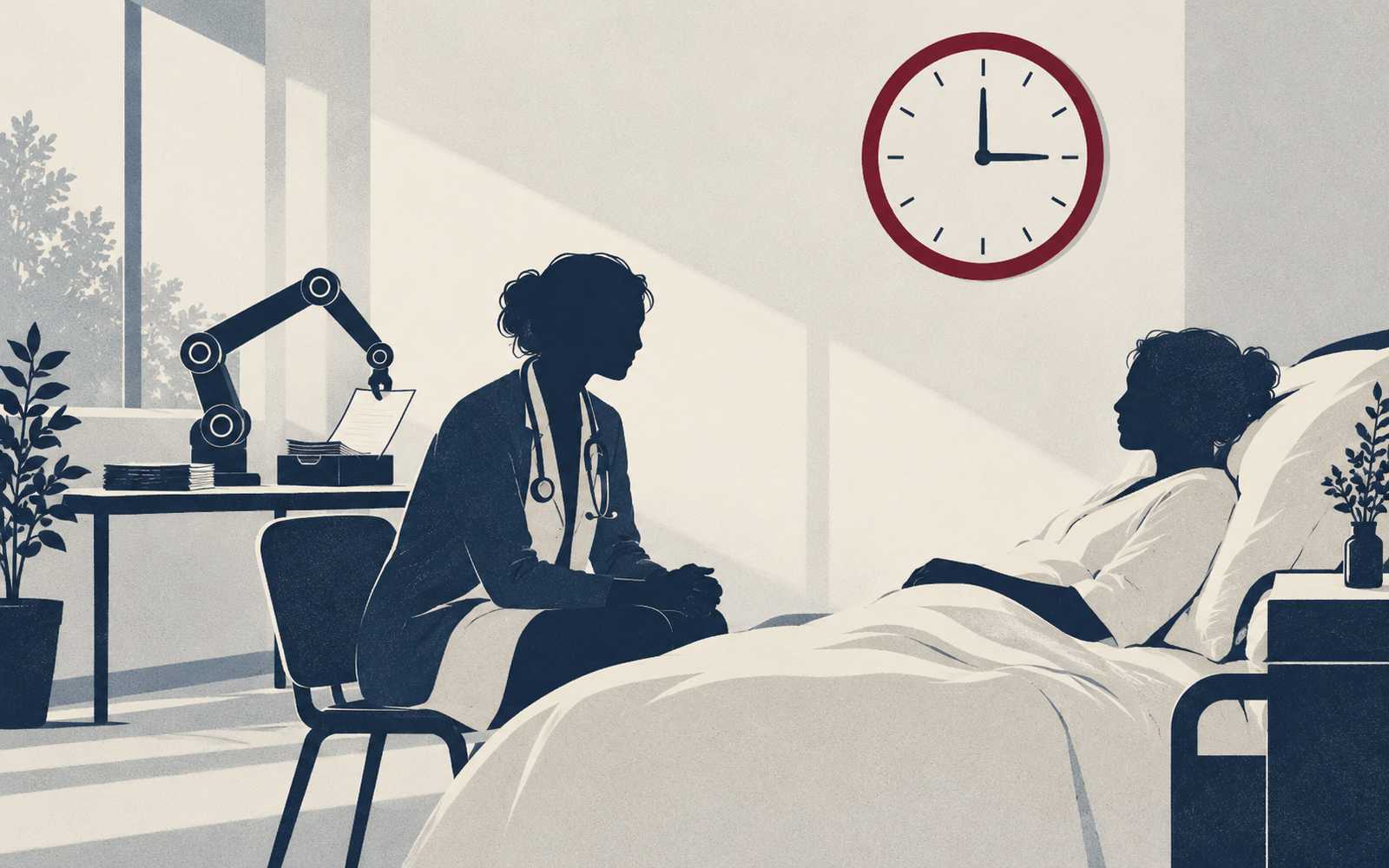
And yet whenever a physician, a therapist or even a janitor entered the room, the nurses seemed to blend into the background. The people who mattered most to her family were treated as if they mattered least.
Olga grew up in a society where injustice was built into the hierarchy, and she says it made her sensitive to the same pattern in healthcare. She noted that nurses have been ranked the most trusted profession year after year. That trust, she argues, has never translated into economic value.
Investment or overhead?
That experience led Olga to develop what she calls the Nursing Human Capital Value Model. It starts from a simple shift: treat nurses as an investment rather than as overhead.
She offered a thought experiment I keep repeating. Imagine every administrator in a hospital disappeared overnight. It might take hours for anyone to notice. If every physician disappeared, it would be noticed immediately, but experienced nurses could hold things together for a while. If every nurse disappeared, the hospital would come to a halt within minutes.
Yet nursing is often treated as one of the largest costs to cut. Olga put it in terms anyone can understand. "Our healthcare organizations are renting nurses instead of owning and putting their investment in the value of the nursing staff." Travel nursing, she said, is a symptom, not a cause. The system makes it cheaper to rent than to invest, so experienced nurses burn out and young nurses leave within a few years.
Then Olga said something every caregiver needed to hear: "Just because you like your job does not mean that you can't be paid well for it too. Your job must love you back."
A system covered in bandaids
Sumita Yadav sees the same problem from inside the clinical world. She trained as a physician in India, where her parents took enormous pride in having a doctor in the family. Becoming a physician, she reminded me, takes far longer than most professions. Yet today she sees clinicians spending hours a day on electronic records and moving from one trauma to the next with no time to process any of it. She has watched surgeons cry in her office when an outcome wasn't what they had worked for.
Her diagnosis was blunt. "The entire model looks like it's covered with bandaids. It is imploding from within because it's no longer sustainable."
She asked three questions every health system should take seriously. Are we choosing the right people? Are we training them well? Are we giving them an environment built on trust? She suggested healthcare learn from police departments that schedule mental health check-ins after a traumatic event. "If we cannot take care of our own health, how are we going to take care of others?"
Purpose is not a substitute for respect
Healthcare has long relied on the fact that people choose it for meaning. Nurses and physicians care deeply about their patients, and organizations have sometimes leaned on that commitment to ask for more while giving less.
Olga believes the shift has to start with nurses themselves, as early as nursing school. Many feel guilty asking for more, as if every dollar they earn is taken from a patient. She wants nurses taught from their first year that they create value, and how the money in healthcare actually flows. She also pushed back on me when I suggested the barriers were mostly self-inflicted. There is a long history, she said, of nurses being told to stay in their place. But she agreed on one point. "Nobody will fix this for nurses."
Questions for health system leaders
- Does your budget treat clinical staff as a cost to reduce or an asset to develop?
- How much are you spending to rent talent that could be invested in the people you already have?
- Where in your organization do clinicians have time to process difficult cases?
- If you asked your nurses whether their job loves them back, what would they say?
You can watch my conversation with Olga in The True Value of Nursing and with Sumita in Reimagining Healthcare, both part of the Belonging and Retention season.
Caregivers give a great deal of themselves to their work. The organizations that keep them will be the ones that give something real in return.
Want to explore these ideas further? Learn more about my work on leadership, identity and conviction at www.theglennllopis.com.
Loving your work should never be the reason you accept being undervalued for it.
© 2026 Glenn Llopis. All rights reserved.
This article is the original work of Glenn Llopis and is protected by copyright. It may not be republished, reproduced, distributed or adapted, in whole or in part, in print, online or by AI tools, without prior written consent. You are welcome to share the link or quote a brief excerpt with credit to Glenn Llopis and a link back to this page. For permission requests, contact solutions@glennllopisgroup.com.
Get the next essay in your inbox
New essays on leadership, identity and conviction, sent to you when they publish. Free, and you can unsubscribe anytime.
Thank you. You're subscribed to Conviction Chronicles.
Something went wrong. Please try again.