.svg)
Conviction
·
Self-Awareness
AI Can Fake the Catch. It Can't Fake What You Earned.
AI-generated catches are flooding a small fishing community, and The Atlantic warns we may lose the ability to believe in the accomplishments of others. The deeper lesson: the easier proof is to fake, the more earned conviction is worth.
What the Headlines Miss · Responding to
Bait and Switch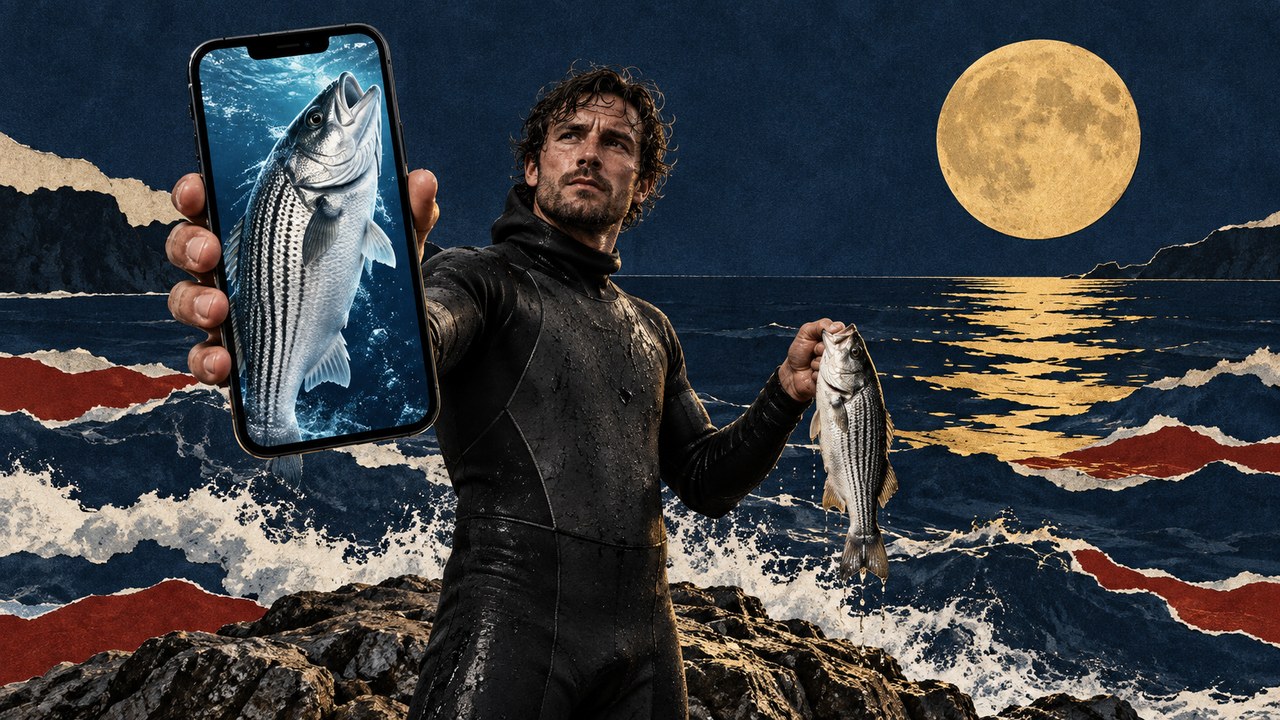
Tyler Austin Harper has written one of the most unexpectedly profound pieces I have read about AI this year, and it is about fishing. In Bait and Switch in The Atlantic, he describes how the small community of anglers who chase striped bass at night in the Northeast surf has been flooded with AI-generated and AI-enhanced catches. Fish with too many stripes. Anglers with six fingers. A dramatic wave that the calm ocean behind it could not have produced.
Harper is clear that a hobby is not the biggest challenge AI poses. But his conclusion reaches far beyond fishing. If we cannot trust what we see, he writes, we risk losing "the ability to believe in the accomplishments of others."
I want to build on that, because underneath the fake fish is something I see in organizations every day.
The Performance Was Already Replacing the Practice
Harper makes an observation that deserves more attention than the AI angle. He wonders whether, for some anglers, the likes and fire emoji had become sweeter than catching the fish itself. He recalls a competitive birder who admitted he would stop birding if the website that logged his sightings disappeared.
AI did not create that problem. It exposed it. When the proof of an accomplishment matters more than the accomplishment, people start managing how they appear rather than developing who they are. AI simply made the shortcut effortless.
The same dynamic plays out at work. When promotions, praise and visibility flow to whoever looks most impressive, people learn to invest in the look. Over time, they can lose touch with the substance that made them valuable in the first place.
In my work, I call this the edit: the parts of ourselves we leave out, or add in, to fit what an audience rewards. Most of the time the edit is subtle. We perform confidence we do not feel. We describe a role in more impressive terms than the work deserves. We let a highlight reel stand in for a whole person. In the workplace, the edit now shows up in résumés polished by AI, presentations generated in minutes and personal brands built on appearance instead of substance.
Why Earned Matters More Now
I define conviction as the earned capacity to act on what you believe before the outcome is certain. The operative word is earned.
Harper describes what it takes to be even remotely good at wetsuiting: months or years learning how the fish move, real risk from the water and the sharks, the discipline of photographing and releasing a fish safely. That is how conviction is built. Not in the image, but in the repetitions no one sees.
Here is the paradox. The easier it becomes to fake the evidence, the more valuable the real thing becomes. When anyone can generate a trophy, people will look harder for proof that cannot be generated: the way you think in a live conversation, the judgment you show under pressure, the record of what you did when it was hard. In the age of AI, conviction is one of the few things that cannot be automated.
As I explored in Being Authentic Isn't Enough. You Have to Be Convicted About It., authenticity without conviction is easy to imitate. And as I wrote in 4 Ways to Maintain Your Authentic Identity in the Age of AI, the leaders who stand out will be the ones whose identity is grounded in what they have actually lived.
What Leaders Can Do
Organizations are not immune to the documentary impulse Harper describes. Many reward visibility over contribution, polish over substance and the slide deck over the thinking behind it. If that is what the room celebrates, people will learn to perform for it, and AI will help them.
Three questions can help leaders reward what is earned.
What do we celebrate: the work, or the appearance of the work? Notice whose contributions get recognized and why.
Where do we see people think in real time? Create moments, from live problem solving to candid debriefs, where judgment shows up unedited.
Do our people know what they solve for? Someone who can answer that question in a sentence has something no tool can generate for them.
Standards still matter. Fishing magazines now run submissions through AI detection, and organizations will need their own safeguards. But detection only protects the evidence. Leaders protect the practice.
The Fish Was Never the Point
Harper notes that people are drawn to watch others do difficult things, from free solo climbing to big wave surfing. We are inspired because the accomplishment is real and the effort behind it is human.
That is worth protecting at work too. The people we trust most are rarely the ones with the best highlight reel. They are the ones whose results we have watched them earn.
AI can fake the catch. It cannot fake what you earned.
Want to explore these ideas further? Learn more about my work on leadership, identity and conviction at www.theglennllopis.com.
The easier it becomes to fake the evidence, the more valuable the real thing becomes.
© 2026 Glenn Llopis. All rights reserved.
This article is the original work of Glenn Llopis and is protected by copyright. It may not be republished, reproduced, distributed or adapted, in whole or in part, in print, online or by AI tools, without prior written consent. You are welcome to share the link or quote a brief excerpt with credit to Glenn Llopis and a link back to this page. For permission requests, contact solutions@glennllopisgroup.com.
Get the next essay in your inbox
New essays on leadership, identity and conviction, sent to you when they publish. Free, and you can unsubscribe anytime.
Thank you. You're subscribed to Conviction Chronicles.
Something went wrong. Please try again.



.svg)
.svg)
.svg)
.svg)
.svg)
.svg)
