
Conviction
·
Self-Awareness
The Uncomfortable Middle Is Where Teens Become Themselves
In Fast Company, Ericka Sóuter asks whether AI is raising a generation that never has to figure things out, from homework to what to text a friend after a fight. Finding the words is how a teen finds herself. Confidence handed over by a tool is on loan, and only struggle builds the kind that lasts.
What the Headlines Miss · Responding to
Is AI raising a generation that doesn't have to figure things out?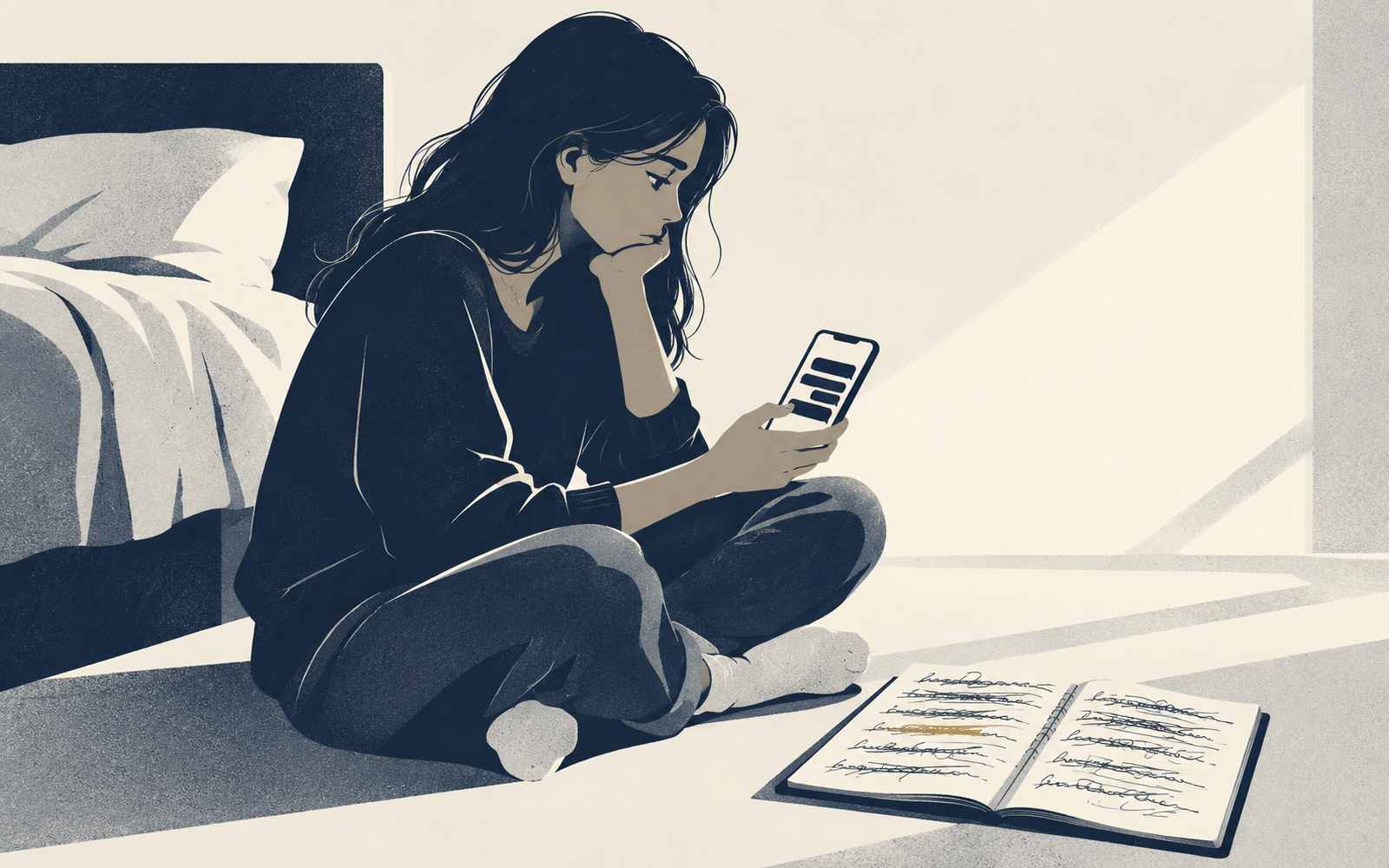
In Fast Company, Ericka Sóuter opens with a scene many parents will recognize. A teenager has a fight with her best friend. Not long ago she would have spent the day replaying it, venting, practicing an apology and agonizing over what to text. Now she can ask AI what to say, and it will probably sound better than anything she would write herself. In Is AI raising a generation that doesn't have to figure things out?, Sóuter argues that this is exactly the problem.
Her concern goes well beyond homework. She worries that AI lets young people skip what she calls "the uncomfortable middle," the stretch of muddling toward an answer where growth actually happens. She cites a Pew Research Center survey finding that 54% of U.S. teens have used chatbots for help with schoolwork and 12% have used them for emotional support or advice. She is fair about the upside, too. AI can help a struggling algebra student or let a shy teen rehearse a hard conversation. The line she draws is between using AI to help you think and letting it think for you.
Finding the Words Is Finding Yourself
I want to stay with the text to the friend, because it reaches further than it seems. When a teenager struggles over what to say after a fight, she isn't just drafting a message. She is working out what she feels, what she is sorry for, what she won't apologize for and what kind of friend she wants to be. The words and the self arrive together. Hand the words to a machine, and the self has nothing to form around.
That is why a polished AI answer can quietly cost more than a clumsy human one. The clumsy message belongs to her. Whatever happens next, she learns something true about herself from how it lands. The polished one belongs to no one. If it works, she learns the tool is good at friendship. If it fails, she learns nothing at all.
I have written about how young people discover who they are through real relationships rather than constant reflection in A Chatbot Can Keep Teens Talking. It Can't Help Them Become Themselves. Sóuter adds an important layer. The risk isn't only the chatbot that acts like a friend. It is the chatbot that quietly does the work of being one.
Confidence Has to Come From Somewhere
Sóuter points to what developmental psychologists call mastery experiences, the moments when people build confidence by doing something hard themselves. Every parent can name a few from their own adolescence: the apology that went badly, the school project that made no sense until it suddenly did, the decision that seemed brilliant at 16 and foolish at 17.
Those moments produce the only kind of confidence that lasts. A teen who has survived getting it wrong knows she can survive it again. A teen who has always been handed the right answer has confidence on loan, and the loan comes due the first time the tool isn't there or the question is one no tool can answer. Conviction, the earned capacity to act on what you believe before the outcome is certain, grows only from the first kind.
Sóuter also turns the mirror on parents, and she is right to. Many of us have become experts at clearing obstacles for our children, emailing teachers about grades and stepping into their friendships. AI didn't invent the habit of removing struggle from childhood. It just made it available around the clock. I explored how adults shape the conditions where young people build their own agency in Agency Isn't Born. It's Earned in the Rooms We Create.
What Families Can Try This Week
Start with Sóuter's simplest advice: your own thinking comes first, and AI comes second. Before your teen asks a chatbot to explain a friend's behavior, ask what they think happened. Before it outlines an essay, give them fifteen minutes to build their own argument.
Make room for the clumsy version. When your teen shows you something they wrote themselves, respond to what it reveals about them before you comment on how it reads.
Agree on a few family rules for when AI comes in and when it waits. Clear, consistent expectations help teens use the tool well and spare everyone a nightly negotiation. Inside those rules, leave real space for your teen to decide things on their own.
And resist the urge to rescue. The next time your teen is stuck on a problem that won't hurt them, let them stay stuck a little longer. Ask questions instead of offering answers.
One day our children will face decisions no tool can make for them: whom to trust, when to walk away, when to stand by a belief no one else shares. The uncomfortable middle is where they practice for those moments.
Teens become themselves by struggling to find their own words, so give them room to struggle before they reach for help.
Want to explore these ideas further? Learn more about my work on leadership, identity and conviction at www.theglennllopis.com.
Teens become themselves by struggling to find their own words, so give them room to struggle before they reach for help.
© 2026 Glenn Llopis Group, LLC. All rights reserved.
This article is the original work of Glenn Llopis and is protected by copyright. It may not be republished, reproduced, distributed or adapted, in whole or in part, in print, online or by AI tools, without prior written consent. You are welcome to share the link or quote a brief excerpt with credit to Glenn Llopis and a link back to this page. For permission requests, contact solutions@glennllopisgroup.com.
Get the next essay in your inbox
New essays on leadership, identity and conviction, sent to you when they publish. Free, and you can unsubscribe anytime.
Thank you. You're subscribed to Conviction Chronicles.
Something went wrong. Please try again.





