Individuality
·
Self-Awareness
AI Can Teach Skills. College Has to Form the Person.
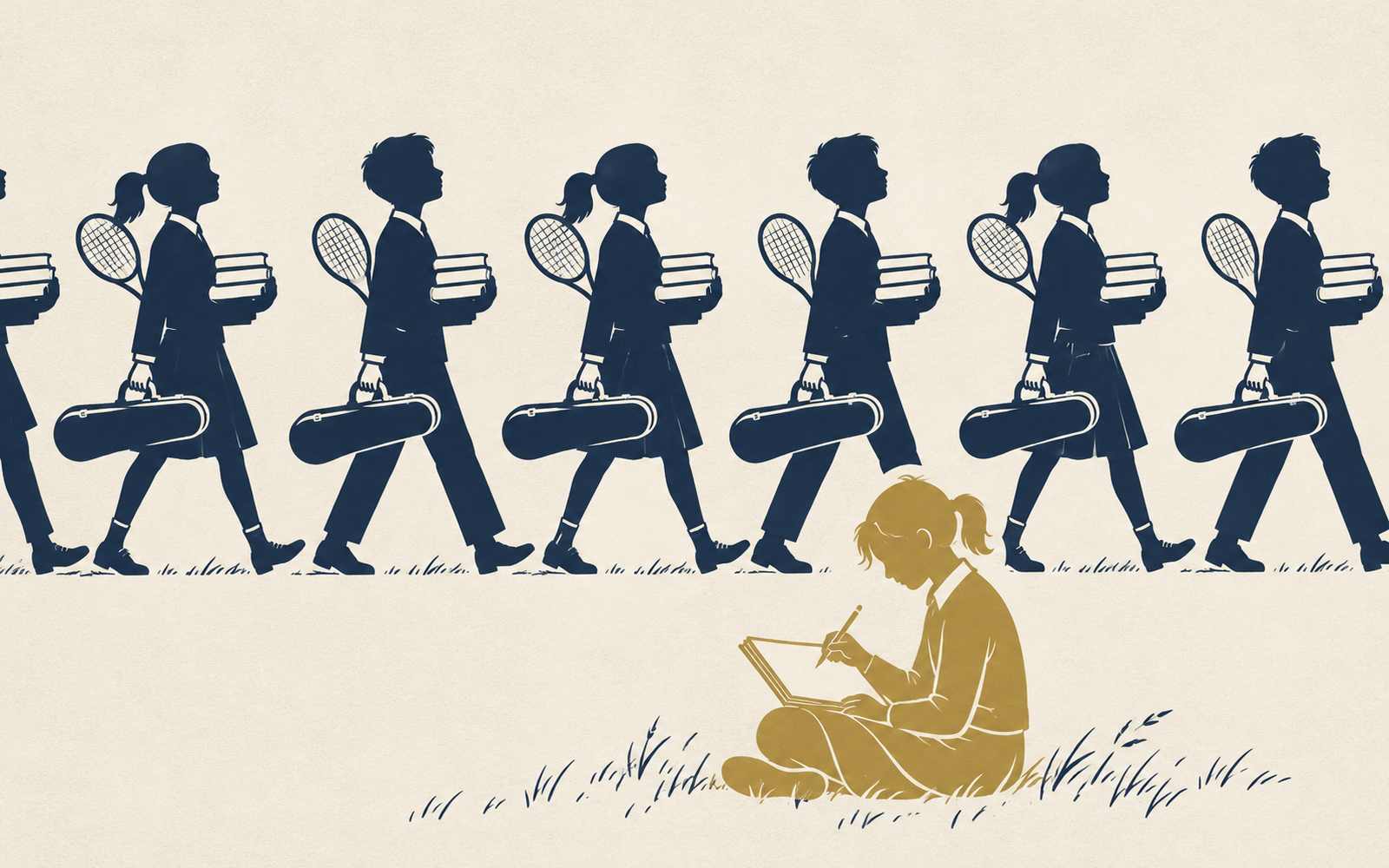
In Inside Higher Ed, UVA dean Christa Acampora argues that AI is clarifying the purpose of college: forming students, not just training them. Formation is identity work. Students can't exercise judgment until they know what they notice, what they enjoy solving and what they believe when no one is grading them.
What the Headlines Miss · Responding to
What Is the Purpose of College in the Age of AI?
In Inside Higher Ed, student success reporter Joshua Bay talks with Christa Acampora, dean of the College and Graduate School of Arts & Sciences at the University of Virginia, about a question every campus is now asking. In What Is the Purpose of College in the Age of AI?, Acampora argues that AI isn't changing the purpose of a college education so much as clarifying it.
Her reasoning is direct. AI can increasingly do the kinds of things students have traditionally prepared for in their first jobs. So colleges need to look past skills toward what she calls formation: helping students develop the judgment, curiosity and capacity to make meaningful decisions that only a "fully formed person" can bring. She also warns that heavy surveillance of student AI use can make campuses feel less like places where students belong, and she admits no one can predict which jobs will matter when today's freshmen graduate.
Formation Is Identity Work
I think Acampora has named the most important shift in higher education, and I want to add a layer to it. Formation doesn't happen in the abstract. A student can't develop judgment without first learning something about who they are: what they naturally notice, what kinds of problems hold their attention and what they believe when no one is grading them.
Many students arrive on campus without ever having been asked those questions. They have spent years learning to give the right answer, fill the right boxes and become the applicant they thought admissions offices wanted. Then we ask them to exercise independent judgment. It is hard to exercise judgment that has never had room to form. Students who have spent years performing for a rubric often need someone to ask, for the first time, what they actually think, and then to wait patiently for an honest answer.
That is why a shift from skills to capabilities is really a shift from what students know to who they are becoming. Skills can be listed on a transcript. Formed capabilities show up in how a student handles a question with no clear answer, a disagreement with a friend or a project that fails. I made the case that human skills need room to be human in Human Skills Can't Be Taught Without Room to Be Human.
The Promise Has to Be About the Person
Acampora makes an honest point about career preparation. Colleges can no longer promise students the hot job or a certain income, because no one knows what the market will look like even four years out. That uncertainty frightens parents, and it should change what colleges promise.
The promise that holds up is this: a graduate will leave knowing what they are good at, what they enjoy solving and how to apply it in a world that keeps shifting. Employers increasingly want exactly that. A student who knows how they think can learn any tool. A student who only learned the tool has to start over every time it changes.
Her example from a UVA writing course is instructive. The professor uses AI heavily in class, specifically so students can notice when they are letting it do their thinking for them. That is self-awareness training disguised as a writing assignment. It teaches students to recognize the moment their own voice goes quiet. I saw the cost of skipping that step in the data behind Students Asked the AI Tutor for Answers. Almost No One Asked for Feedback.
None of this argues against clear rules or a rigorous curriculum. Consistent expectations about how and when AI is used help students and faculty alike. The balance Acampora describes is the right one: structure that supports learning, without surveillance that makes students feel watched instead of known.
What Parents and Educators Can Do Now
For parents: when your student talks about college choices, ask fewer questions about majors and more about moments. When did they lose track of time? What problem did they solve that made them proud?
For faculty: build at least one assignment each term where students have to explain what they think before they consult AI, then reflect on how the tool changed their thinking.
For campus leaders: ask whether your career services measure what students can do or whether they help students understand who they are. Both matter, but only one lasts beyond the first job.
And for students: keep a short list of the moments when you felt most like yourself this semester. That list is the beginning of the formation Acampora describes, and no model can write it for you.
AI can teach almost any skill. Only a student who knows who they are can decide what to do with it.
College in the age of AI succeeds when students graduate knowing who they are, not only what they can do.
Want to explore these ideas further? Learn more about my work on leadership, identity and conviction at www.theglennllopis.com.
College in the age of AI succeeds when students graduate knowing who they are, not only what they can do.
© 2026 Glenn Llopis Group, LLC. All rights reserved.
This article is the original work of Glenn Llopis and is protected by copyright. It may not be republished, reproduced, distributed or adapted, in whole or in part, in print, online or by AI tools, without prior written consent. You are welcome to share the link or quote a brief excerpt with credit to Glenn Llopis and a link back to this page. For permission requests, contact solutions@glennllopisgroup.com.
Get the next essay in your inbox
New essays on leadership, identity and conviction, sent to you when they publish. Free, and you can unsubscribe anytime.
Thank you. You're subscribed to Conviction Chronicles.
Something went wrong. Please try again.