Individuality
·
Career Growth
Students Value Who They're Becoming More Than What They'll Earn
A new Qualtrics and Buro Happold survey finds college students value purpose and personal growth most and economic return least. But value drops by senior year, a sign that students are growing without learning how to connect that growth to where they are headed.
What the Headlines Miss · Responding to
What Students Value Most About College
In Inside Higher Ed, Joshua Bay reports on What Students Value Most About College, which covers a new report from Qualtrics and Buro Happold. Based on a spring 2026 survey of 1,007 U.S. college students, the Student Experience Snapshot asked students to rate nine dimensions of college. Purpose and personal growth came out on top, with 74.2% saying they received high or exceptional value from it. Economic return ranked last, at 66.2%.
Two more findings stood out to me. Students who felt a strong sense of belonging were far more likely to rate college as highly valuable, 74% compared with 43% of those with low belonging. And the researchers found what they call a "year four cliff." Perceived value was 70.3% among first-year students and fell to 64.1% by the fourth year, the lowest of any class.
Students Are Measuring Something Different
Most of the public argument about college is an argument about money: tuition, debt and starting salaries. Those concerns are real, and families are right to raise them. But the students in this survey are describing a different return. What they valued most was the experience of becoming someone. Trying new things earned the highest satisfaction in the growth category, at 80.1%, and gaining confidence came in at 74.5%. Being challenged academically, at 75.3%, sat right alongside them.
That is encouraging, and it should change how we talk about value. It also comes with a warning. Satisfaction dropped for exploring career paths, at 69.9%, and for solving real-world problems, at 68.3%. Students are growing. Too often, nobody is helping them connect that growth to where they are headed.
The Year Four Cliff Is an Identity Gap
The survey doesn't establish why value dips in the final year, and the report's co-author points to worries about careers and return on investment. My own read, from years of working with young people and early-career professionals, is that senior year is when the question changes. For three years the question was who am I becoming? Suddenly it becomes what will I do with it? Many students find no bridge between the two.
They know they have changed. They can feel the confidence they gained. What they often can't do yet is put it into words someone else will value: the problems they're drawn to solve, the role they tend to play on a team, the kind of work that brings out their best. Without that language, personal growth feels like a private achievement instead of a foundation for a career. That answer will keep evolving across a lifetime, which is exactly why it is worth starting early. In The Only Constant in a Multichapter Career Is You, I made the case that self-knowledge is what carries people from one chapter to the next. Year four is the first of those transitions.
Belonging Is Where Identity Gets Practiced
The 31-point gap on belonging deserves attention from every campus leader. Belonging is far more than a social extra. It is the environment where students try on who they are, speak up, and find out whether their voice matters. Qualtrics' Katie Johnson described it to Inside Higher Ed as having a place and a voice across the whole experience, including a say in shaping the institution.
The data also shows who has a harder time finding that place. Transfer students rated overall value lowest, at 56.1%, and commuter students rated advising and experience at 61.5%. Colleges have built thoughtful, repeatable systems for welcoming first-time freshmen, and that structure is an asset. The opportunity now is to personalize it for students whose lives don't fit the traditional schedule. I wrote in Human Skills Can't Be Taught Without Room to Be Human that the skills employers want grow in environments that make room for the whole person. Belonging is that room.
What Students, Parents and Educators Can Do
For students: once a semester, ask a professor, coach or supervisor what they see you doing well that you might take for granted. Other people often name our strengths before we can.
For parents: ask about growth alongside grades. What did you try this term that surprised you? When did you feel most like yourself? Those answers are the raw material of a career story.
For educators and career offices: start the bridge in year three, before the cliff. Build career conversations on the growth students already value, and help them translate it into language employers understand. Invite alumni a few years out to describe how what they discovered about themselves in college shaped the work they chose.
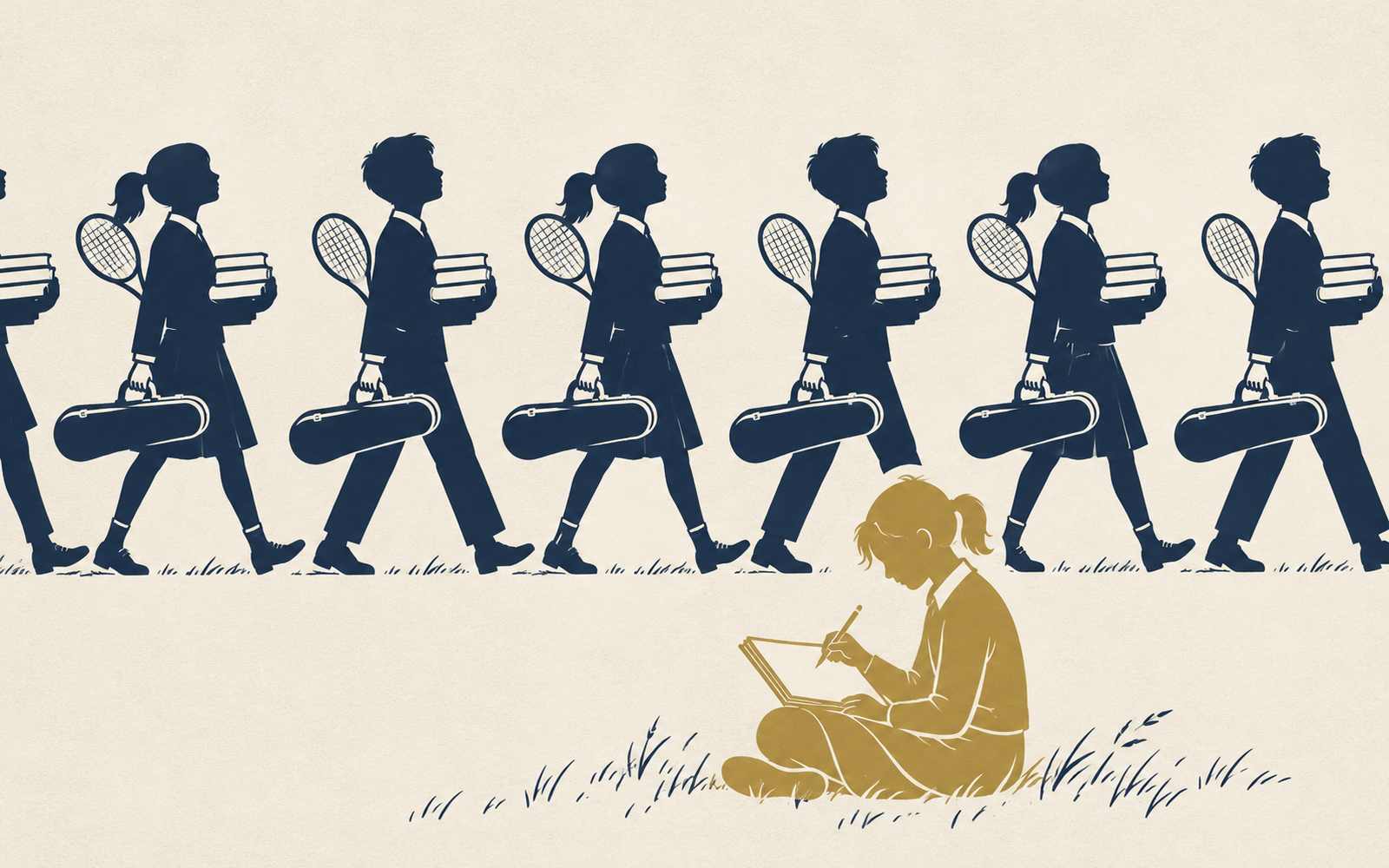
Students are telling us they already know college is about becoming someone. Our job is to help them see that who they are becoming is exactly what the world will need from them.
Growth becomes direction the moment you can name what it has prepared you to solve.
Want to explore these ideas further? Learn more about my work on leadership, identity and conviction at www.theglennllopis.com.
Growth becomes direction the moment you can name what it has prepared you to solve.
© 2026 Glenn Llopis Group, LLC. All rights reserved.
This article is the original work of Glenn Llopis and is protected by copyright. It may not be republished, reproduced, distributed or adapted, in whole or in part, in print, online or by AI tools, without prior written consent. You are welcome to share the link or quote a brief excerpt with credit to Glenn Llopis and a link back to this page. For permission requests, contact solutions@glennllopisgroup.com.
Get the next essay in your inbox
New essays on leadership, identity and conviction, sent to you when they publish. Free, and you can unsubscribe anytime.
Thank you. You're subscribed to Conviction Chronicles.
Something went wrong. Please try again.