
Individuality
·
Self-Awareness
Don't Trade One Admissions Script for Another
Selective colleges are moving from "pointy" applicants to "star-shaped" ones, Forbes reports. The shift is welcome, but the real problem was never the shape. It was teaching teenagers to design themselves for the reader instead of discovering who they are.
What the Headlines Miss · Responding to
What Ivy League Admissions Officers Want From Top Applicants In 2026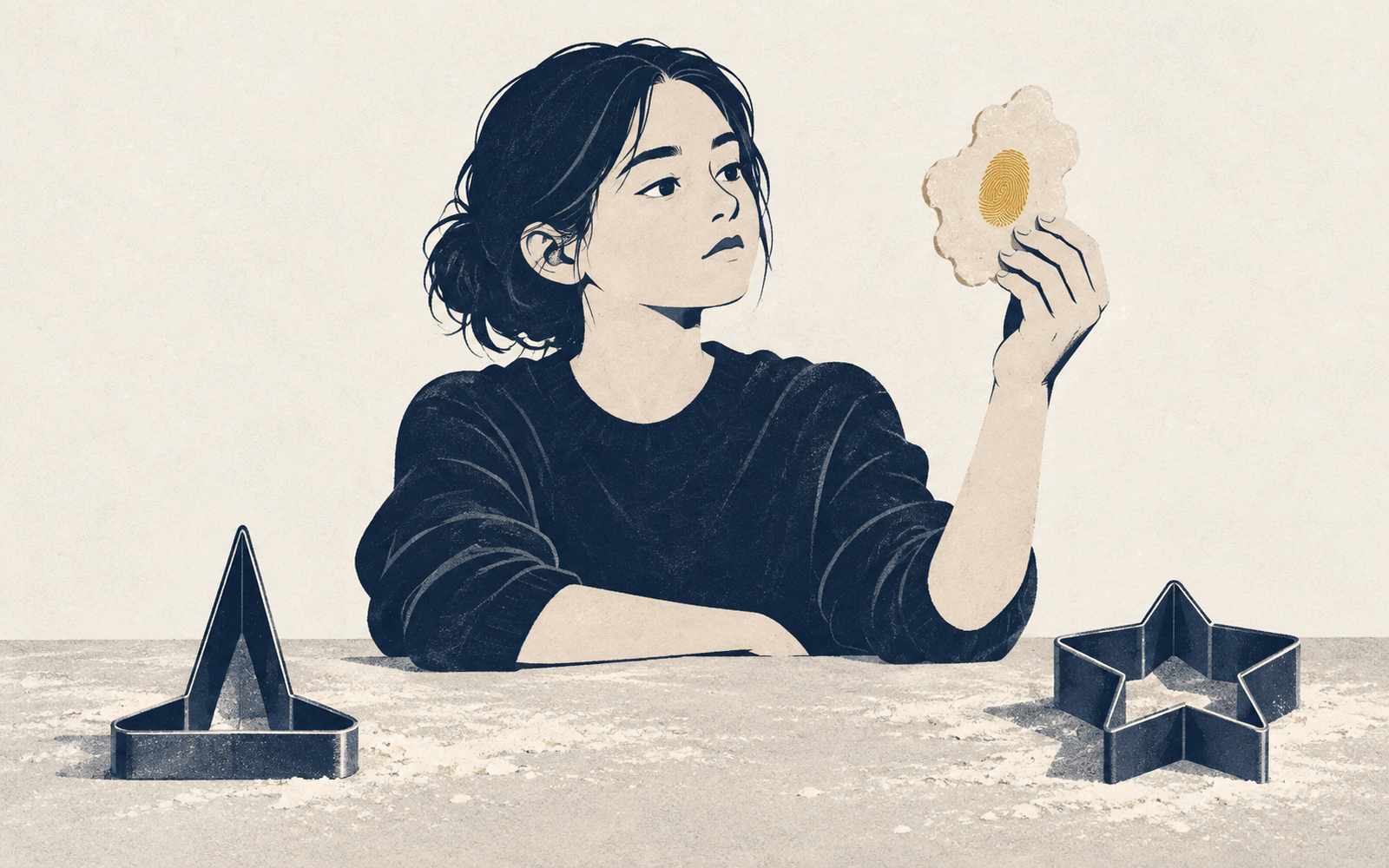
In Forbes, Christopher Rim, the CEO of the admissions consulting firm Command Education, writes about a change in how selective colleges read applications in What Ivy League Admissions Officers Want From Top Applicants In 2026. For about a decade, he explains, families were told to build a "pointy" student: one defining passion, pursued relentlessly from middle school on. That advice pushed students toward depth, but it also produced profiles so linear they looked manufactured. Rim says admissions officers are now drawn to "star-shaped" students who combine interests that don't usually overlap.
His example is a student with a background in computer science, a long fascination with linguistics and a deep connection to the family's heritage language, who builds a tool to help preserve a dialect spoken by a dwindling number of elders in the grandparents' community. Rim's conclusion is one I agree with completely: an application should show how a student thinks and what they will bring, not prove that they have life figured out at 17.
The Honest Part of the Advice
Rim is right that very few teenagers have followed one passion since middle school. Interests shift as young people grow, and the data shows it. Federal research found that about one-third of students in bachelor's degree programs changed their major within three years of enrolling. Asking a 14-year-old to commit to a single story and then arrange four years of activities around it was always a strange request.
So the shift he describes is welcome. It makes room for the messy, curious way most young people actually discover what they care about.
Every Shape Can Become a Script
Still, I want parents to read this carefully, because the trouble with the pointy profile was never really its shape. It was the idea that a teenager should be designed to match what an admissions reader wants to see. Swap in a new shape and the same habit can carry right on.
You can already picture how it might go. A sophomore is encouraged to pick a second, unexpected interest because it will look good next to the first. A summer is planned to create an intersection rather than to explore one. The family's heritage becomes an asset to position instead of part of who the student is. Rim notes that a star-shaped profile is still built deliberately and requires an early start. Some planning is sensible. But when the planning reaches into the identity itself, a teen learns to edit who they are to fit the room, which is the very thing admissions officers are now trying to see past.
I don't fault colleges for having a structure. Readers need comparable information, and a consistent application gives every student the same chance to be read fairly. The structure works when it helps a real person show up. It fails when students start building a person to fit it.
The Most Distinctive Part Wasn't Strategy
Look again at Rim's example. The detail that makes that student unforgettable isn't coding or linguistics. It is a grandparent's community and a language the student grew up close to. No consultant invented that. It came from the student's own life, and it gave the technical skill a reason to exist.
That is where distinctiveness usually comes from. It grows out of who a young person already is and the problems they find themselves pulled toward again and again. Those problems will keep evolving as they grow, and that's fine. The point is to notice them, not to lock them in.
What Parents Can Do This Week
Ask your teen what they do when nothing is being graded or counted. The answer often reveals more than their activities list.
Notice the connections they make on their own, the moment a history lesson reminds them of a video game or a family story explains something from science class. Ask them to say more, and resist the urge to turn it into a résumé line.
Let them quit things. Dropping an activity that no longer fits is part of discovering what does.
Ask a different question about the future. Instead of what they want to be, ask what problem keeps pulling them back. I explored that question in Before Choosing College or the Trades, Ask Who You're Becoming.
Counselors and educators can help too, by giving students space to explore before asking them to package anything. As I wrote in Room to Roam Is Not Enough. Kids Need Room to Be Themselves., young people need permission to be who they are, not just freedom to move.
Rim's advice will help many students tell a more honest story. The deeper opportunity is for the adults around them to stop treating that story as something to engineer. If colleges really want to know how a student thinks, the best preparation is a childhood in which that student was allowed to think for themselves.
The application that stands out is the one a teenager never had to become someone else to write.
Want to explore these ideas further? Learn more about my work on leadership, identity and conviction at www.theglennllopis.com.
The application that stands out is the one a teenager never had to become someone else to write.
© 2026 Glenn Llopis Group, LLC. All rights reserved.
This article is the original work of Glenn Llopis and is protected by copyright. It may not be republished, reproduced, distributed or adapted, in whole or in part, in print, online or by AI tools, without prior written consent. You are welcome to share the link or quote a brief excerpt with credit to Glenn Llopis and a link back to this page. For permission requests, contact solutions@glennllopisgroup.com.
Get the next essay in your inbox
New essays on leadership, identity and conviction, sent to you when they publish. Free, and you can unsubscribe anytime.
Thank you. You're subscribed to Conviction Chronicles.
Something went wrong. Please try again.





