.svg)
Individuality
·
Self-Awareness
Room to Roam Is Not Enough. Kids Need Room to Be Themselves.
The Wall Street Journal's Meghan Cox Gurdon makes a warm case for giving children room to take risks and grow up. She is right. But independence builds confidence, while identity builds conviction. Parents give both when they step back and help kids discover who they are.
What the Headlines Miss · Responding to
Children Need Room to Make Mistakes and Grow Up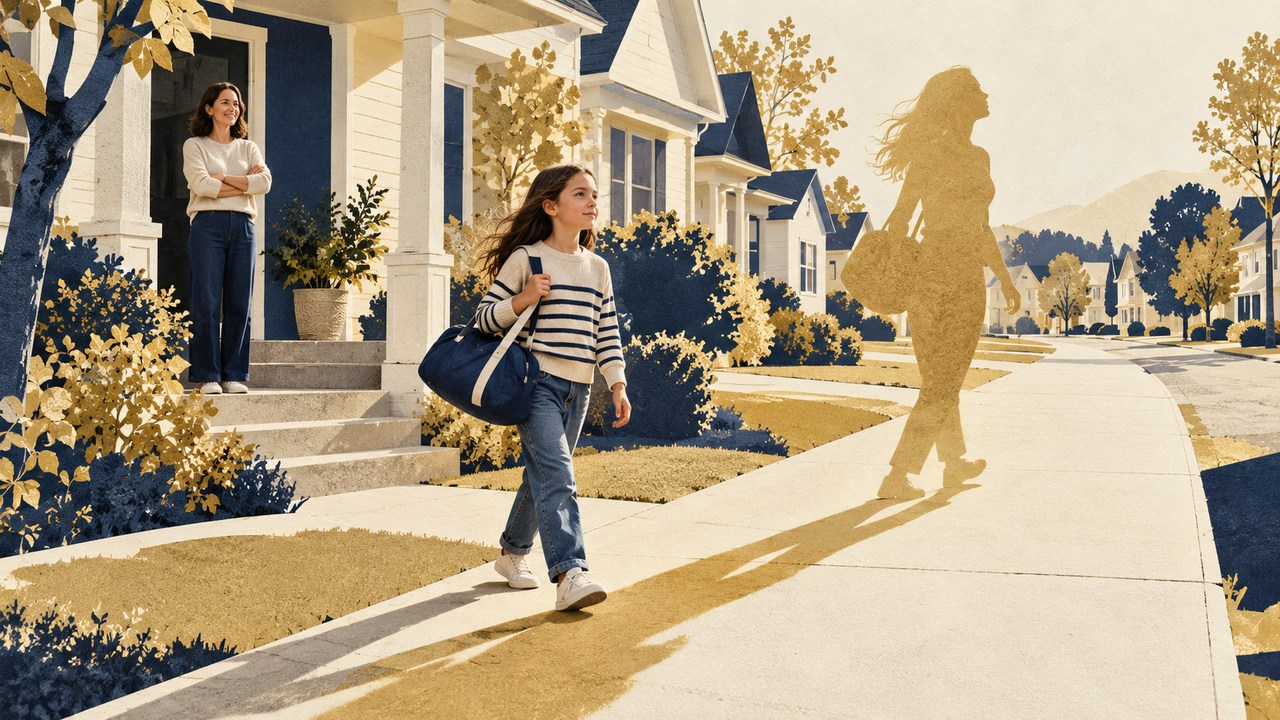
Meghan Cox Gurdon has written a column every parent should read. In Children Need Room to Make Mistakes and Grow Up in The Wall Street Journal, she describes a 10-year-old girl walking home alone from a sleepover, glowing with the quiet pride of doing something by herself. Then she contrasts that girl with a generation of children escorted half a block to the school bus and supervised through every Girl Scout cookie sale.
Her argument is clear and warm. Children are not fragile. A little adversity makes them stronger, and they need chances to find their own way, settle their own disputes and get themselves out of their own scrapes. Giving them that room, she concludes, is not neglect. "It's respect."
I agree with every word. And I want to add what comes next.
Room to Roam Is the Beginning
The data behind Gurdon's concern is real. A Harris Poll of 500 children ages 8 to 12, conducted for Let Grow, found that more than a quarter of 8- and 9-year-olds are not allowed to play in their own front yards. Nearly three-quarters said they would spend less time online if there were more friends in their neighborhood to play with in person.
Kids are asking for freedom. Giving it to them matters.
But freedom alone does not guarantee growth. A child can walk home alone and still spend the rest of the day trying to be whoever the group chat expects. A teenager can be independent in every practical sense and still have no idea who they are. Independence builds confidence. Identity builds conviction.
I define conviction as the earned capacity to act on what you believe before the outcome is certain. Room to roam gives kids practice acting. Knowing who they are gives them something to act on.
The Edit Starts Early
In my work with leaders, I see the same pattern again and again. The executive who is exhausted at 45 is often not tired from the work. They are tired from pretending. As I wrote in The Exhausted Executive Was Once a Kid, that pretending usually began around age fifteen, when they learned which parts of themselves were safe to show and which to hide.
I call this the edit: the parts of ourselves we leave out to fit the room. Children learn the edit in every room they enter. Home, school, friends and screens all teach them, quietly, who they are allowed to be.
That is why the most important question for parents is not only how much freedom to give. It is: Who do we let our kids be?
The screen deserves special attention. Online, children are rewarded for a curated version of themselves, measured in likes and followers. When the physical world offers little freedom, the digital world becomes the main place they practice identity, and it is a room built for performance. Giving kids more real-world freedom is one of the best ways to give them a room where they can simply be themselves.
The Home Room
In my work on Leadership in the Age of Personalization, I ask leaders to read the rooms they create. The same questions apply at home, in simpler words. Is my teen actually in, or just present? Do I see them, or a label? Can they be themselves here? Do they get to do anything real? Do they get to do it their way?
Standards still matter in a family. Rules, values and expectations give children a foundation. The goal is not to drop them. It is to balance them with room for each child to discover what makes them distinct, and to practice expressing it.
In my work, I describe three doors people walk through: Claim, Reclaim and Transform. Adults often spend years reclaiming the parts of themselves they edited out. Children and teens have a better option. They can claim who they are while they are still forming. Every time a parent steps back and lets a child decide, try and recover, they help the claiming happen.
As I explored in Raise the Individual, Not the Resume, the strongest preparation we can give young people is self-awareness and the confidence to adapt, not a perfect list of activities.
Three Questions for Parents
What did my child decide on their own this week? If the answer is nothing, start small: a route, a purchase, a plan for a Saturday.
What do I notice about who my child is becoming? Ask what they noticed today instead of how their day was. You will hear more of who they are.
Where does my child feel they have to edit themselves? Home should be the one room where the answer is nowhere.
Gurdon is right that giving kids room is a form of respect. The deepest respect goes one step further. It trusts children not only to find their way home, but to find out who they are.
Want to explore these ideas further? Learn more about my work on leadership, identity and conviction at www.theglennllopis.com.
Independence builds confidence. Identity builds conviction. Children need room for both.
© 2026 Glenn Llopis. All rights reserved.
This article is the original work of Glenn Llopis and is protected by copyright. It may not be republished, reproduced, distributed or adapted, in whole or in part, in print, online or by AI tools, without prior written consent. You are welcome to share the link or quote a brief excerpt with credit to Glenn Llopis and a link back to this page. For permission requests, contact solutions@glennllopisgroup.com.
Get the next essay in your inbox
New essays on leadership, identity and conviction, sent to you when they publish. Free, and you can unsubscribe anytime.
Thank you. You're subscribed to Conviction Chronicles.
Something went wrong. Please try again.




.svg)
.svg)
.svg)
.svg)
.svg)
.svg)
