.svg)
Individuality
·
Culture
Healthcare Needs People Experts Now
Healthcare is personalizing care while still running its people strategy on standardization. HR can be the biggest advocate for personalization or its biggest hurdle. Here is how to choose.
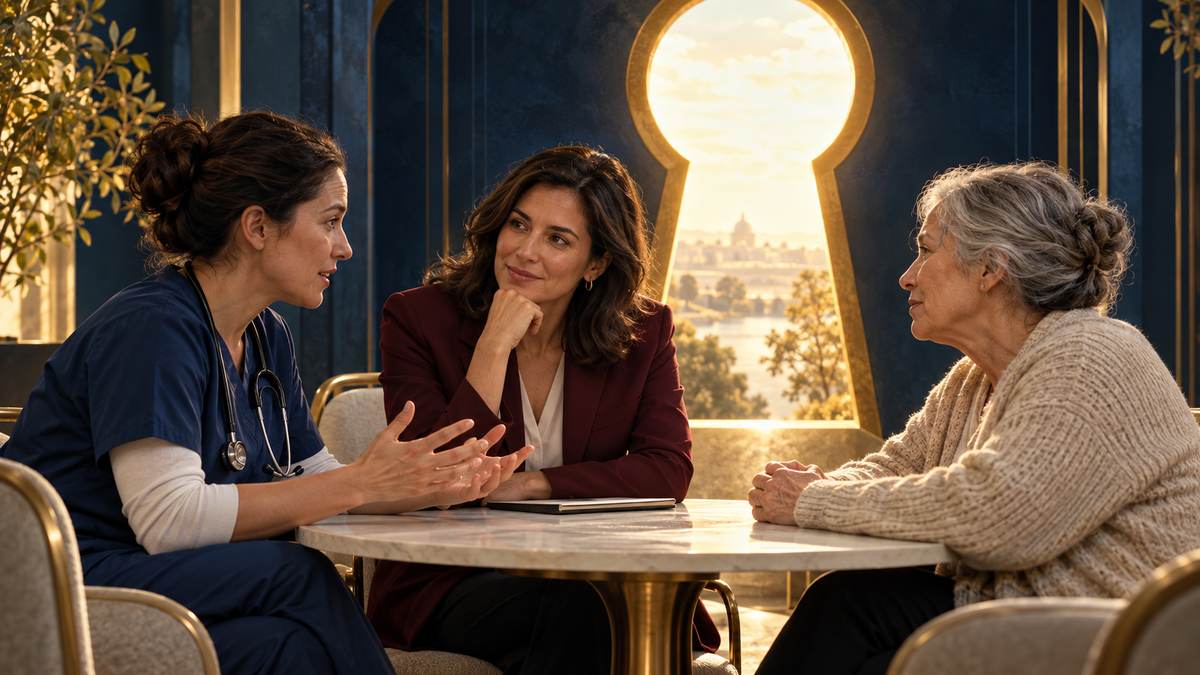
HR can be the biggest advocate for personalization in healthcare, or its biggest hurdle. Health systems have spent years investing in personalized medicine and digital access, yet one function is too often left out of the transformation conversation: the people who manage people.
That is a costly blind spot. Every personalization strategy eventually runs through the workforce. It's people who will deliver the innovation, people who will change how patients are served and people who will decide whether a new model takes hold or quietly fails.
Trained for the Opposite
Most HR leaders have been trained in standardization. That's not a criticism. For decades, the job was to keep a complex organization compliant, consistent and safe. Healthcare's culture reinforces this. People are used to working under policies, procedures and protocols, and many of those protocols save lives.
But the systems HR inherited were designed for the opposite of personalization. Job architecture, performance reviews, career paths and benefits were built to treat people the same. Now leaders are asking those same systems to help them know and activate each individual.
We have to change the system, and HR is where that change either starts or stalls.
The Talent Pressure Is Real
Health systems everywhere are competing for the same scarce clinicians, and many are losing people faster than they can replace them. Nursing, allied health and support roles face their own shortages, and burnout continues to push people out.
In that environment, a standardized people strategy is a retention risk. People in healthcare leave when they can no longer pursue their mission. They are asking a simple question: can I go after my career mission here? If the answer depends on fitting into a rigid box, many will look elsewhere.
Think about what a personalized people strategy would look like in practice. Schedules designed around the realities of the people working them. Career paths that recognize capability, not just credentials. Development conversations that start with what each person naturally does best. Recognition that reflects what individuals actually value. It simply requires HR to know people as individuals, the same way we now ask clinicians to know patients.
Healthcare Is a Vertical, Not a Function
Another challenge is perception. Too many students and career changers see healthcare as doctors and nurses only. They miss the finance professionals, technologists, data scientists, engineers and operations experts it takes to run a health system. Treating healthcare as an industry with many paths, rather than a single function, widens the talent pool and helps people see where their individual strengths belong.
What Comes After the Training
Many organizations respond to culture challenges with a round of awareness training. But I don't want to hear about your training. I want to hear about what comes after your training.
Some of the first ways to operationalize personalization are to define the specific problem you're trying to solve and then measure it. Do people feel standards are applied fairly? Do they see favoritism? Do bystanders who witness someone being diminished feel empowered to speak up in the moment? These are measurable, and what gets measured can be managed.
From Administrator to Business Partner
A cancer surgeon I interviewed told me how he learns what is really happening in his department. He hangs out with the OR staff, even in the OR lounge, just chatting and swapping personal stories. That's how they get to know each other. When people vent about why something is being done a certain way, he hears it. To him, that is communication. Then he warned me that once leaders move into the C-suite, they tend to lose touch. People experts can't afford that distance.
The profession is already evolving. HR leaders once focused mainly on the competencies needed to stay compliant. Today they are expected to bring business acumen and contribute to how programs are designed and evaluated.
The people experts who earn real influence do something practical: they understand each executive's priorities and ask what role HR plays in every one of those goals. Culture is built one business priority at a time, by people experts who can connect what the organization wants to achieve with the individuals who will achieve it.
Look Past the Completion Rate
- Design: Which of our people processes still assume everyone should be treated the same?
- Mission: Can employees at every level see a path to pursue their career mission here?
- Measurement: Beyond training completion, what are we measuring about how people experience fairness and respect?
- Partnership: Does HR have a defined role in every one of the executive team's top goals?
- Tools: Are we using our systems and technology to know our people better, or only to process them faster?
The People Department Must Be the Most Sophisticated
At a time when we are personalizing healthcare, HR should be one of the most sophisticated departments in the organization. Understanding people intelligence is no longer a support activity. It is the strategy.
It's people who will deliver the innovation needed to grow. It's people who will revolutionize the way you serve patients, employees and your community. It's people who will transform healthcare for this age of personalization. Healthcare needs its people experts to lead.
Want to explore these ideas further? Learn more about my work on leadership, identity and conviction at www.theglennllopis.com.



.svg)
.svg)
.svg)
.svg)
.svg)
.svg)
