.svg)
Individuality
·
Leadership
Market-Driven or Operations-Driven: Who Is Leading Your Company?
Companies rarely lose momentum all at once. They lose it quietly, when leaders protect the business instead of looking for where it's headed. Competitive advantage isn't copied. It's created.
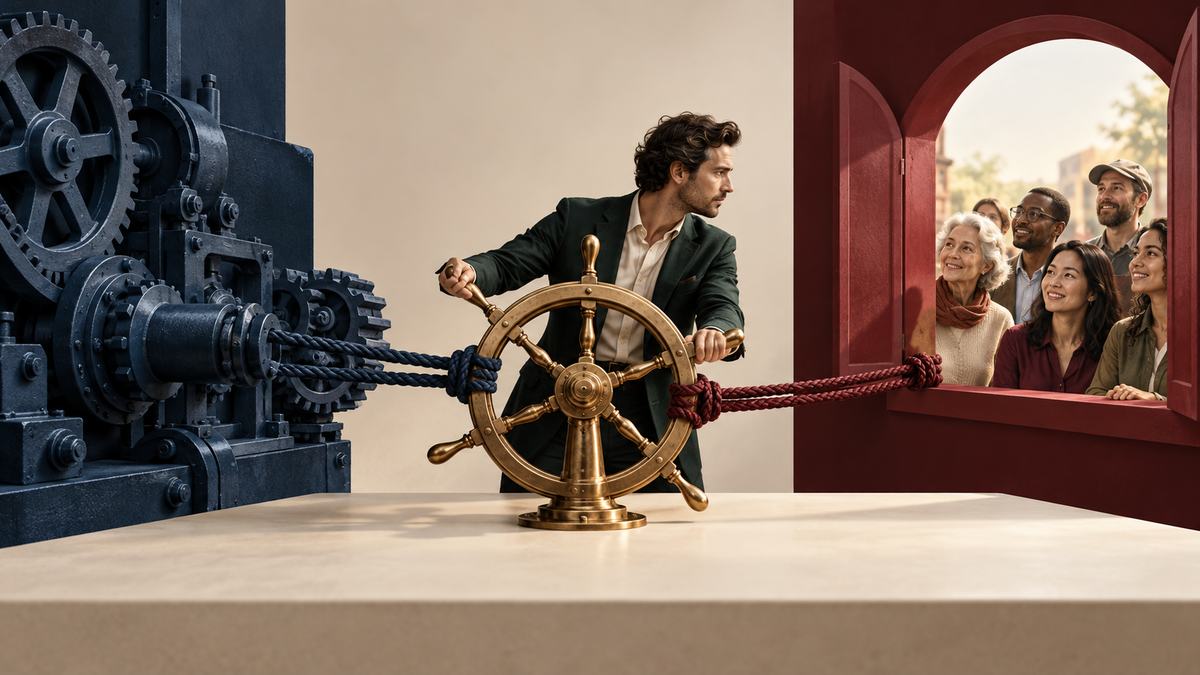
Companies rarely lose momentum all at once. They lose it quietly, when they fail to see the opportunities their competitors are consistently seizing. By the time the numbers show it, the gap is already wide.
It almost always starts at the top. Senior leadership stops changing with the marketplace and with the customers who expect brands to evolve with them. Leaders lose the skills to stay in lockstep with the market, let alone stay ahead of it and define the trends themselves.
The warning signs are usually loud. Employees and customers are telling the company it's time to do things differently. The question is whether anyone at the top is listening.
Lost momentum is expensive to regain. It takes far more energy to restart a stalled organization than to keep a moving one moving.
Two Kinds of Leaders
I've long described two kinds of leaders: operations-driven and market-driven.
Operations-driven leaders focus on the here and now. They protect what works, rarely change and believe they are not vulnerable to new market conditions. They lack the vision to see beyond the obvious, and they grow complacent easily.
Market-driven leaders are constantly searching for what's next: new ways to shape workplace culture, new products and new ways to engage employees and customers. Their companies stay steps ahead of the market and set the tone for the industries they lead.
The difference isn't intelligence or effort. It's where their attention goes: inward to protect the business, or outward to understand where it's headed.
Every company needs operational discipline. But when operations-driven thinking runs the whole leadership team, the company ends up optimized for a market that no longer exists.
Are You Leading or Mimicking?
Here's a simple test. How much time do your leaders and employees spend watching what competitors do? And how much do they spend defining what customers will need next?
Mimicry feels safe. If a competitor launches a new feature, you launch one too. If they restructure, you restructure. But imitation guarantees you'll always be a step behind, and it teaches your organization to wait for someone else to go first.
Look at how quickly AI tools spread across industries. Many companies adopted them because competitors did, not because they had a clear idea of what their customers needed. The result is a lot of similar products and very little distinction.
Competitive advantage isn't copied. It's created, by leaders who understand their customers and employees well enough to see what they need before a competitor does.
What's on Your Bookshelf?
When I walk into a leader's office, the first thing I do is glance at the desk and bookshelves. What are they reading? Who is influencing their thinking? It tells me a great deal about their mindset, how they manage their time and what they're doing to find the next big opportunity.
Today I'd add a few questions. What podcasts and newsletters shape their week? Whom do they talk to outside their industry? When did they last spend time with a customer, or with someone twenty years younger than they are?
A leader's inputs predict the leader's outputs. Leaders who only consume what confirms their view see the glass as half empty: every new idea is a risk, every change a threat. Leaders with wider inputs see the glass as half full, because they can see what's possible.
Urgency Without Fear
Market-driven leaders create a sense of urgency, not out of fear, but as a way to stretch the organization's thinking. You might be winning now. The market can still catch you by surprise, and competitors are always ready to beat you at your own game.
That's why every leader must be a change agent or face extinction. A change agent is optimistic about the future and still prepares for the unexpected with a healthy dose of skepticism. Leaders who resist change, and whose tone and attitude broadcast negativity, are a crisis waiting to happen.
Preparation today means understanding the people you serve. Your customers and employees are more individual than ever in what they value, how they buy and how they want to work. Leaders who still design for an average customer, or an average employee, will be blindsided by competitors who design for the individual.
Five Questions for Your Leadership Team
- Are we defining trends in our industry, or reacting to them?
- What did we learn from a customer this month that changed a decision?
- Which competitor move did we copy last year, and did it work?
- Who outside our industry is shaping our thinking?
- If a competitor started today with our resources, what would they do that we won't?
The companies that grow and compete for years to come are led by people who can see beyond the obvious. Momentum belongs to the leaders who go looking for it.
Want to explore these ideas further? Learn more about my work on leadership, identity and conviction at www.theglennllopis.com.




.svg)
.svg)
.svg)
.svg)
.svg)
.svg)
