.svg)
Individuality
·
Leadership
The End of Command and Control
Command and control leadership is ending. Today's informed patients, employees and students expect to be known, and AI is changing where authority comes from. Here is what leaders lost along the way, and how to get it back.
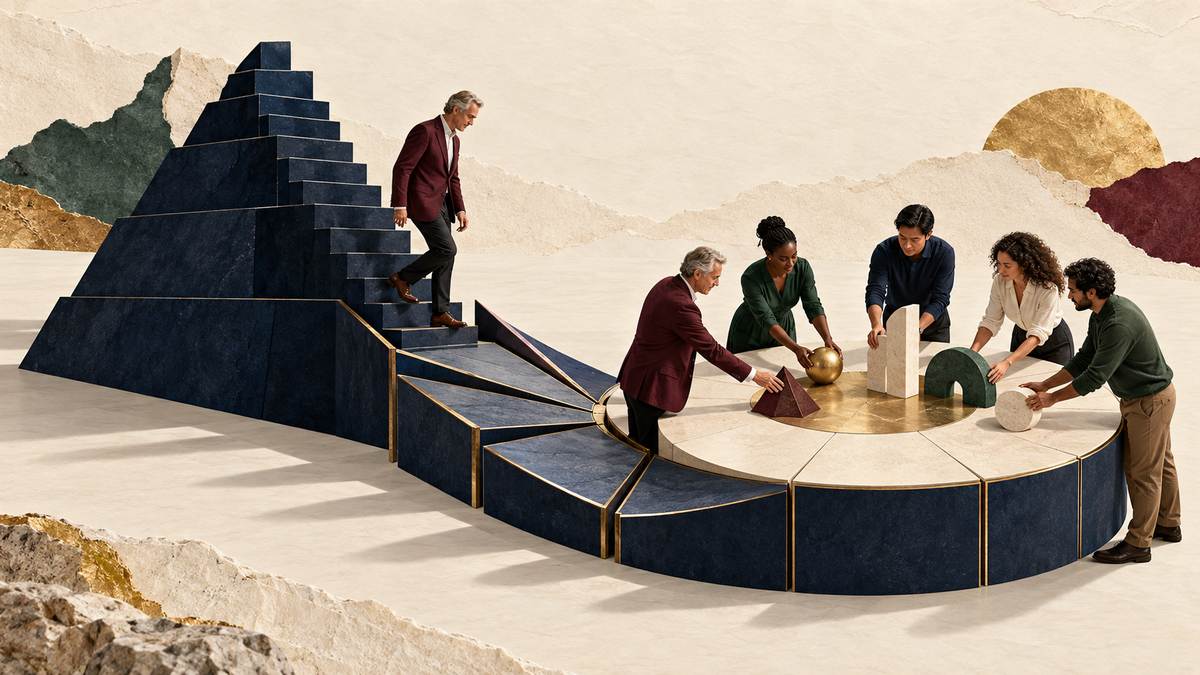
"Command and control" leadership is coming to an end. It was built for a world where leaders held the information, set the standard and expected everyone to follow it. It rewarded compliance, measured people against a single standard and assumed the person at the top knew best. That world is gone.
Today we serve a much more informed and knowledgeable individual. The patient walks into the exam room having already researched the diagnosis. The employee knows how peers at other companies are paid, developed and trusted. The student can learn almost anything, anywhere, at any hour.
Each of them expects more from their leaders. Each of them can tell quickly when a leader is managing them as a category instead of knowing them as a person. This is the collapse of standardization: one-size-fits-all leadership no longer fits anyone.
AI Changes Where Authority Comes From
The advent of AI accelerates all of it. When anyone can get a credible answer in seconds, having the answer no longer makes someone a leader. Information has stopped being scarce. What remains scarce is judgment, trust and the ability to see what is possible in a specific person.
Consider what that means in practice. A physician who simply delivers answers is competing with a search engine. A manager who only assigns tasks is competing with software. The leaders who matter now help people make sense of what they know and act on it.
That shift should free leaders to do the work only they can do. Instead, many of us have held on tighter: more oversight, more process, more metrics. We try to control what we can no longer command.
The problem is not that leaders stopped caring. Somewhere in the pace of the last decade, we unknowingly lost touch with the very things that make leadership work.
We Lost Touch With Ourselves
It starts with identity. Too many leaders can no longer say, with clarity, who they really are as individuals and what really matters to them. They have spent years fitting the role, adopting the organization's language and meeting expectations others set. Along the way, their own voice went quiet.
When we lose touch with who we are, we also lose touch with what others should expect from us. Our teams can't count on a consistent standard because we haven't defined one for ourselves. Leadership becomes a title we hold rather than a responsibility we understand.
And we stop evolving. Our roles and careers keep changing, but we keep leading the way we always have, because that is what got us here. Reinvention starts to feel like a risk instead of a requirement.
We Lost Touch With the People We Lead
Leadership has always been measured by the growth of others. Yet many leaders have become so consumed by their own output that they no longer know how to influence the growth of the people around them.
Growth begins with opportunity. The best leaders see opportunities others don't, and then they share them. They connect a person's unique talents to a need no one else has noticed. They open doors before anyone asks. Too often, opportunity goes to the people who look and sound like the leader, and everyone else waits.
That requires knowing people well enough to see what they are capable of. You cannot personalize what you do not understand. When leaders stop asking questions and stop paying attention to the individual, the opportunities are still there. No one is positioned to see them.
We Lost Touch With the Environment We Are Responsible For
The hardest part of leadership is the part most of us avoid: the conversations we postpone, the decisions we delay, the change we know is needed but hope someone else will lead. What's missing is conviction, the earned capacity to act on what we believe before the outcome is certain. Conviction is not certainty. It is the willingness to move first.
Without it, we leave the work environment to shape itself. Left alone, workplaces fragment. Departments protect their turf, teams optimize for their own metrics, and people stay in their lanes because crossing them feels unsafe. The environment grows more siloed every year.
Leaders have a duty to shape that environment, not simply operate inside it. Culture is not what we say we value. It is what we allow.
Getting It Back
None of this is lost for good. It has been neglected, and what has been neglected can be restored.
Start with three questions. Who am I, really, as a leader and as a person? What do the people I lead need from me that no one else can give them? What environment am I building, whether I intend to or not? Answer them honestly and write the answers down. Then ask the people you lead the same questions about you, and listen for where the answers differ.
Command and control asked people to conform. The informed individual is asking to be known. Leaders who answer that call will earn a kind of trust no system or tool can replace. Leading in the Age of Personalization starts with getting back what we lost.
Want to explore these ideas further? Learn more about my work on leadership, identity and conviction at www.theglennllopis.com.




.svg)
.svg)
.svg)
.svg)
.svg)
.svg)
