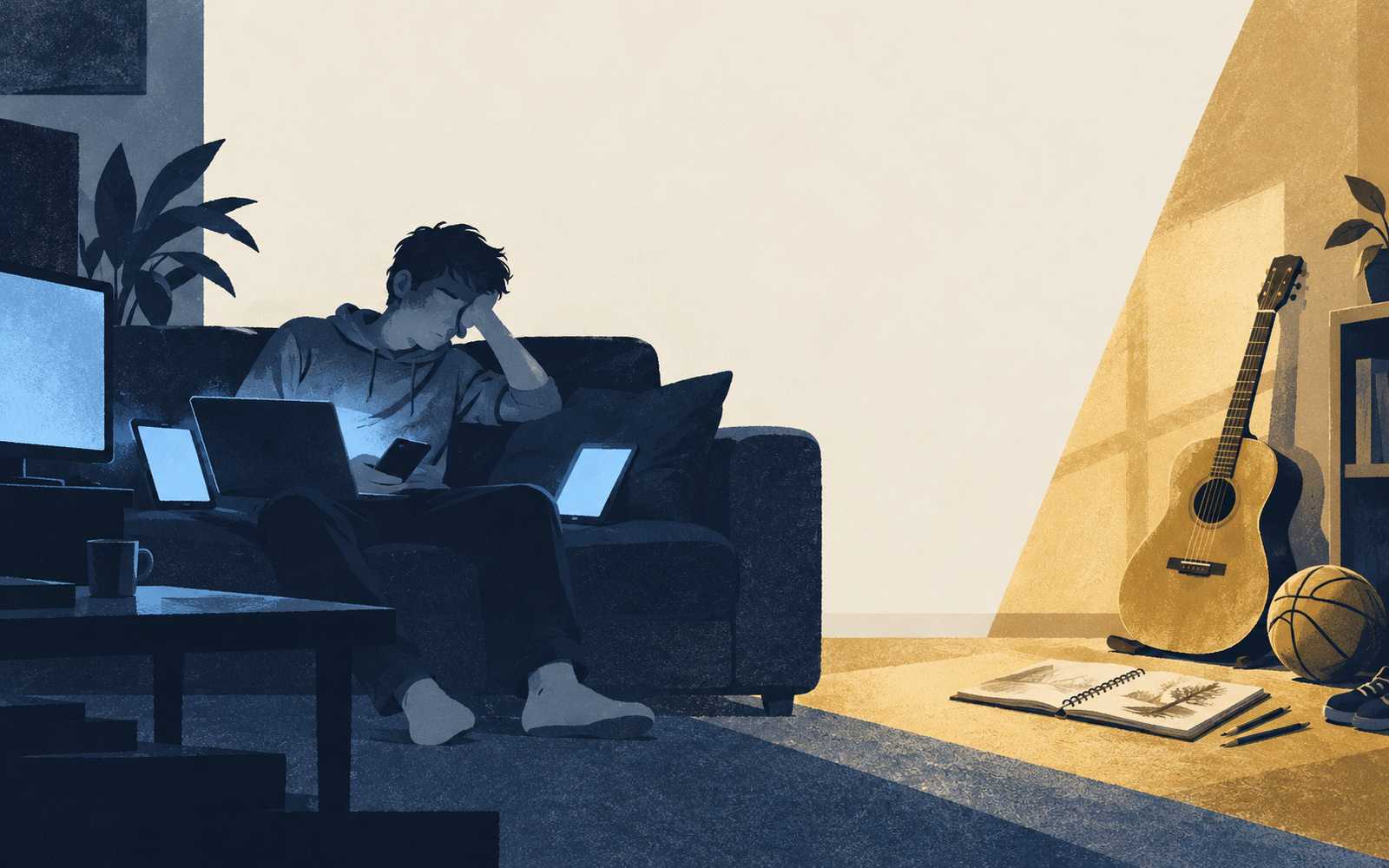
Opportunity
·
Culture
Peer Pressure Can Pull Teens Toward Generosity Too
We worry that friends will pull our teenagers toward trouble. Experiments led by Jorien van Hoorn at Leiden University found that teens also gave more when peers applauded generosity. The pull is real. What matters is what the room is cheering for.
Ask a parent what worries them about their teenager's friends, and you will hear the same fear in a dozen versions. They'll talk her into something. He'll do it just to look cool. The group will pull them somewhere they shouldn't go.
That fear isn't foolish. Teenagers are deeply tuned to what their peers think, and decades of research have documented how that pull can raise risk-taking. Nothing I'm about to share erases that. But a line of research from the Netherlands asks a question most of us forget to ask: if the pull is that strong, can it also point toward something good?
What Happened When Peers Applauded Giving
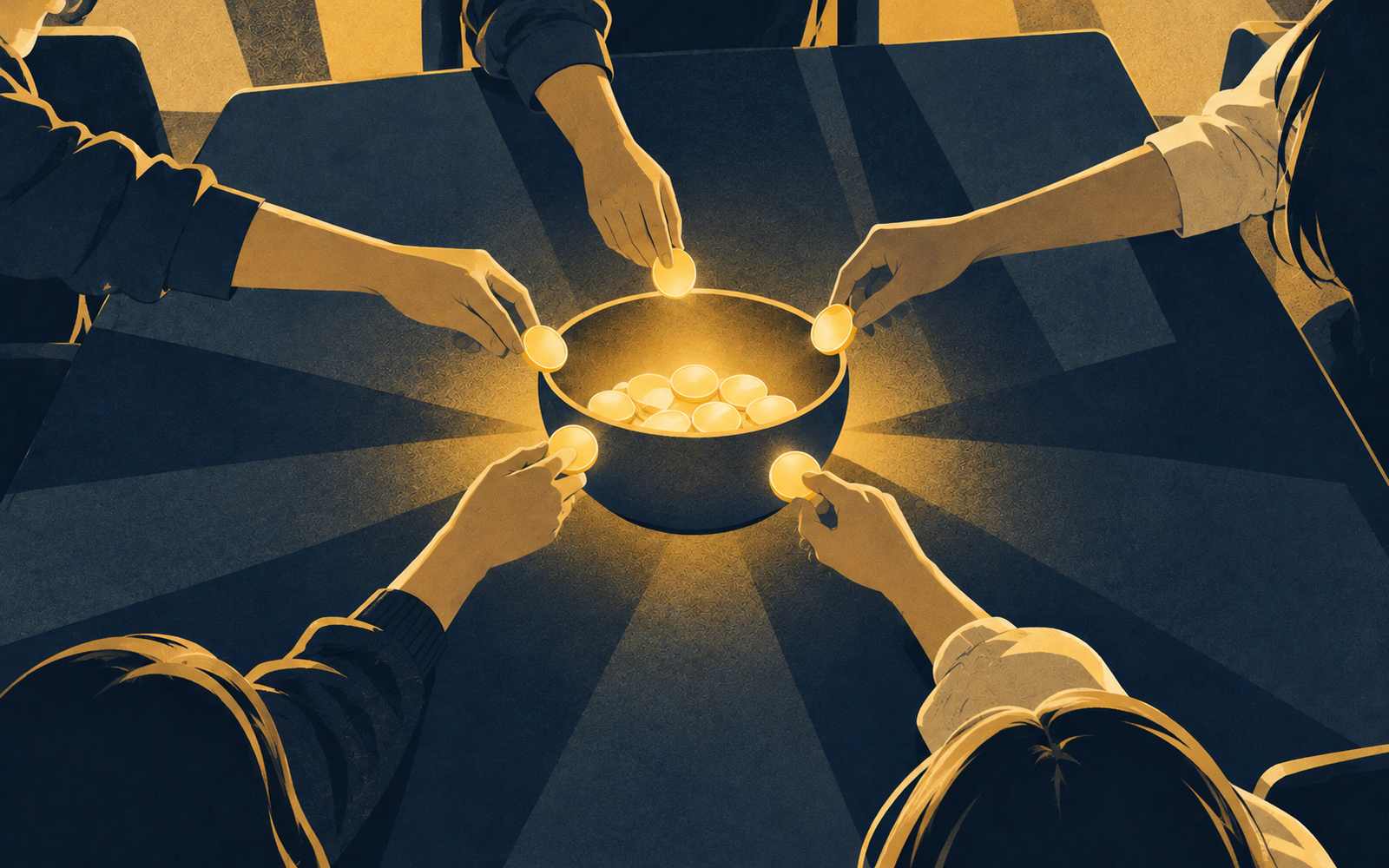
Jorien van Hoorn, a developmental psychologist at Leiden University, led a study with Eveline Crone as senior author in which 197 adolescents aged 12 to 16 played what researchers call a public goods game. Each teen decided how much to contribute to a shared pot that benefited the group and how much to keep. Along the way they saw feedback presented as coming from peers. For some teens, those peers "liked" generous choices. For others, they liked selfish ones. A third group saw no feedback at all.
When the likes rewarded generosity, teens gave more. When the likes rewarded keeping, they gave less.
Because the researchers controlled the feedback, this was an experiment, and the feedback did shift the giving. It was also an anonymous game played on school computers and measured over minutes, not years. I hold it as evidence of what peers can do in the moment, not as proof of who a teen will become.
A second study from the same team added a brain scanner. Sixty-one adolescents, about half of them 12 to 13 and half 15 to 16, played the game alone, with peers watching, or with peers watching and giving feedback. They gave more when they were watched, and the most when the watching peers responded positively. Being observed also lit up regions the brain uses to think about other people, and activity in one of them, the temporoparietal junction, rose with the size of the gift. That brain link is a correlation, not a cause. The behavior, though, was clear: for these teens, an approving audience brought out more generosity.
Giving at a Cost Starts Early
Kathy Do, now an assistant project scientist at UCLA, led a related study with Eva Telzer as senior author. The team scanned 51 children and adolescents aged 8 to 16 as they chose whether to give points to anonymous peers, sometimes when giving cost them something. How often young people gave did not change with age. What changed was the brain activity behind the choice. Regions involved in understanding others and regulating decisions were most engaged in early adolescence.
The sample was small and each young person was measured once, so the study describes differences between age groups rather than how any one child grows. Still, it fits a view that runs through this whole body of work: the social sensitivity of the teenage years can lead toward good outcomes as readily as bad ones.
The Real Question Is What the Room Applauds
I have spent most of my career watching adults edit themselves to fit the rooms they work in. That habit doesn't start at work. It starts in the years when the audience matters most, and this research shows how much it matters.
So I don't think the goal is a teenager who is immune to peers. That teenager doesn't exist, and if one did, I'm not sure we'd want them. The goal is a teen whose hunger for an audience is pointed at the right things, and who, over time, keeps doing those things when nobody is clapping.
There is an honest tension in these findings. Generosity that rises and falls with likes is, at first, borrowed. It belongs to the room. I don't think that makes it worthless. Most of us picked up our best habits because someone we admired noticed them. The change happens when a young person starts giving because it feels like who they are, rather than because the group is watching. That is the difference between belonging and simply fitting in, which I wrote about in Belonging Isn't Fitting In. The Research Can Tell the Difference.
It also connects to something I explored in Teens Don't Just Need Support. They Need to Be Needed. Teenagers want to matter to the people around them. Giving in front of their friends may be one of the first ways they test whether they do.
Be the Audience That Notices Kindness
Ask what their group cheers for. "What gets people noticed in your group?" will tell you more than "Are those kids a good influence?" Listen without grading the answer.
Notice generosity out loud, and be specific. You are part of your teen's audience too. "You gave up your Saturday to help your friend move. I saw that." Name the act. Over time, specific notice helps a teen see the pattern in themselves.
Put them in rooms where giving is normal and visible. A team that volunteers together, an older teen coaching younger kids, friends invited to help cook for a neighbor who could use a meal. When generosity is what the group does, joining in doesn't feel like a risk.
Ask the question that helps them see it themselves: "What do people always come to you for?" The answer will change as they grow, and that's fine. The point is that they start noticing what they give.
Then watch for the quiet version. When your teen helps someone with no one watching, don't turn it into a public award. That moment is the sign the generosity has become theirs.
Peers can lend a teenager generosity for an afternoon. Our part as parents is helping them keep it after the audience goes home.
Research cited
van Hoorn, J., van Dijk, E., Meuwese, R., et al. (2014). Peer influence on prosocial behavior in adolescence. Journal of Research on Adolescence.
van Hoorn, J., van Dijk, E., Güroğlu, B., et al. (2016). Neural correlates of prosocial peer influence on public goods game donations during adolescence. Social Cognitive and Affective Neuroscience.
Do, K. T., McCormick, E. M., & Telzer, E. H. (2019). The neural development of prosocial behavior from childhood to adolescence. Social Cognitive and Affective Neuroscience.
Want to explore these ideas further? Learn more about my work on leadership, identity and conviction at www.theglennllopis.com.
Peers can lend a teenager generosity for an afternoon; the work of a parent is helping them keep it after the audience goes home.
© 2026 Glenn Llopis Group, LLC. All rights reserved.
This article is the original work of Glenn Llopis and is protected by copyright. It may not be republished, reproduced, distributed or adapted, in whole or in part, in print, online or by AI tools, without prior written consent. You are welcome to share the link or quote a brief excerpt with credit to Glenn Llopis and a link back to this page. For permission requests, contact solutions@glennllopisgroup.com.
Get the next essay in your inbox
New essays on leadership, identity and conviction, sent to you when they publish. Free, and you can unsubscribe anytime.
Thank you. You're subscribed to Conviction Chronicles.
Something went wrong. Please try again.