Opportunity
·
Transformation
The Workforce Plan Is Missing the Workforce
A new Conference Board report finds just 11% of organizations have built AI's effects into enterprise workforce planning, even as most expect to redesign jobs and workflows. The plans describe roles and skills. What they miss is what each person uniquely brings.
What the Headlines Miss · Responding to
AI & Workforce Planning: How Leaders Can Navigate Tech-Driven Change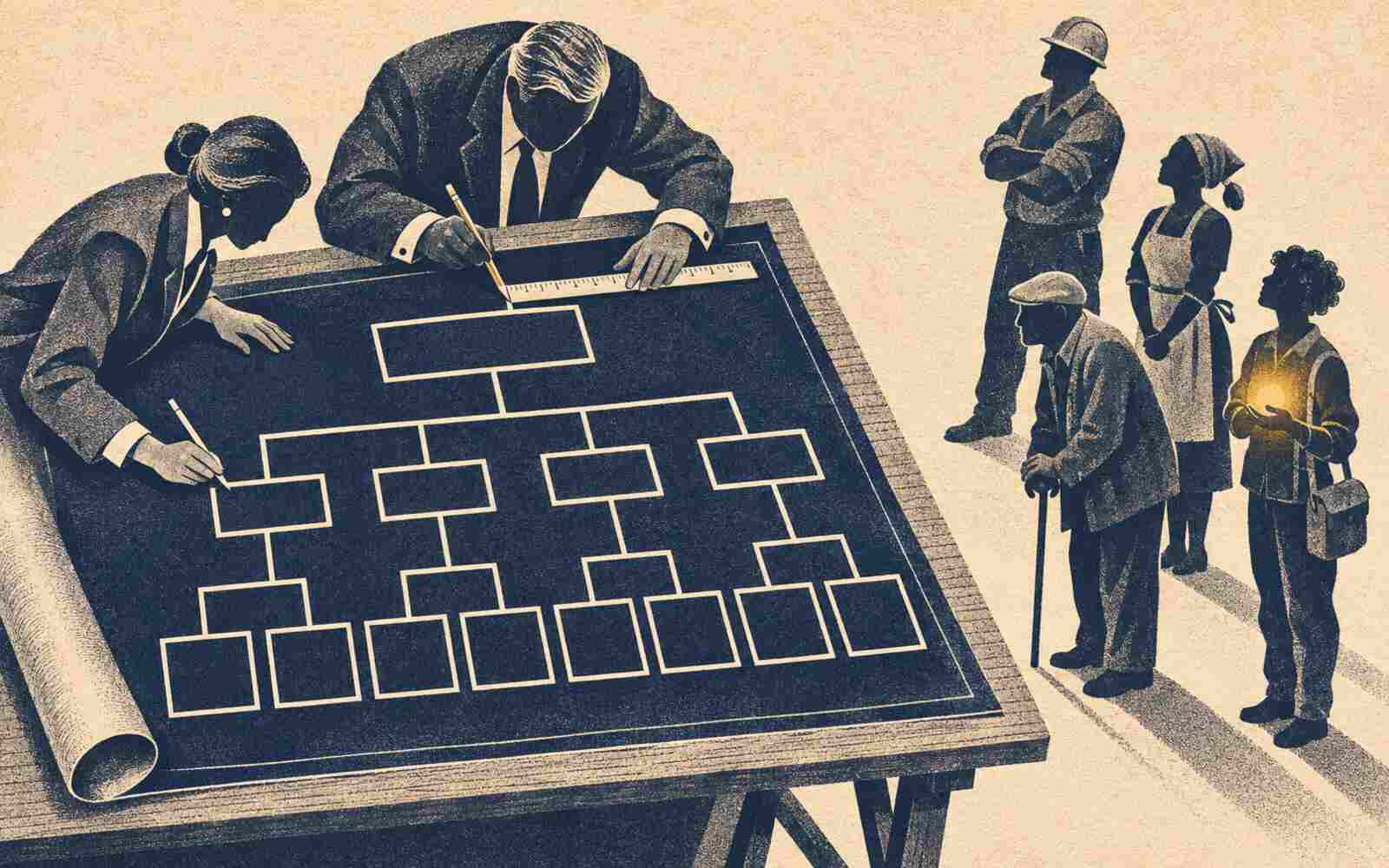
Every company now has an AI strategy. Far fewer have a plan for the people who will carry it out.
That's the central finding of AI & Workforce Planning: How Leaders Can Navigate Tech-Driven Change, a new report from The Conference Board by Matt Rosenbaum and Robin Maillard. Drawing on a survey of 775 leaders around the world and 35 interviews, they found that just 11% of organizations have built AI's expected effects into workforce and financial planning across the enterprise.
The report is practical and clear-eyed, and it deserves a careful read from every leader responsible for people.
What the research shows
The gap between expectation and preparation is wide. Nearly 70% of leaders expect redesigning jobs, tasks or workflows to be among their most important AI-related workforce actions over the next two years, and 68% expect upskilling or reskilling to be a top priority. Yet only about a third have integrated AI into planning even for some functions or regions, another third are still discussing it, and 13% haven't started assessing it at all.
Meanwhile, the headcount story is quieter than the headlines suggest. Only 5% of leaders expect AI to increase headcount over the next two years. Most expect a slight reduction or no real change. The work, in other words, is changing much faster than the number of people doing it.
Rosenbaum makes an important point about why simple math fails here. Removing one task often creates new responsibilities somewhere else, so time saved doesn't automatically mean fewer people or lower costs. Diana Scott, who leads the organization's US Human Capital Center, adds that traditional headcount forecasts can't keep up when the work itself is changing this quickly.
The report's recommendations follow from that: look beyond headcount, redesign work deliberately, plan continuously and bring HR, finance, technology and business leaders to the same table.
The question beneath the plan
I agree with every one of those recommendations. But I'd add one thing the data points toward without quite naming.
You can't redesign work well if you don't know who is doing it.
Most workforce plans describe people as roles, skills and costs. That's useful, and it's also incomplete. Two people with the same title and the same skills can bring entirely different things to the same workflow. One sees problems before they surface. Another holds a team together under pressure. A third is the person everyone quietly goes to when the process breaks. None of that appears on a skills inventory, and all of it is exactly what gets lost when work is redesigned around tasks alone.
For decades, organizations were built for consistency. People were asked to fit standard roles so the system could run predictably. AI is now taking over much of that standardized work, which leaves a harder question for leaders: what is it that only this person brings? As I wrote in AI Is Abundant. Originality Still Comes From People., when everyone has access to the same tools, the human contribution becomes the difference.
Why the 11% matters
It's tempting to read the 11% as a planning problem. I think it's also an identity problem.
Many leaders hesitate to plan because they're waiting for certainty: about the technology, about the economy, about what the next model will be able to do. That certainty isn't coming. I describe conviction as the earned capacity to act on what you believe before the outcome is certain, and this is a moment that calls for it. The organizations that move first won't have perfect forecasts. They'll have a clear understanding of what their people uniquely contribute, and they'll design the work around protecting and growing it.
Employees are waiting too. When a company announces that jobs will be "redesigned" without telling people where they fit, most assume the worst. They start editing themselves to look safe instead of offering what they actually see. That is the opposite of what a redesign needs.
Three questions to add to the plan
The report introduces practical tools for assessing workflows, tracking how work shifts and measuring whether productivity gains become real value. Alongside them, I'd encourage leaders to ask three human questions:
What does each person bring that the workflow doesn't show? Ask managers, and ask the employees themselves. The answers will reveal value that no task map captures.
Who should help redesign the work? The people closest to a workflow usually understand it best. Bring them in before the plan is final, not after.
What will people do with the time AI gives back? If the answer is simply more of the same work, the organization has saved hours but missed the opportunity.
The plan starts with people
The Conference Board's research makes clear that AI is changing the shape of work faster than most organizations are planning for it. Rosenbaum, Maillard and their colleagues have given leaders a useful framework for catching up.
The companies that get this right will treat workforce planning as more than a forecast of headcount. They'll treat it as a decision about who their people are, and what they want them to become. As I've argued in The Collapse of Standardization Is No Longer a Prediction, that shift is already underway. The question is whether the plan will include the workforce.
Want to explore these ideas further? Learn more about my work on leadership, identity and conviction at www.theglennllopis.com.
You can't redesign work well if you don't know who is doing it.
© 2026 Glenn Llopis Group, LLC. All rights reserved.
This article is the original work of Glenn Llopis and is protected by copyright. It may not be republished, reproduced, distributed or adapted, in whole or in part, in print, online or by AI tools, without prior written consent. You are welcome to share the link or quote a brief excerpt with credit to Glenn Llopis and a link back to this page. For permission requests, contact solutions@glennllopisgroup.com.
Get the next essay in your inbox
New essays on leadership, identity and conviction, sent to you when they publish. Free, and you can unsubscribe anytime.
Thank you. You're subscribed to Conviction Chronicles.
Something went wrong. Please try again.