.svg)
Individuality
·
Leadership
Six Ways to Build Teams That Last
It takes great leadership to build great teams. People's ideal roles often lie outside their job descriptions. Before you replace someone, ask whether you've placed them well. Teams built to last are cultivated.

It takes great leadership to build great teams: leaders who aren't afraid to course correct, make difficult decisions and set standards that are constantly met and raised. Whether in business, sports or your community, team building requires a keen understanding of people, their strengths and what excites them about working with others. It also requires managing egos and their constant demand for attention.
Team building is both an art and a science. In nearly three decades of building teams as an executive and advising Fortune 500 leadership groups, I've learned that the best leaders treat it as a craft they never stop refining. The leader who can consistently build high-performance teams is worth their weight in gold.
That's why most managers never become leaders. It requires mastering the art of people: knowing how each person thinks and how to use their strengths at the right place and the right time. Here are six ways successful teams are built to last.
Start With Yourself, Then Your Team
1. Be aware of how you work. Are your style and techniques as effective as you think? How well does your team receive them? Evaluate yourself honestly and be willing to course correct. You may have good intentions, but how you work may not be appreciated by those who work for you. Self-awareness is the foundation. A leader who doesn't know their own impact can't build a team that trusts them.
2. Get to know the rest of the team. Make the time to understand what each person brings to the table: the strengths they use, the ones they leave behind and the ones not yet developed. Great leaders know which buttons to push and when. They match expertise to problems and activate the talent around them. Think of your team as puzzle pieces that can fit together in many different ways.
Define Roles Around People, Not Just Job Descriptions
3. Clearly define roles and responsibilities. Once you know your team, you can define roles more clearly. Don't assume it's easy. You'll often find that people's ideal roles lie outside their job descriptions.
I once inherited an employee who wasn't very good at his specific job. Instead of firing him, I took the time to get to know him. He turned out to be a natural facilitator who could keep all the moving parts of the department aligned and communicating. He helped the team run more efficiently, saved the company money by preventing mistakes caused by miscommunication and was eventually promoted to special projects manager.
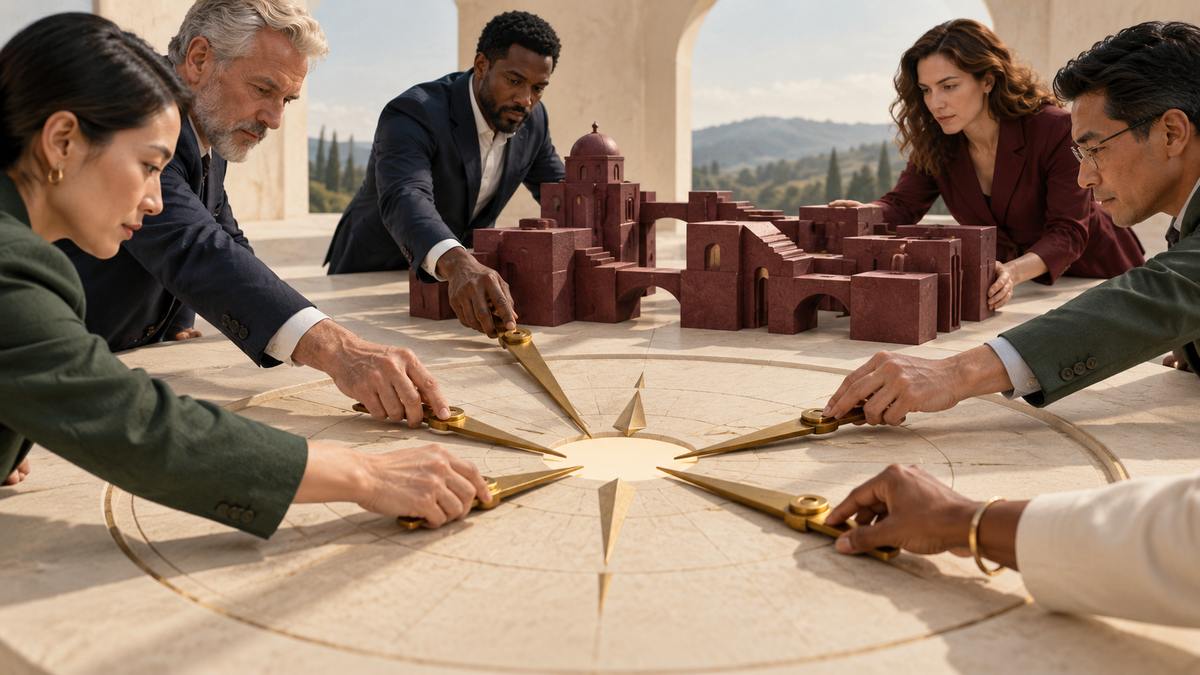
Before you replace someone, ask whether you've placed them well. Each role should connect to and depend on the others. A team should operate as a mosaic whose unique strengths convert into a powerful, united force.
Make Feedback Constant and Acknowledgment Real
4. Be proactive with feedback. Many leaders wait until a problem occurs. Feedback should be constant, part of natural conversation, both formal and informal. When it becomes too structured, it stops feeling authentic. Every team is different, so avoid a cookie-cutter approach. And remember that feedback is two-way: learn from your team as much as you guide them.
5. Acknowledge and reward. People love recognition, but they appreciate respect even more. Too many leaders take performance for granted because they believe no one should be rewarded for doing their job. Genuine acknowledgment builds loyalty and trust, and it ignites extra effort. When people are acknowledged, their work becomes more satisfying and purposeful.
In hybrid teams, both matter more. When people aren't in the same room, silence is easily read as indifference. AI can summarize performance data, but it can't make someone feel seen.
Always Celebrate Success
6. Always celebrate success. In a world of constant change, teams rarely pause to understand why they succeeded and how that success affected others. They finish one project and sprint to the next.
Celebration goes beyond acknowledgment. It's stepping back to reflect on what you accomplished and what you learned along the way. I've seen leaders fall into the trap of taking credit for what their teams achieved rather than celebrating the effort, sacrifice and perseverance behind it.
Celebration also teaches. When a team names what made a win possible, it's far more likely to repeat it. It's short-lived, so don't skip it. Live in the moment and remember what got you across the finish line.
Teams That Last
Leaders are only as successful as their teams. The great ones know that with the right dynamics, decisions and diverse personalities, everyone wins.
Ask yourself:
- When did I last change how I lead based on my team's feedback?
- Is anyone on my team in the wrong role for their real strengths?
- What did we accomplish recently that we never paused to celebrate?
Teams built to last aren't assembled. They're cultivated, one person, one conversation and one celebration at a time.
Want to explore these ideas further? Learn more about my work on leadership, identity and conviction at www.theglennllopis.com.



.svg)
.svg)
.svg)
.svg)
.svg)
.svg)
